James Cook University’s Daintree Canopy Crane is home to a growing family of nesting ospreys, with live-streamed video capturing the feathered fish-loving couple’s journey to parenthood.
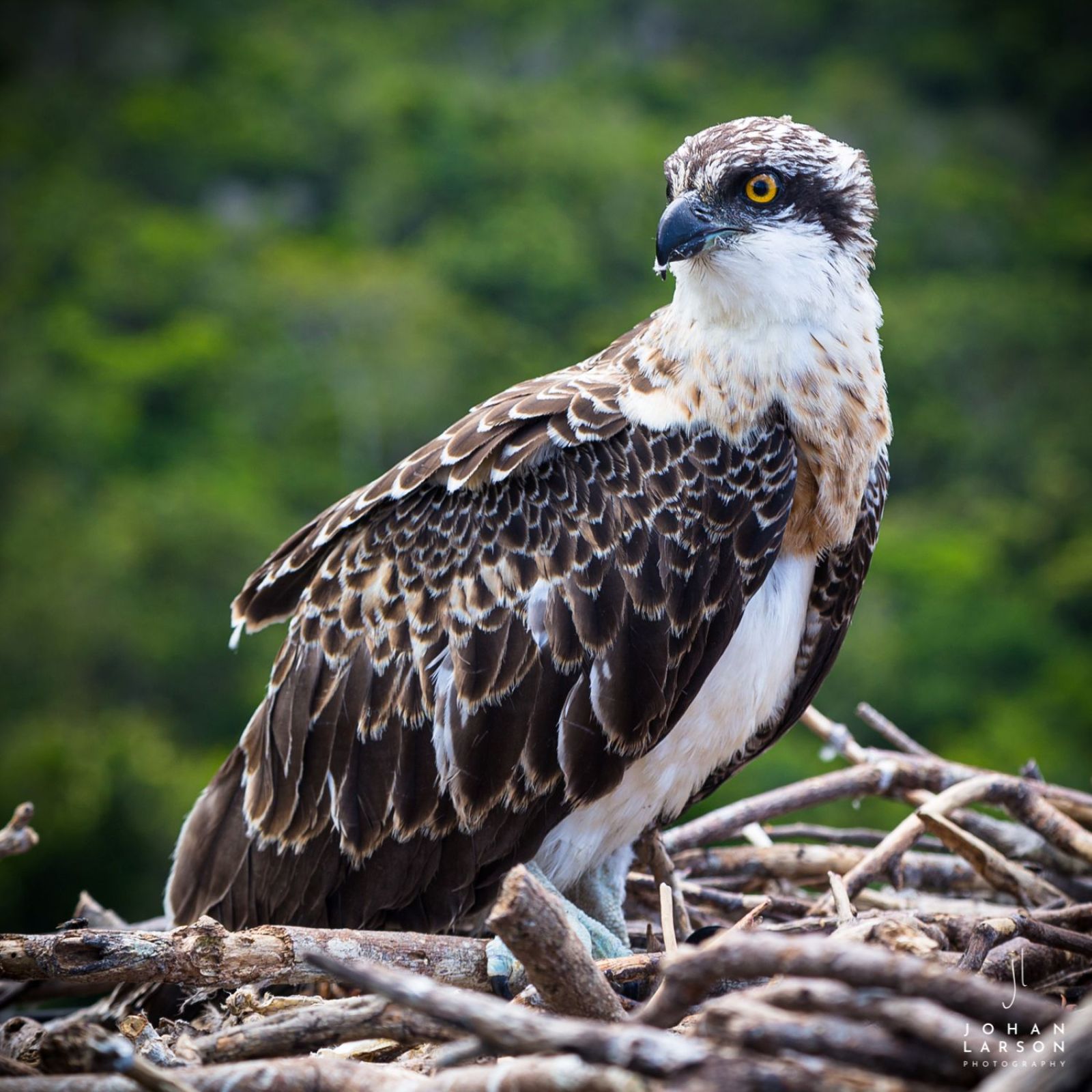
From their prestige high-rise location overlooking the World Heritage Wet Tropics rainforest and turquoise waters of the Coral Sea, the family of ospreys are currently up to egg number two, taking turns to nurture their fragile cargo while perched out on the tip of JCU’s massive crane.
The 47m-high canopy crane is the centrepiece of JCU’s Daintree Rainforest Observatory (DRO), a field station nestled in lowland wet tropics rainforest in Far North Queensland that includes include a huge lecture theatre and indoor and outdoor laboratories.
“Ospreys like to nest in really high exposed locations … tall trees or rock outcrops, even on man-made structures,” said DRO Observatory manager Johan Larson.
“Over 15 years ago, they realised that the canopy crane is a great structure to nest on.”
Ospreys can live for up to 25 years and researchers at the observatory believe the nest belongs to the same breeding pair.
Mr. Larson observed that the ospreys tended to nest in the earlier part of the year, and then towards the end of the year after the chicks have fledged, they stop maintaining the nest.
“The adults still hang around the crane, we see them year around, but they don’t use the nest then,” he said.
“There’s usually between two to three eggs every year. They lay one egg and then there’s a day or two before the next egg.
“It takes about five weeks before the eggs hatch and another seven or so weeks before they’ll actually fledge.”
Ospreys like to nest within flying distance of water because they predominately feed on fresh fish.
The live cam footage shows that even during nesting both ospreys still hunt, but the female spends more time on the eggs, and the male will spend more time hunting.
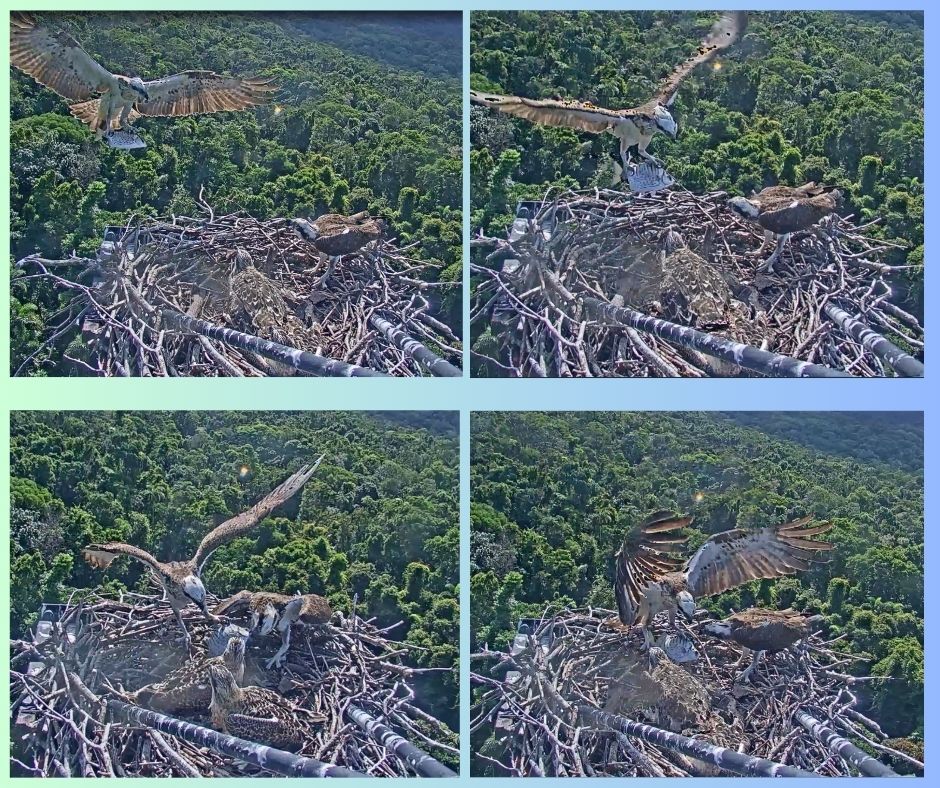
“Often the male will bring fish back to the female,” Mr. Larson explained.
“They will dive from 10 to 30 meters into the water, catch a big fish and bring it back to the nest. You can imagine them trying to take off with a big fish and with their wings in the water … they’re very strong flyers.
“They carry those fish in a particular way, usually with their head facing forwards. It’s more aerodynamic that way.”
With big sticks needed, building an osprey nest is not a straightforward activity – especially when observatory personnel remove them at the end of each year, to undertake essential crane maintenance.
“It’s fascinating to watch them,” said Mr. Larson
“They’ll bring the first stick on top of the metal structure, and then the wind will catch it and it kind of swivels and then falls through the gap. They take a deep breath, go get another stick, try again.
“It’s actually pretty quick once they get started. It only takes a few weeks.”
The Canopy Crane live feed offers the public 24-hour bird-watching joy amidst the stunning scenery of the Daintree rainforest, providing a peaceful escape into nature from anywhere in the world.