MYTH 1 – Sun damage is not possible on windy, cloudy or cool days.
You can get sun damage on windy, cloudy and cool days. Sun damage is caused by ultraviolet (UV) radiation, not temperature. A cool or overcast day in summer can have similar UV levels to a warm, sunny day. If it’s windy and you get a red face, it’s likely to be sunburn. There’s no such thing as ‘windburn’. Sun damage is also possible on cloudy days, as UV radiation can penetrate some clouds, and may even be more intense due to reflection off the clouds. Check the daily sun protection times, available online (cancer.org.au or bom.gov.au/uv), in the weather section of newspapers, or on the free SunSmart app. The sun protection times show when the UV is forecast to be 3 or above.
MYTH 2 – A fake tan darkens the skin, protecting the skin from the sun.
Fake tanning lotion does not improve your body’s ability to protect itself from the sun, so you will still need sun protection. Some fake tans have an SPF rating, but this should not be relied on for continued protection.
MYTH 3 – Sunscreen is not necessary when using cosmetics with SPF.
Unless cosmetics are labelled with an SPF 30 or higher rating, you should wear additional sunscreen under your makeup if you’re going to be in the sun for an extended period. For longer periods of time in the sun, use a separate sunscreen and reapply it every two hours – not just once in the morning. Be aware that most cosmetic products offer either no protection or protection that is much lower than the recommended SPF 30.
MYTH 4 – People with olive skin are not at risk of skin cancer.
People with olive skin can get skin cancer too. Regardless of skin type, exposure to UV radiation from the sun and others artificial sources such as solariums, can cause skin to be permanently damaged. People with skin types that are less likely to burn can still receive enough UV exposure to risk developing skin cancer. Care still needs to be taken in the sun.
MYTH 5 – You can stay out longer in the sun when you are wearing SPF 50 than you can with SPF 30.
No sunscreen is a suit of armour and sunscreen should never be used to extend the amount of time you spend in the sun. Though it may sound like there is big difference. SPF 50 only offer marginally better protection from UVB radiation, which causes sunburn and adds to skin cancer risks. SPF 30 sunscreens filter about 96.7% of UV radiation, SPF 50 sunscreens filter 98% of UV. Cancer Council recommends applying a sunscreen that is SPF 30 or higher before heading outside, every two hours, after swimming, sweating, or towel drying.
MYTH 6 – Plenty of sun exposure is required to avoid vitamin D deficiency.
Australians shouldn’t expose themselves to potentially harmful UV in order to get more vitamin D. Research suggests that prolonged sun exposure does not cause vitamin D levels to continue to increase further but does increase the risk of skin cancer. When UV levels are 3 or above, most Australians get enough vitamin D with just a few minutes of sun exposure while completing everyday tasks – like walking to the car or shops. During peak UV times, it’s important to reduce your risk of skin cancer by protecting your skin. However, sun protection isn’t generally recommended when UV levels are below 3. If you live in those parts of Australia where UV levels are low in winter, you can help maintain vitamin D levels by spending time outdoors in the middle of the day and doing some physical activity. People who may be at higher risk of vitamin D deficiency include please with naturally very dark skin, people with conditions or medications that impact vitamin D absorption, those who cover their skin for religious or cultural reason and those with little or no sun exposure. If you believe you are at risk of no sun exposure. If you believe you are at risk of vitamin D deficiency speak to you doctor.
MYTH 7 – You don’t have to be concerned about skin cancer because if it happens you will see it, and it is easy to treat.
Skin cancer treatment can be much more serious than simply having a lesion ‘burnt off’. It can include surgery, chemotherapy and can result in permanent scarring. Skin cancer can also spread to other parts of your body. Each year, more than 2000 Australians die of skin cancer. Be alert for any new spots or changes to existing spots and consult your GP immediately if you notice anything new or changing. And remember, prevention is always better than cure.
MYTH 8 – Only sun seekers get skin cancer.
Excessive exposure to the sun does not just happen when deliberately seeking a tan. In a high UV environment like Australia, we can be exposed to dangerous levels of UV radiation during all sorts of daily activities, such as working outdoors, gardening, walking the dog or having a picnic. This sun exposure adds up over time increasing the risk of skin cancer.
MYTH 9 – If you tan but don’t burn, you don’t need to bother with sun protection.
There’s no such thing as a safe tan. If skin darkens, it is a sign of skin cells in trauma, even if there is no redness or peeling. Skin darkens as a way of trying to protect itself because the UV rays are damaging living cells. If you tan easily, you are still at risk of skin cancer and need to use sun protection.
MYTH 10 – You can’t get burnt in the car through a window.
You can get burnt through a car window. Untinted glass commonly used in car side windows reduces, but does not completely block, transmission of UV radiation. This means you can still get burnt if you spend a long time in the car next to an untinted side window when the UV is high. More commonly, people are burnt in cars with the windows down, where they can be exposed to high levels of UV radiation.
Be SunSmart
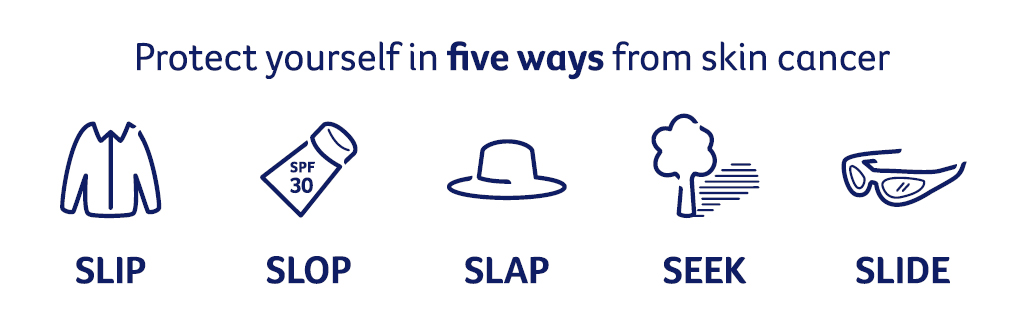
Australia has one of the highest rates of skin cancer in the world. This is largely due to our proximity to the equator, a largely fair-skinned population, and our love of the great outdoors. Fortunately, being SunSmart is a simple way to reduce your risk of developing skin cancer. Cancer Council recommends a five-step approach to sun protection when the UV Index is 3 or above.
Find your local UV levels
When the UV Index reaches 3 or above, be SunSmart and protect your skin. You can find your local UV levels at: