Forest expansion and thickening after British colonisation has created landscapes more prone to burning, amplifying the influence of climate change and propelling Australia’s bushfire crisis, a new study has found.
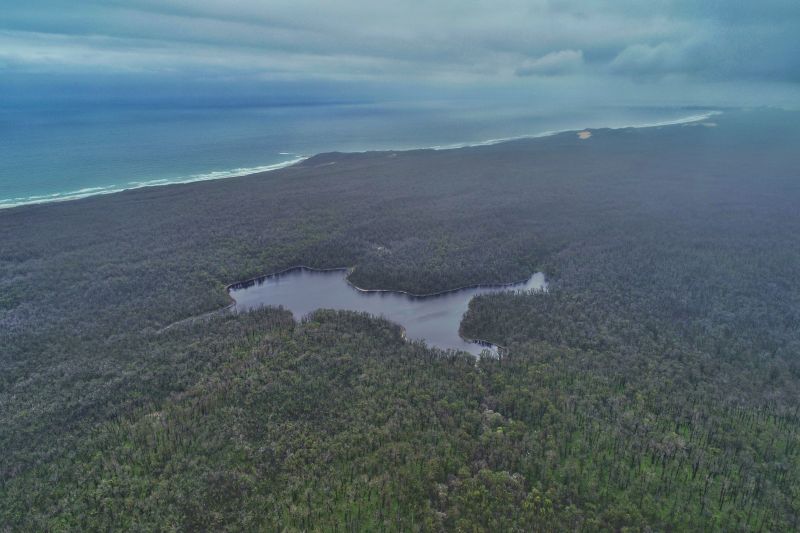
Published today in Nature, University of Melbourne researchers, in collaboration with Gunaikurnai Land and Waters Corporation, reconstructed the past 1000 years of vegetation, fire and erosion in Croajingolong National Park in East Gippsland, one of southeastern Australia’s most fire-prone forests.
The researchers found that colonialisation drove cascading changes: increased fire temperature, a four-fold increase in eucalypt cover, transformation from an open woodland to forest, and increased soil erosion.
Lead author, University of Melbourne Professor Michael-Shawn Fletcher, said the research provides scientific evidence for the value of cultural burning and the need to integrate Indigenous knowledge into contemporary fire management strategies.
“When Country is cared for, climate does not dictate wildfire,” Professor Fletcher said.
“For thousands of years, Gunaikurnai people cared for Country in what is now Croajingolong National Park through cultural burning, keeping much of the landscape as open woodland.
“Climate records show that seasons of comparably dangerous fire weather, such as those seen during Ash Wednesday and Black Saturday, reoccurred in the region repeatedly before colonisation, yet the open landscape maintained by cultural burning protected the land from catastrophic fire.
“When colonisation ended that care, the forest expanded and thickened across the region, loading the landscape with fuel. It is that transformation that has handed control of fire to climate.”
The research found the transformations to the land predate human-driven climate change, demonstrating the current vulnerability of southeastern Australian eucalypt forests to wildfire is strongly influenced by colonial land-use legacies.
“Most discussion of Australia’s wildfire crisis stops at climate change. Our work shows what set the stage for it – forest expansion and thickening that loaded the landscape long before the climate began to shift,” Professor Fletcher, from the School or Geography, Earth and Atmospheric Sciences, said.
Reading the lake sediment record, researchers found the hot fires came first, driving a four-fold surge in eucalypts that thickened the once-open woodland into forest and loaded the landscape with fuel. Infrared analysis of charcoal preserved in the sediments reveals past fire temperatures, showing the cool cultural fires of the pre-colonial period being replaced by hot wildfires after colonisation.
The paper concludes that restoring cultural burning and supporting Traditional Owners to care for Country is an essential component to mitigating wildfire risk.
GunaiKurnai elder Uncle Russell Mullett, from Gunaikurnai Land and Waters Corporation, said Gunaikurnai Ancestors were born with towera (fire), an interrelationship of the Old Peoples practical daily life on country.
“Not treating country with towera, country becomes extremely dangerous for GunaiKurnai, animals and plants,” Mr Mullet said.
“Studies such as this provide firm scientific evidence to support towera land management initiatives for country.”
The study also addresses a larger cultural point on the concept of wilderness – a powerful cultural and environmental idea describing land largely untouched by humans.
“Croajingolong National Park has long been treated as pristine wilderness, yet it is now one of the most fire-prone and repeatedly burnt parts of southeastern Australia,” Professor Fletcher said.
“The forest we protect there is in fact a product of colonisation, and it’s that legacy that now imperils its very survival.”