Renowned art collector and founder of Kaldor Public Art Projects, John Kaldor AO, recently held a talk sharing memories of his five-decade-long friendship with influential American artist, Sol LeWitt.
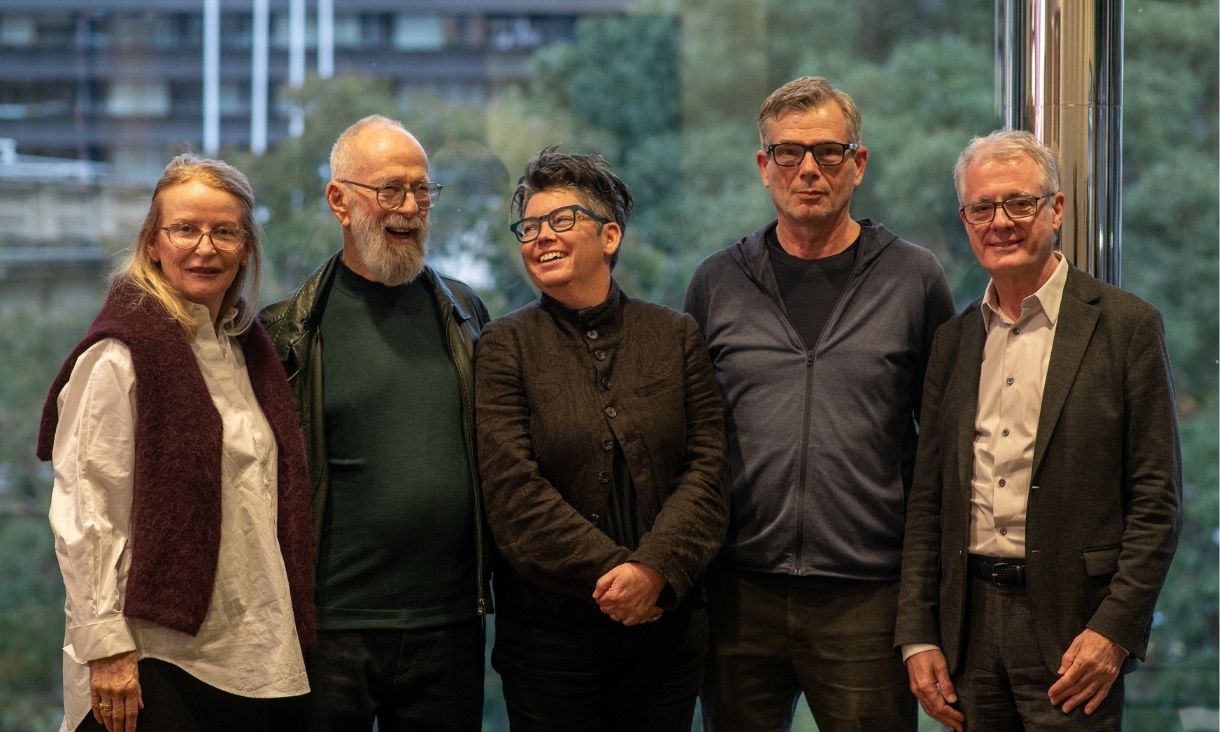 Image caption: Kamila Smirski, John Kaldor, Naomi Stead, Michael Waite and Tim Marshall at ‘Sol LeWitt: Recollections of a great artist and a wonderful friend’. A talk by John Kaldor AO, for ‘The Concentric Influences of Sol LeWitt: Foundations, Pivots and Place’, RMIT Gallery, Melbourne, 2026. Photo by Keelan O’Hehir.
 RMIT Galleries recently hosted internationally renowned art collector and philanthropist, John Kaldor AO, for a public talk about the life, career, and his close friendship with influential conceptualist artist, Sol LeWitt, as part of the public programming for The Concentric Influences of Sol LeWitt: Foundations, Pivots and Place.
Professor Naomi Stead, Associate Deputy Vice Chancellor, Engagement, RMIT College of Design and Social Context, welcomed Kaldor back to RMIT, noting his long association with the university.
That association includes a commissioned work, Kaldor Public Art Project 18, with Scottish artist Martin Boyce on RMIT’s City campus in 2008, and support for RMIT Design Hub Gallery’s inaugural exhibition in 2013.
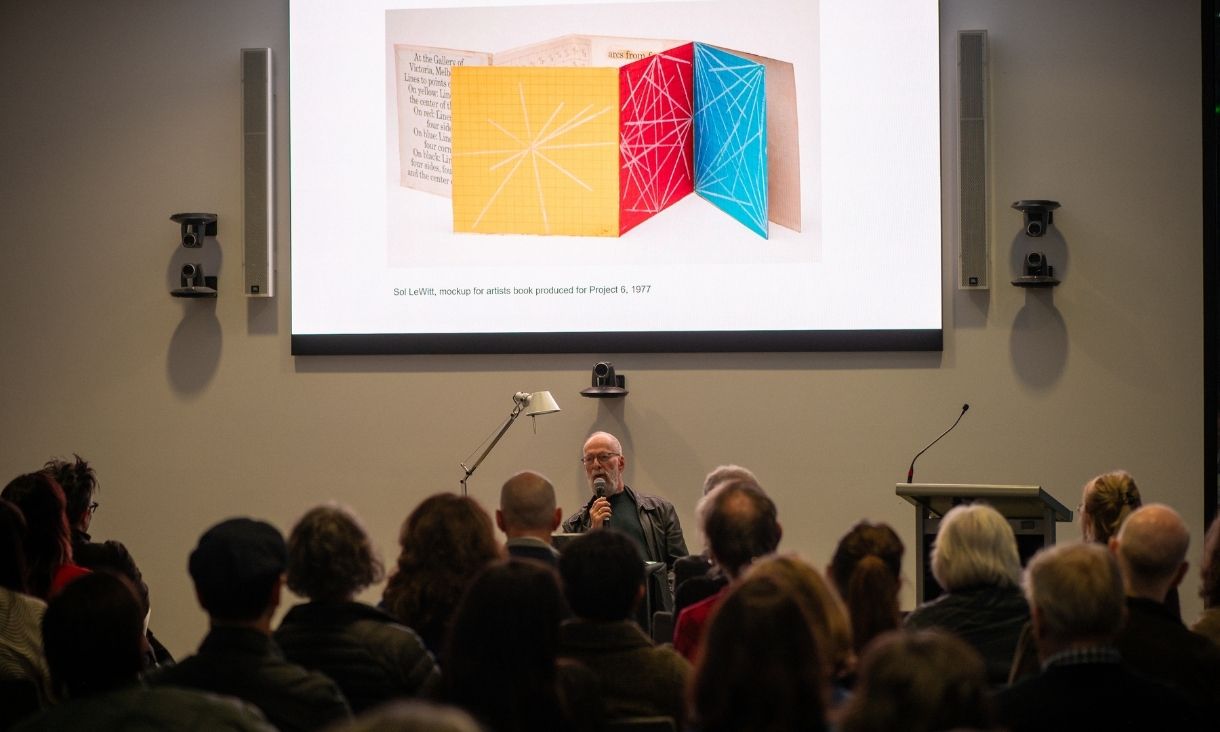 Image caption: John Kaldor at ‘Sol LeWitt: Recollections of a great artist and a wonderful friend’. A talk by John Kaldor AO, for ‘The Concentric Influences of Sol LeWitt: Foundations, Pivots and Place’, RMIT Gallery, Melbourne, 2026. Photo by Keelan O’Hehir.
 “The idea is the creative act”
Kaldor began collecting LeWitt’s work after meeting him in the early 1970s, beginning a friendship and creative partnership that spanned five decades, until LeWitt’s death in 2007.
Kaldor illustrated LeWitt’s approach to conceptual art with a story from a chance New York encounter in 1985. He told LeWitt he was looking forward to his exhibition, and LeWitt simply replied, “so am I.”
“That really defines how Sol worked,” Kaldor said. “In conceptual art, the idea is the creative act. The execution can be done straight away or years later – just like a composer: music can be performed years and years afterwards, and many times afterwards,” he continued.
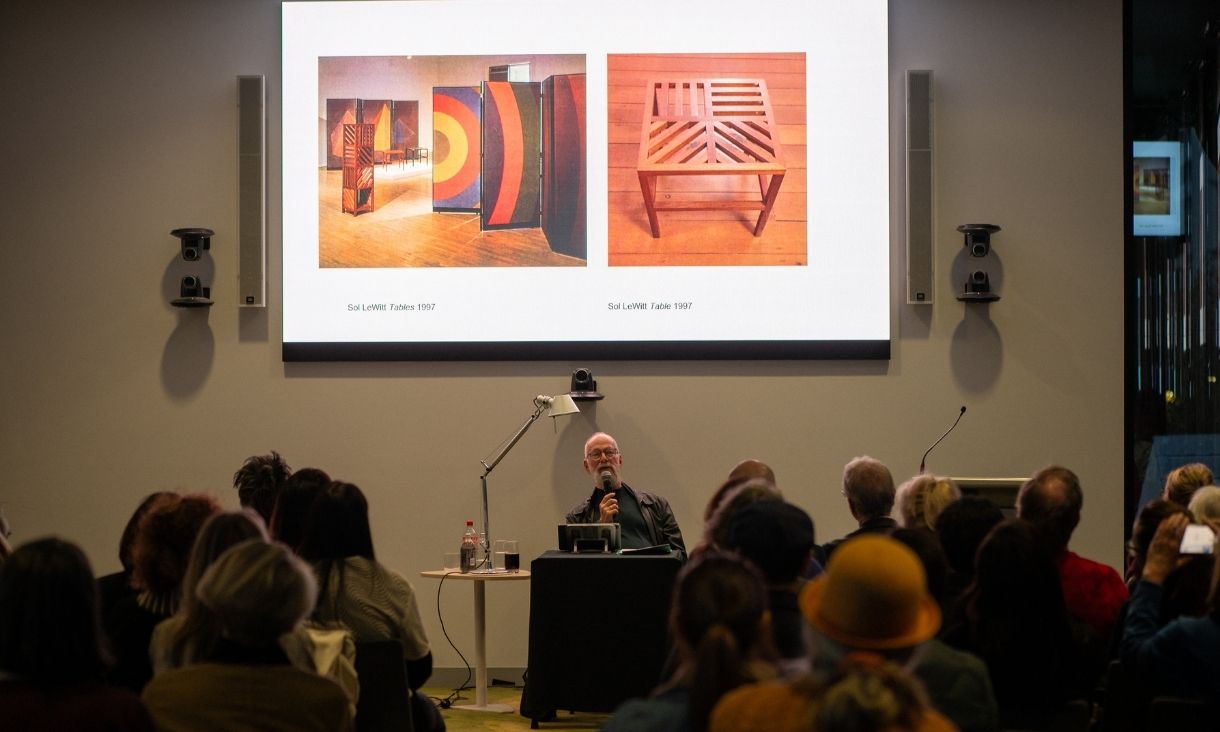 Image caption: John Kaldor at ‘Sol LeWitt: Recollections of a great artist and a wonderful friend’. A talk by John Kaldor AO, for ‘The Concentric Influences of Sol LeWitt: Foundations, Pivots and Place’, RMIT Gallery, Melbourne, 2026. Photo by Keelan O’Hehir.
 A lasting legacy
Kaldor invited LeWitt to Australia on two occasions, commissioning Kaldor Public Art Project 6 (1977) and Kaldor Public Art Project 11 (1998).
In 2022, Kaldor Public Art Project 37, a posthumous collaboration, brought together LeWitt’s work with Aboriginal art and music in Sol LeWitt: Affinities and Resonances at AGNSW.
Reflecting on RMIT Gallery’s current exhibition, Kaldor praised the work on display, noting LeWitt’s enduring influence on contemporary practice.
“It’s a great privilege to see such a moving work from Sol LeWitt,” Kaldor said about the large-scale drawing, Wall Drawing #123A, currently exhibited at RMIT Gallery.
“It’s very simple but very elegant, moving and, in a funny way, an emotional work. Melbourne is very fortunate to be able to have that.”
“Sol LeWitt’s influence lives on and on and on,” he said.
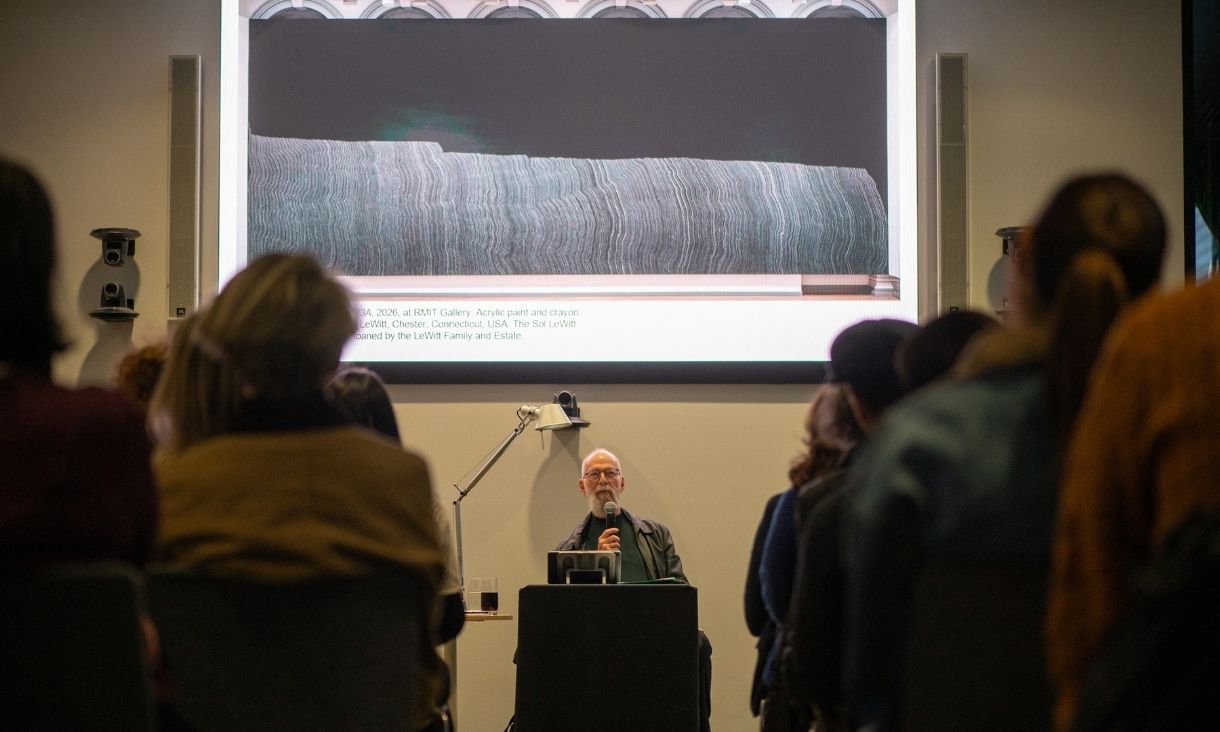 Image caption: John Kaldor at ‘Sol LeWitt: Recollections of a great artist and a wonderful friend’. A talk by John Kaldor AO, for ‘The Concentric Influences of Sol LeWitt: Foundations, Pivots and Place’, RMIT Gallery, Melbourne, 2026. Photo by Keelan O’Hehir.
 Professor Stead said that it was a privilege to hear from Kaldor about the inner workings of such an influential artist through the memories of his close friend, and said the evening was, “a very generous, intimate, warm and fascinating conversation, that not only reveals more about Sol as a person, but also the social milieu through which both Kaldor and LeWitt lived.”
The Concentric Influences of Sol LeWitt: Foundations, Pivots and Place is open at RMIT Gallery until 29 August.