While many people know us best for our weather forecasting, the Bureau of Meteorology is home to a diverse community of scientists. Some of our experts work across weather, water, climate, ocean, fire, space weather, hazards and social science.
Mika Peace
After having worked in a variety of roles across the bureau, including forecasting, training, and aviation, Mika Peace identified fire research as an increasingly important area of work and decided to specialise in it.
Mika works as a research scientist in the High Impact Weather team. She spends her time studying fire and its interactions with the landscape and the atmosphere.
When there is a fire, Mika investigates and asks; ‘What kind of fire behaviour are we going to see?’, ‘What kind of smoke plumes and clouds are going to develop?’ and ‘How fast is it going to move?’
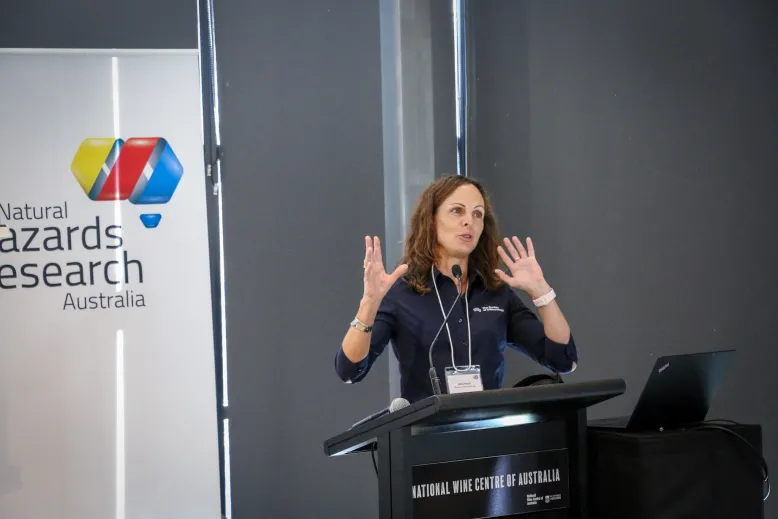
Mika sharing her research
Mika spends a lot of time collaborating with fire agencies to dissect major fire events, understand what happened, and capture learnings for next time.
“One of the things I really like about my job is seeing the model outputs we’re producing in the research space match what occurs in the real world,” said Mika.
“It’s also exciting seeing how the science we do makes a difference in the decisions that the fire agencies make on fire grounds.”
Mika’s favourite part of her role as a scientist is using research tools to help people learn and understand new things, which ultimately helps them make safer decisions on fire grounds.
Joshua Soderholm
Joshua is a senior research scientist whose work focuses on thunderstorms and hail.
“I was always interested in thunderstorms,” said Joshua. “I grew up in an area of Brisbane where we frequently saw storms coming, but they split around us and never quite hit us, so I was always interested in learning how they work.”
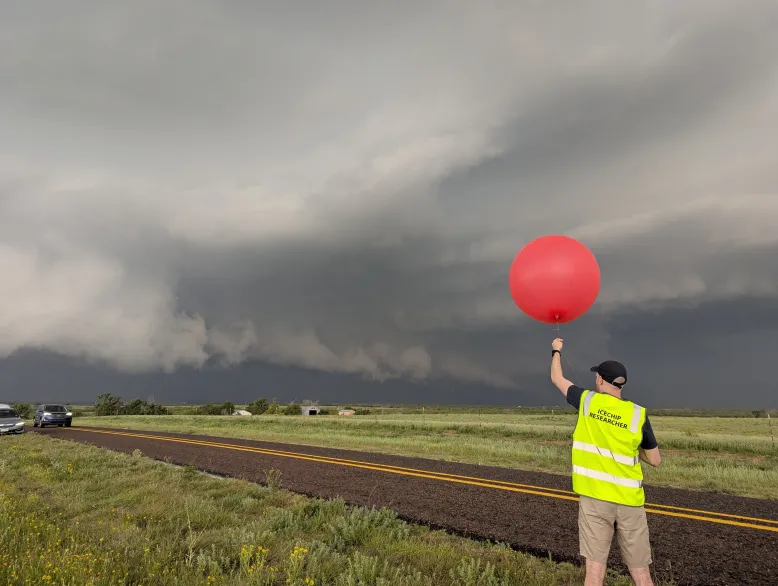
Joshua releases equipment during a field trip
Joshua said the best part of his role as a scientist is being able to make a difference in a field that gives him plenty of opportunities to focus on what he loves and get out in the environment and enjoy the weather.
Joshua’s research currently focusses on improving the production of short-term thunderstorm forecasts. “We’re experimenting with using machine learning to better integrate various observations such as lightning strikes, rainfall and wind, into forecast guidance,” said Joshua. “We collect these observations from various places including radars, satellites and weather stations.”
Another part of his job is studying hailstones.
“Hailstones are a black box of thunderstorms,” he said. “They are made up of layers which tell us about the conditions of the storms in which they were formed, such as temperature and moisture.”
“We can’t fly an aircraft through a storm to measure these things, so hailstones are pretty much our only way of determining what’s happening on the inside.”
Joshua’s research helps the thunderstorm team make decisions about thunderstorm warnings, short term forecasts, and other bureau products and services.
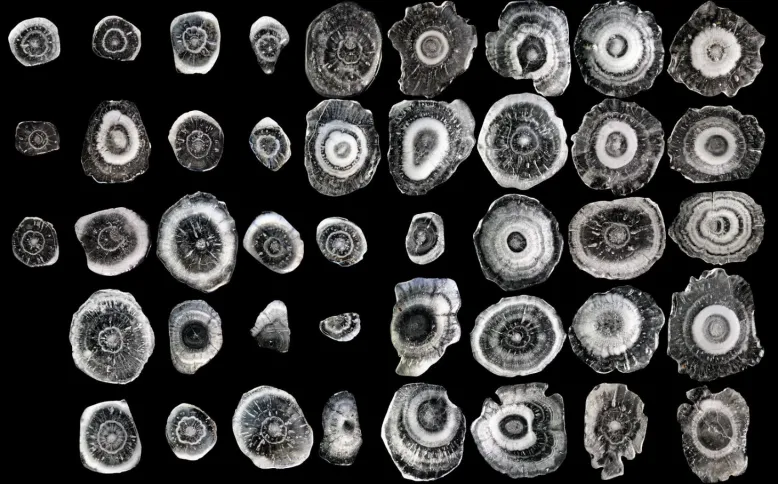
Rings found inside hailstones provide scientists with useful information about thunderstorms they formed in
Carla Mooney
Carla Mooney is a social scientist and has had a lifelong interest in people and the environment.
In her role, Carla researches how people perceive and act on warnings and information in high impact weather events, such as floods and thunderstorms.
“In a severe weather situation, there’s often a gap between what people say they want to do, and what they actually do,” she said. “You can have the best information in the world, but if your children are stuck and there’s a flood, you’re not going to leave like the warning suggests.”
“We try and bridge that gap as much as possible by researching what information people need, when they need it, and how they perceive the risk associated with the weather event.”
In her research, Carla conducts regular surveys and community workshops. She asks questions such as: ‘What are people’s concerns about the weather?’, ‘What colours best encourage people to act on weather warnings?’, ‘Why do some people decide not to leave when warnings suggest otherwise?’ and ‘What sort of language is useful in a severe weather situation, for example, should we call it a thunderstorm, or a thunderstorm and lightning?’.
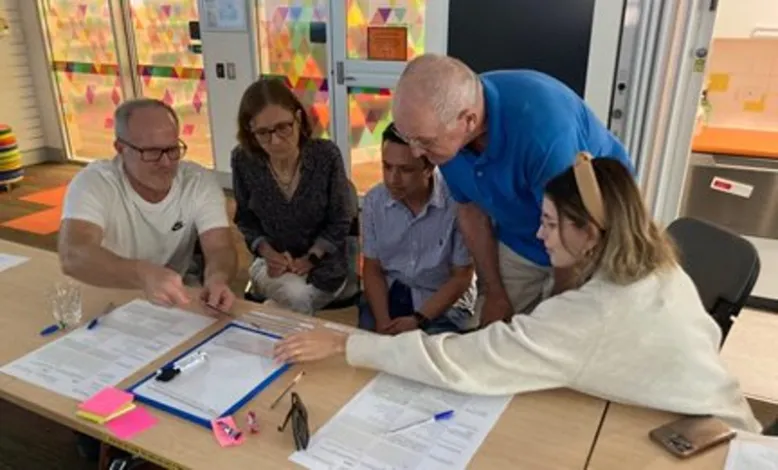
Community members completing a warning design exercise at a workshop that Carla organised
Carla then works to bring community perspectives into the design of our future high impact weather services, such as weather warnings.
Carla’s favourite part about being a scientist at the bureau is working on meaningful projects and being surrounded by curious people who are really interested in what they’re doing.