When scientists discovered that increasing the ocean’s natural alkalinity could enhance seawater’s capacity to absorb and store carbon dioxide (CO₂), the idea quickly gained attention as a potential geoengineering solution to climate change.
Early visions suggested it could remove gigatonnes of CO₂ from the atmosphere each year. But the reality is far more complex.
In a new study published in Nature Reviews Earth & Environment , scientists urge that the focus of ocean alkalinity enhancement (OAE) be shifted from a science fiction-flavoured geoengineering intervention to a practical, flexible tool for local CO2 management.
“We argue that integrating small-scale OAE into diverse local contexts could deliver the achievable carbon mitigation goals defined by individual governments and communities,” said lead author Associate Professor Lennart Bach who is a biogeochemical oceanographer at the University of Tasmania’s Institute for Marine and Antarctic Studies (IMAS).
“For example, a city council might realise that its emissions from domestic wastewater could be mitigated through alkalinity from silicates. Or a regional wind farm might not need to be shut off during excess wind, if the energy is used to increase seawater alkalinity electrochemically.
“Upscaling could be achieved across these local areas, but only if those pathways are environmentally responsible, demonstrably carbon negative, and receive public trust,” Associate Professor Bach said.
Understanding environmental connections
Ocean alkalinity enhancement reduces acidity in seawater and converts CO₂ into mainly inert bicarbonate ions. This chemical reaction enables bicarbonate ions to be stored en masse in the ocean for millennia.
“The chemistry is scientifically understood and predictable, and the available evidence suggests storing carbon as bicarbonate would not harm marine life,” IMAS researcher and co-author, Dr Damon Britton said.
“In fact, natural alkalinity is transported by rivers into the sea, and has been regulating the climate naturally throughout Earth’s history. Without it, our climate would be utterly inhospitable to human life.”
However, while OAE is versatile and can be adjusted to a range of ocean environments, Dr Britton said OAE alters the environment in other ways in addition to simply increasing alkalinity.
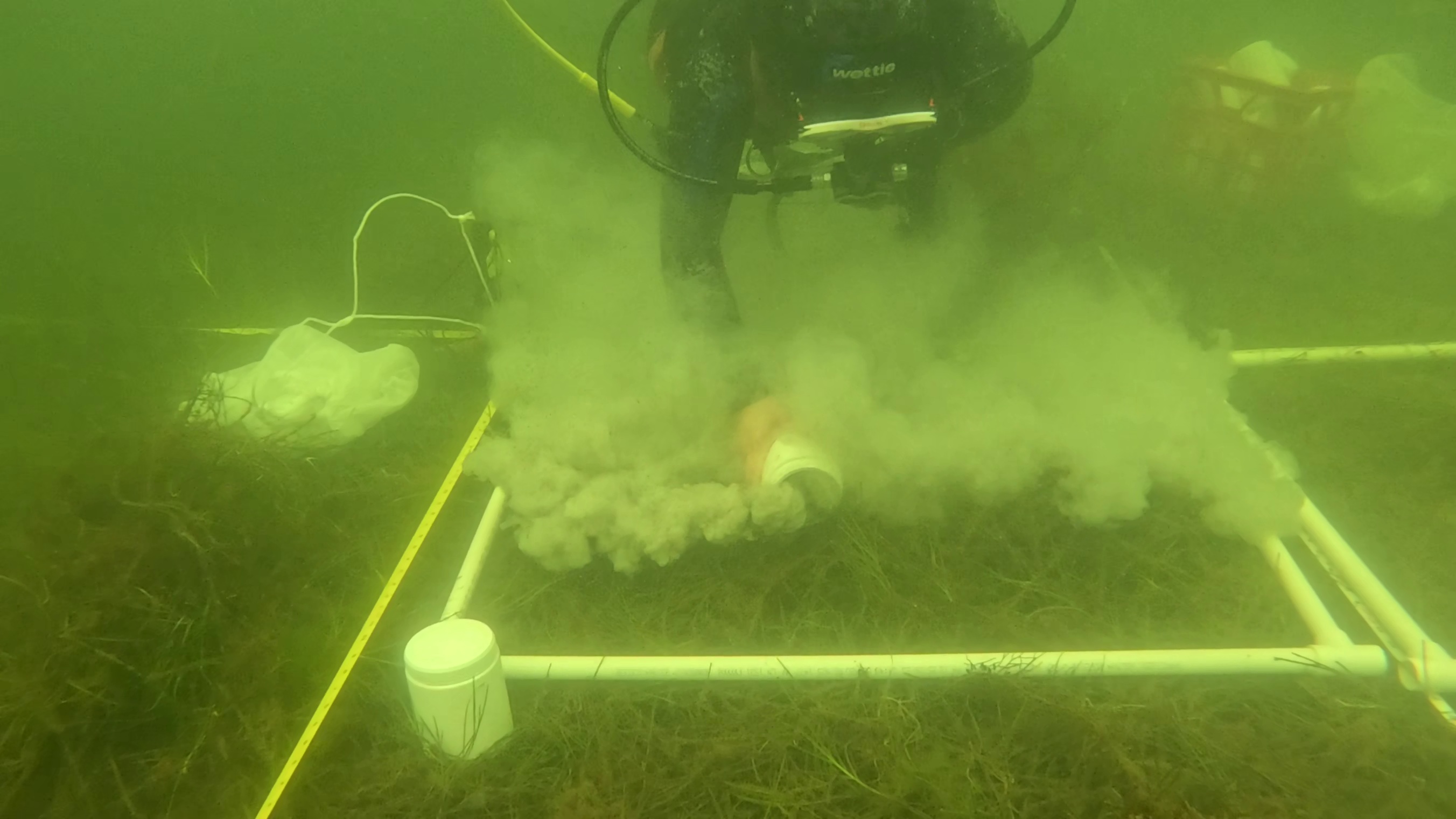
“Depending on the method of alkalinity addition, OAE can increase turbidity and introduce additional elements such as trace metals alongside the alkalinity,” he said.
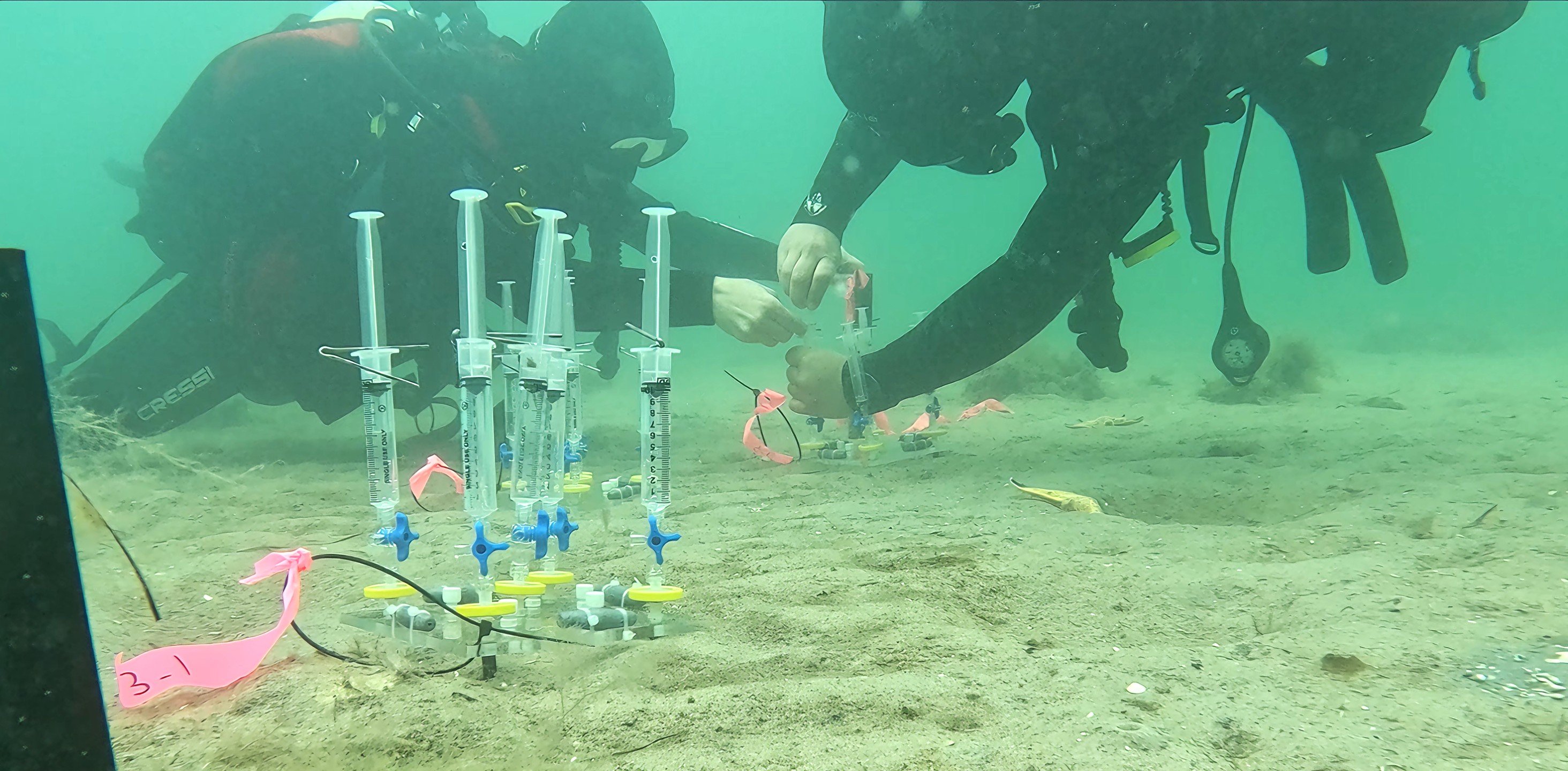
“Understanding how these and other perturbations from OAE interact with local marine life is critical to understanding where small scale OAE can be safely implemented, and whether the environmental risks outweigh the benefits.”
Exploring the possibilities
“In theory, the ocean has more than enough ‘space’ to safely sequester all human emissions. We would only need to increase the mean alkalinity of the ocean by about 2% to store all of the approximately 2,660 billion tonnes of CO₂ released since the industrial revolution,” said IMAS researcher and co-author Dr Tyler Rohr .
“The problem is that it’s not obvious how we could evenly distribute that much alkalinity across the global ocean, and ensure it is in contact with the atmosphere long enough to absorb its full potential of CO₂.
“In practice, highly concentrated alkalinity must be delivered to the ocean from some specific point sources and obtained from material that may contain contaminants,” he said.
The study highlights that early modelling work has focused on what happens once alkalinity is diluted across the ocean, but has not demonstrated how that would happen.
“The diverse range of ways alkalinity could be sourced and distributed offers options to tailor deployments to specific local environments, but current modelling tools are not yet able to quantify those trade-offs,” Dr Rohr said.
“To really explore the possibilities for OAE, we need a more advanced modelling toolkit – one that does not ignore chemical feedbacks and environmental impacts that may matter at the local scale.”
Starting small for local uptake
Shifting the focus from intimidating gigatonne scales to integrating OAE into local net-zero targets would enable a variety of groups to become involved in overcoming local and diverse challenges.
“Our study highlights the need to move away from a globally uniform perspective and towards locally-designed and context-relevant research, policy and practice,” Associate Professor Bach said.
“Incentivising small-scale projects is key to building the uptake of OAE, without an implied obligation to scale up to unrealistic targets.”