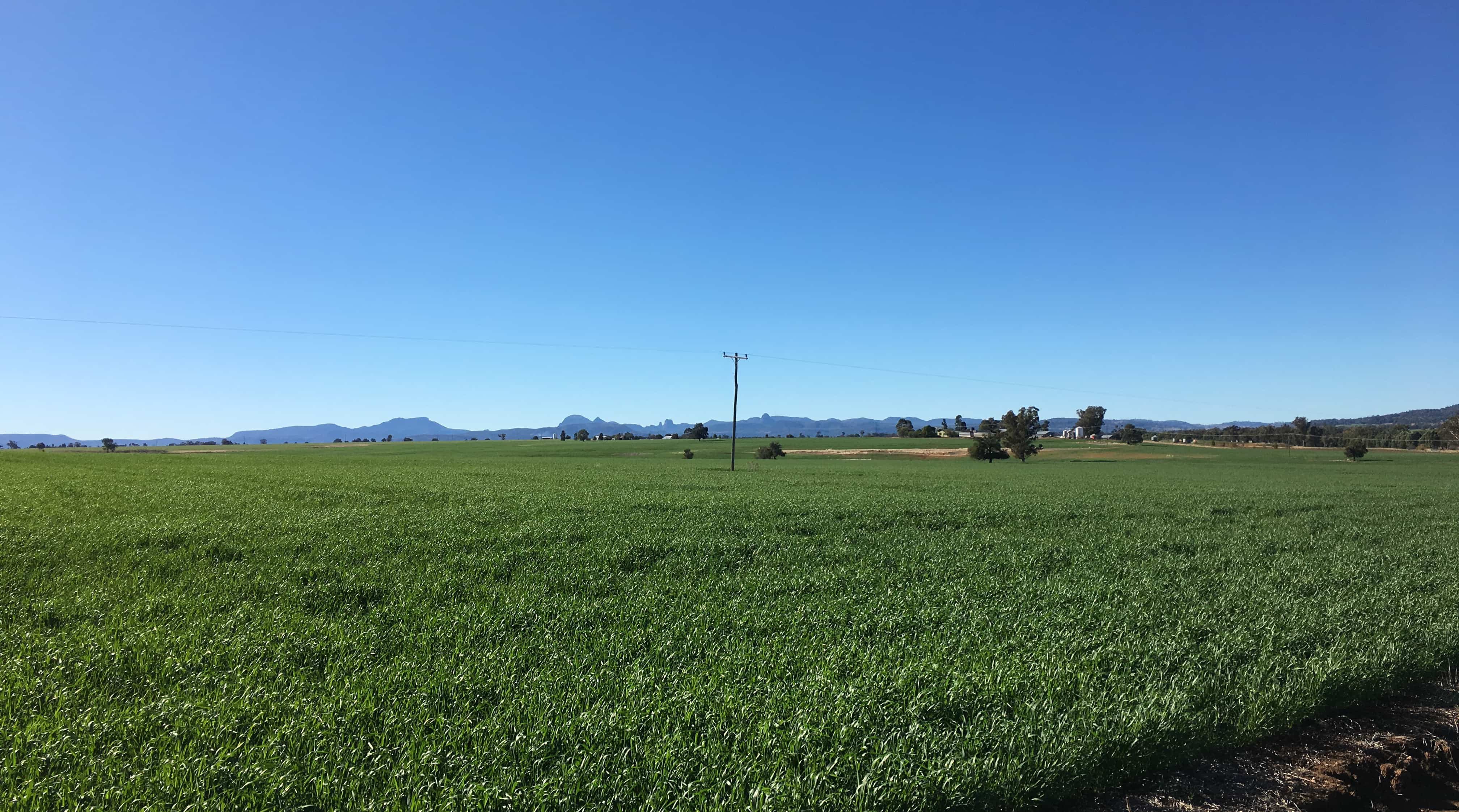
Riparian restoration works in the Lockyer catchment.
(Photo credit: Port of Brisbane Pty Ltd
)
Fixing erosion and planting vegetation along riverbanks upstream of Brisbane could generate a return on investment of up to 400 per cent, a study has found.
University of Queensland environmental economist Dr Joseph McMahon led research into the costs and benefits of riparian restoration along 95 kilometres of Lockyer Creek, a major source of sediment that impacts drinking water for Brisbane residents.
Dr McMahon said the research found benefits for water quality, public health and the environment.
“Riparian restoration involves replanting native vegetation, fencing riverbanks and installing off-stream watering points for livestock,” Dr McMahon said.
“Stable vegetated riverbanks reduce erosion, capture sediment, limit the movement of pathogens into waterways, store carbon and improve biodiversity.”
Co-author Associate Professor Jim Smart, from Griffith University, said previous research found most of the sediment transported through the Brisbane River likely originated from riverbank erosion.
“Our study showed riparian restoration can reduce contaminants entering the water,” Dr Smart said.
“When combined with effective treatment; it’s a cost-effective way to help maintain drinking-water quality for the community.”
Dr McMahon said the research also found riparian restoration could substantially reduce the risk of water supply disruptions during major flood events.
“Based on data between 2008 and 2014, before restoration there was about a 5 per cent chance that muddy water conditions were severe enough to disrupt the drinking-water treatment plant during floods,” he said.
“After restoration, the likelihood fell to about 0.4 per cent.”
Dr McMahon said many more benefits of restoration would accrue over time.
“Restoration stores carbon as vegetation grows,” he said.
“It also reconnects fragmented habitat corridors, creating substantial biodiversity benefits across the landscape.
“We estimated newly planted trees would take around 20 years to become sufficiently established to withstand flood events of the scale experienced in 2011 and 2022, but they would be beneficial much sooner for smaller flood events.”
Seqwater, which manages South East Queensland’s water supply, was a project partner.
Seqwater Asset Manager Stephanie Pruss said the findings aligned with the long-term planning typically used by water managers.
“Water utilities routinely plan for infrastructure that supports communities over many decades, including dams, treatment plants, pipelines and the catchments that supply our drinking water,” Ms Pruss said.
“Although the full benefits are realised over the long term, this research provides greater confidence that these investments deliver measurable value, supporting affordable and reliable water services for communities while also improving environmental outcomes.”
Dr McMahon said realising the potential of riparian restoration to address complex water challenges required a coordinated response.
“Regional efforts are already underway, such as the Resilient Rivers South East Queensland strategy,” he said.
“But our study provides evidence for decision-makers of the scale and distribution of costs and benefits, making investment in riparian restoration more compelling.
“The various approaches to achieving greater investment and increasing riparian restoration, such as through water funds and payments for ecosystem service schemes, are an area of ongoing research.”
Read the research published in Ecosystem Services.
Collaboration and acknowledgements
The study began as PhD research at Griffith University’s Australian Rivers Institute and was completed as part of the Reef Catchments Science Partnership .