Tsunami and Australia are two words not commonly paired together, so many might be surprised to learn tsunamis are observed in the Australian region approximately once every other year.
The Bureau of Meteorology defines a tsunami as a series of long waves which are caused by large-scale ocean disturbances, such as earthquakes and undersea landslides. Tsunami waves are typically hundreds of kilometres in length and can travel right across an ocean basin.
Most tsunamis recorded along Australia’s coastline are small. They typically pose a threat to people on boats or swimming near the water’s edge. However, a larger and more powerful tsunami, while improbable, remains a real possibility.
The bureau plays an important part in Australia’s tsunami preparation and response.
International tsunami collaboration
Tsunamis often cross international borders. This is why the bureau frequently works alongside international partners to effectively prepare for this hazard.
Regular meetings with the United Nations Educational, Scientific and Cultural Organization (UNESCO’s) Intergovernmental Coordination Group for the Indian Ocean Tsunami Warning and Mitigation System (ICG/IOTWMS) are one of the primary ways we collaborate internationally.
ICG/IOTWMS consists of senior representatives from 27 countries that border the Indian Ocean. Recently, they met for a three-day workshop at the bureau’s Perth office.
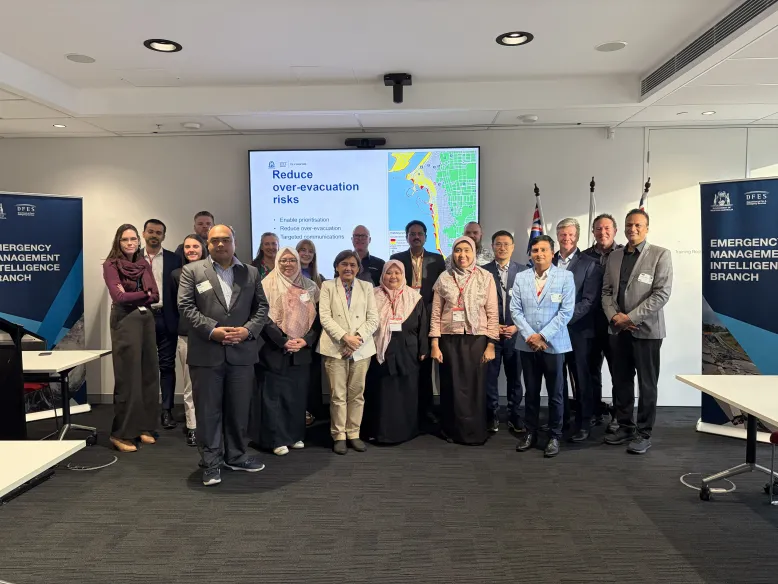
Delegates of UNESCO’s ICG/IOTWMS
The bureau’s Todd Smith attended the meeting. Todd is the manager of the Hazard Preparedness and Response team in Western Australia and the Northern Territory. He is also the National Decision Support Lead for tsunami and coastal hazards.
“Working groups are a really important mechanism for us to influence, but also to learn from other countries,” he explains.
“The IOTWMS has been on a journey to improve a whole range of things to do with warnings for tsunamis.”
Each country works on their own tsunami preparedness activities. “The breadth and complexity of all the tsunami activities that these countries work on is phenomenal,” he said.
“This includes collecting observations from undersea fibre optic cables and exploring emerging technologies, issuing the warnings and improving the modelling, clarifying communication channels and the standard operating procedures that make it all connect in an event, right through to community engagement and risk mapping.”
When they meet, delegates are sharing best practice and supporting each other with projects, as well as sharing data.
“No country can really just go and do it on their own. So, this collaboration, sharing of information and knowledge, and building partnerships is just so important,” Todd said.
As part of the visit, the group visited the Department of Fire and Emergency Services (DFES), who are responsible for managing any tsunami events in Western Australia.
“It was an opportunity to share knowledge and experiences, and for the delegates to see the State Operations Centre, what it looks like and what it would look like in a tsunami event.”
“DFES shared what their role is in managing tsunamis. They also shared an inundation mapping project that they’ve been working on.”
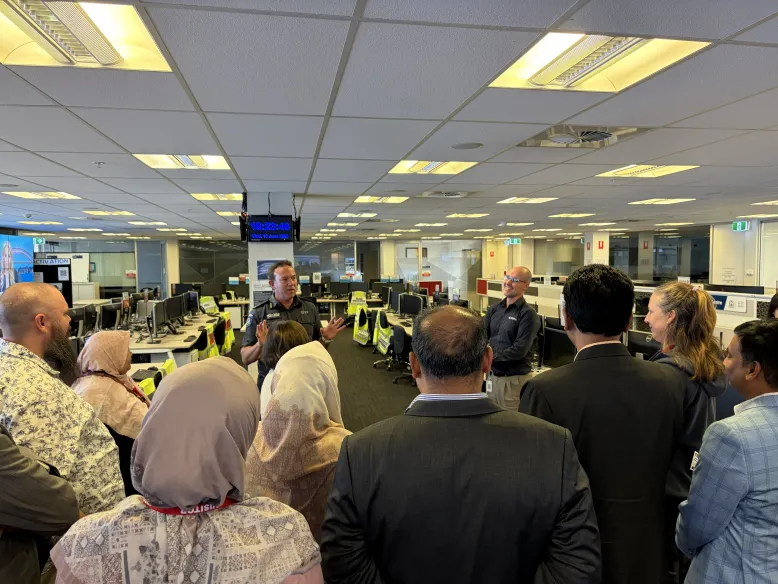
Delegates of ICG/IOTWMS visiting DFES
Delegates were additionally given a tour of the bureau’s Perth office.
“We do a lot of collaborating locally and domestically, but it became really clear sitting in and observing the interaction with our team, you could really see the benefits of that international collaboration,” Todd said.
Australia is well prepared to respond to tsunamis when they occur. This is a result of the effective processes of the JATWC, and regular collaboration with partners on tsunami preparedness and response.