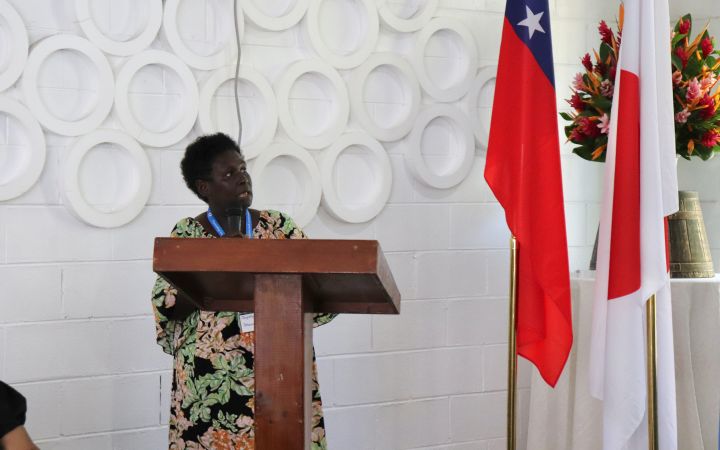
- Joycelyn Lamu is a teacher in the Solomon Islands.
- She developed a disaster risk reduction project through the UNITAR’s Women’s Leadership in Tsunami-based Disaster Risk Reduction Training Programme.
- The UNITAR programme started online in 2025 and concluded with an in-person workshop in Apia, Samoa, in March 2026.
- Joycelyn’s project evolved from a proposal for emergency shelters into a broader preparedness plan centred on establishing a school policy and committee, training staff, conducting drills and involving the community.
- Joycelyn believes students can spread disaster risk knowledge widely. She is more confident she can lead effective preparedness efforts in her community.
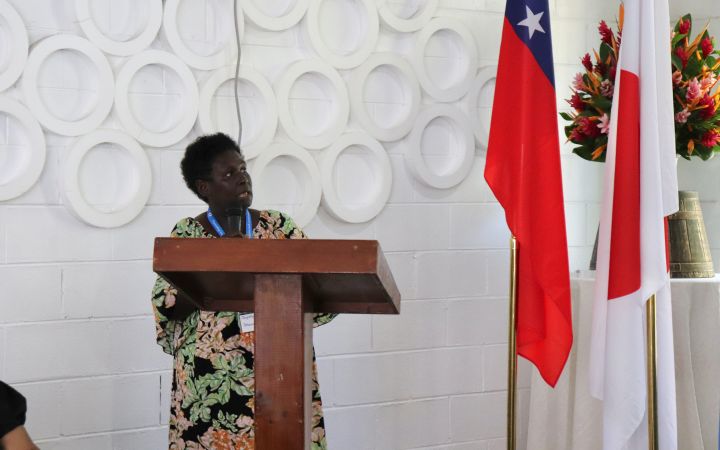
30 September, Hiroshima, Japan – Joycelyn Lamu knows that experiencing a disaster and being prepared for one are two different things. Her community in the Solomon Islands faces earthquakes, tsunamis and tropical cyclones. Yet practical information about how to prepare and respond has not always reached the people who need it.
People in my community did not have well-informed information about disasters. They just experienced it and then that’s it. We did not have any mechanisms in place where we can help people [understand] what to do before, what to do during and what to do after the disaster.”
A low-lying school prepares for disaster risks
In 2025, Joycelyn was a teacher and was head of a secondary school that was located on a low-lying island close to the sea. The school served approximately 650 students, as well as around 150 staff members and their families. With no nearby hills offering an obvious refuge during a tsunami, preparedness was a practical concern for the school community.
According to Jocely, schools and communities in rural areas sometimes receive disaster risk reduction training, but these activities tend to be one-off events with limited practical follow-up. This gap motivated her to seek knowledge that could help her school move from general awareness towards a more organized approach to preparedness.
Learning with UNITAR: Building a practical plan
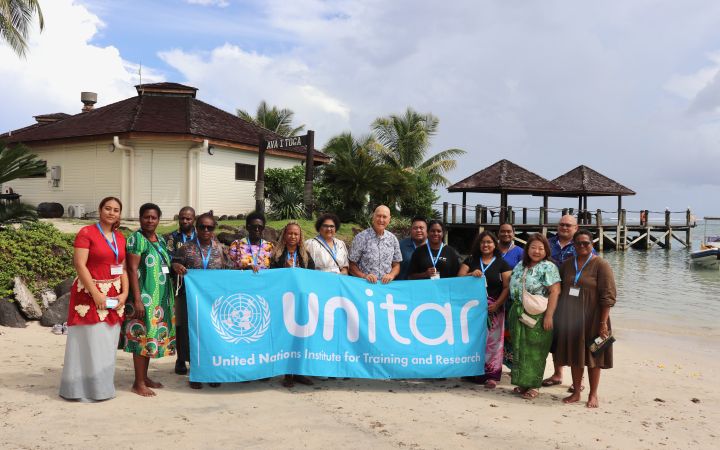
Joycelyn heard about the UNITAR Women’s Leadership in Tsunami-based Disaster Risk Reduction Training Programme for World Tsunami Awareness Day from a close relative and was drawn to its content. The programme, funded by the Government and People of Japan, aimed to enhance the skills of agents of change from Pacific island and Asian countries in disaster risk reduction and inclusive leadership.
From September to November 2025, Joycelyn joined over 1,100 participants from 83 countries across the Asia-Pacific in the online first phase , where she learned about gender-inclusive leadership, core disaster risk reduction concepts, and ecosystem- and community-based approaches to disaster risk reduction. She also developed an inclusive disaster risk reduction plan to build an evacuation route and emergency shelters for her students and community.
Her plan and engagement earned her an invitation to join 11 others in the programme’s second phase, an in-person workshop held in Apia from 9 to 12 March 2026 for participants from the Pacific islands. Over the four days, the participants engaged in expert lectures, group exercises, discussions and study visits focusing on disaster resilience in the Pacific, and further develop their project plans.
Starting with policy and responsibilities before construction
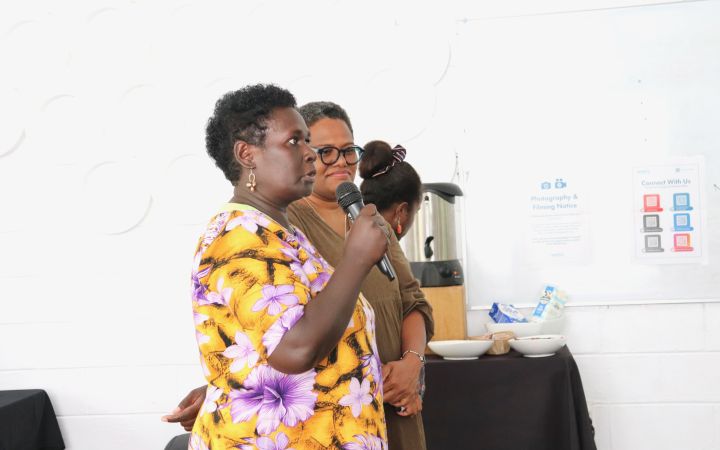
Joycelyn’s project plan initially focused on establishing an evacuation route and constructing two emergency shelters, one for female students and one for males. Signs along the route would use words and images and consider the needs of children, older people and persons with disabilities.
During the Apia workshop, however, Joycelyn began to look beyond infrastructure. “I look at all the presentations and [shared] my ideas with other peers,” she said. “My project changed and then I have other ideas.”
She decided instead to start with developing a school preparedness policy and committee. These would allow the school to define responsibilities, establish a timeline and identify the sectors and stakeholders who should be involved before moving ahead with physical construction.
All those things mean that my school is prepared. And then later we will be able to build [an evacuation] route and emergency shelters.”
Her proposed approach would involve training staff and student leaders, conducting drills and consulting the wider community. Community members and businesses could contribute through fundraising, materials or labour.
Preparing students to carry knowledge into their communities
Joycelyn believes schools can contribute to wider community preparedness because what students learn in school travels quickly beyond the classroom. The students are messengers who can discuss risks and practical actions with their families.
If I have 40 students in my class, then the message will quickly pass to others. That’s why it’s important to have disaster risk reduction in schools.”
Through the programme, Joycelyn gained access to practical examples and tested her ideas with peers from across the Pacific. She expressed her appreciation to the Government and People of Japan for supporting the programme. While she is no longer at the same school as when she completed the UNITAR programme, Joycelyn still hopes to find a way to translate the plan into practical steps.
After this programme, … I am confident that I will be able to organize something in terms of disaster risk reduction in my community so that we can pass the information to everybody.”
Joycelyn is hopeful that improving awareness and preparedness in school communities will reduce the impact of disasters and save lives.