Key Facts:
Barcelona is the starting point for discovering five distinctive autumn landscapes across Catalonia.
The featured destinations can be added to a Barcelona itinerary as day trips or short extensions.
The five locations are La Fageda d’en Jordà, Bellmunt del Priorat, Sant Llorenç de Montgai, Boí and Santa Fe del Montseny.
October and November bring colourful forests, changing vineyards, pumpkin harvests and golden riverside scenery.
Experiences include walks through volcanic forests, vineyard trails, mountain villages, lakes and protected natural areas.
Cooler temperatures and fewer visitors make autumn an appealing season to explore beyond Barcelona.
Pumpkin harvests, volcanic forests and colourful vineyards reveal a side of Catalonia that many summer visitors never see.
Barcelona, Catalonia – 16 October 2026. Barcelona is often the starting point for discovering Catalonia, but autumn offers plenty of reasons to extend the journey beyond the city and explore the landscapes, villages and traditions that surround it.
Between October and November, the season moves gradually from the Pyrenees towards the lower valleys. Pumpkins are gathered in mountain villages, riverside trees turn gold, vineyards change colour after harvest and beech forests fill with copper leaves. Cooler temperatures and fewer visitors make this an especially rewarding time to explore the region.
These five places show how differently autumn unfolds across Catalonia, each revealing its own colours, landscapes and seasonal traditions.
1. La Fageda d’en Jordà: a forest growing on lava
La Fageda d’en Jordà is no ordinary beech forest. Its trees grow over an ancient lava flow created by the nearby Croscat volcano, within La Garrotxa Volcanic Zone Natural Park.
By late October, pale trunks rise above a carpet of copper leaves, while sunlight filters through a canopy of gold and orange. Walk beneath the trees and the loudest sound may be the crunch of leaves underfoot.
The flat, circular Joan Maragall Trail offers an easy 35-minute walk through the heart of the forest and is suitable for families. More active visitors can follow the longer 11-kilometre route connecting La Fageda with the Santa Margarida and Croscat volcanoes. This more demanding circuit takes approximately four hours and 20 minutes.
Visitors can also experience the forest on a horse-drawn carriage, a slower option that is particularly atmospheric during autumn.
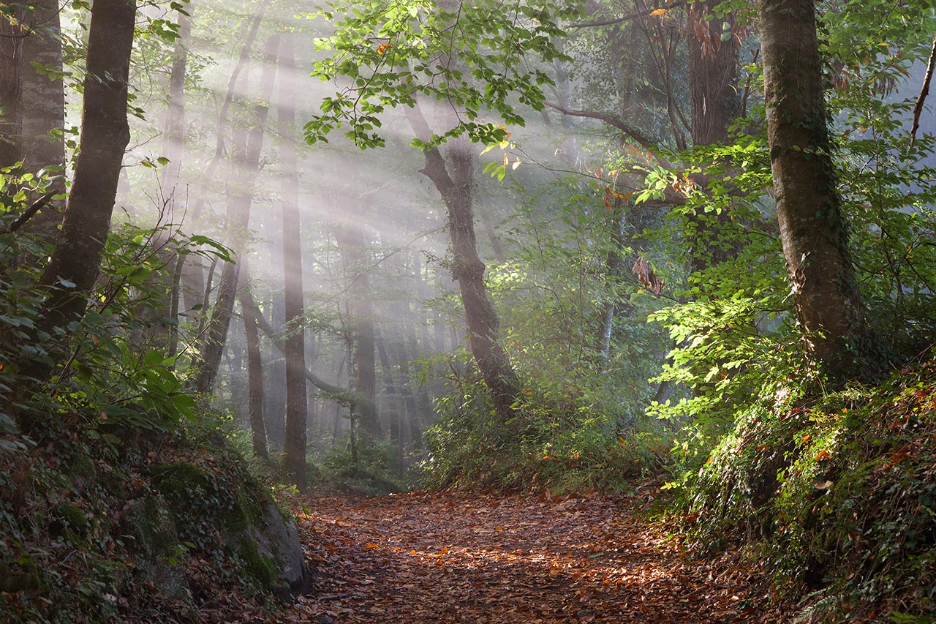
Sunrise at La Fageda d’en Jordà
2. Bellmunt del Priorat: vineyards after the harvest
Once the grapes have been collected, the Priorat vineyards begin another transformation. Their leaves turn yellow, orange and deep red, following the curves of terraces carved into the hillsides.
Around Bellmunt del Priorat, the colours contrast with llicorella, the dark slate soil closely associated with the character of Priorat wines. Late October and November are particularly beautiful, when the harvest activity has ended and a slower rhythm returns to the vineyards.
Walkers can follow the six-kilometre path between El Masroig and Bellmunt, a moderate route of around two hours through vineyards and old farming landscapes. An easy 19-kilometre cycling circuit also connects Falset, Bellmunt and Marçà in approximately 90 minutes. Complete the experience with a winery tasting or descend underground at Bellmunt’s former lead mine.
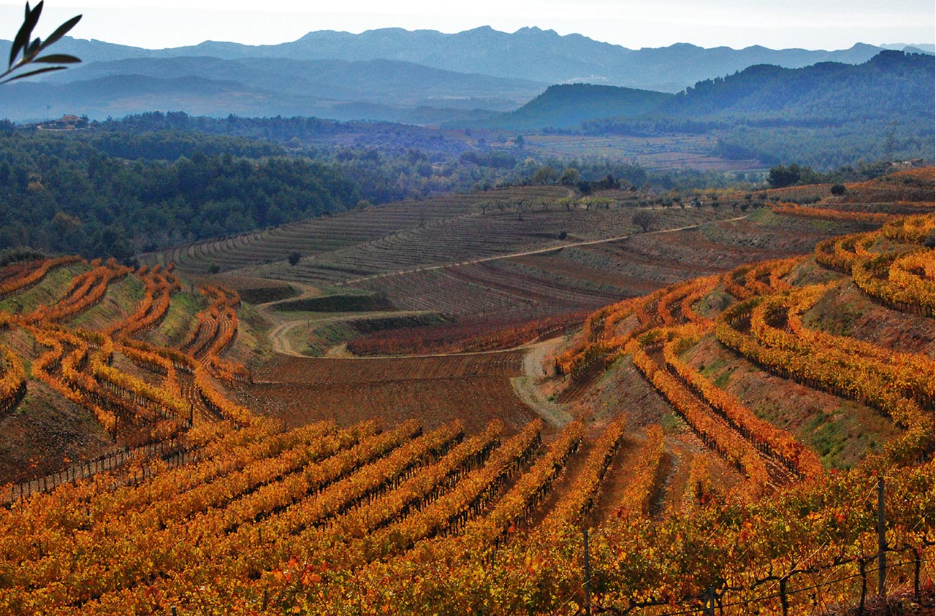
Terraced vineyards in Bellmunt del Priorat after the autumn harvest.
3. Sant Llorenç de Montgai: autumn reflected on the water
At Sant Llorenç de Montgai, autumn colours gather around the reservoir, where golden poplars are reflected beneath the reddish cliffs of the Pre-Pyrenees. The landscape forms part of the protected Aiguabarreig Segre-Noguera Pallaresa natural area, shaped by rivers, reservoirs and dramatic limestone walls.
October and November are especially beautiful, when the intense summer heat has faded and the riverside vegetation changes colour. A mostly flat circular walk around the reservoir takes approximately two and a half hours, passing through woodland and beside calm stretches of water. Birdwatching, kayaking and the historic Tren dels Llacs offer other ways to experience the landscape.
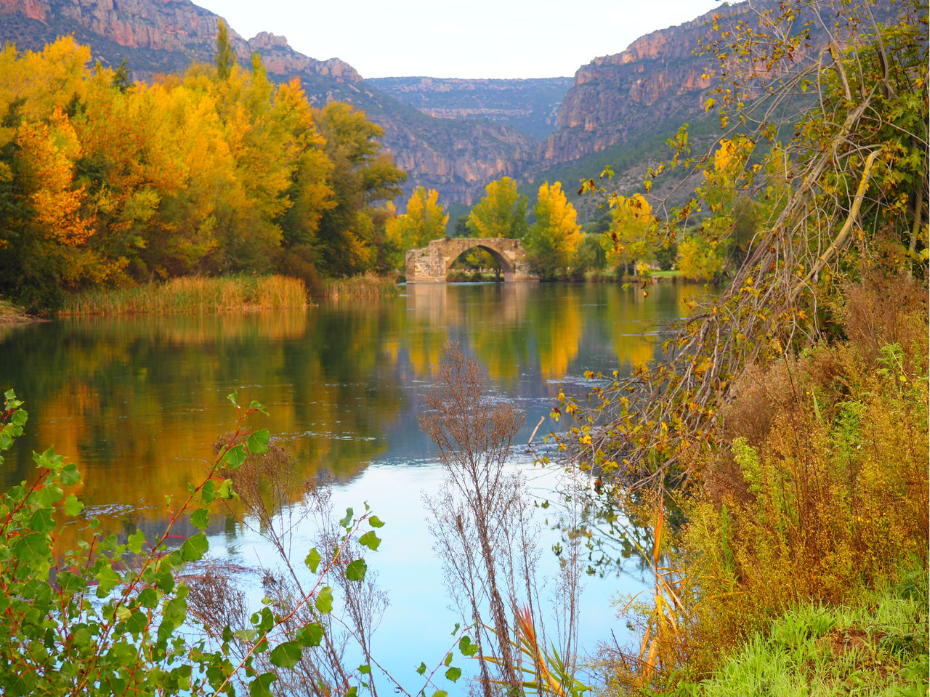
Sant Llorenç de Montgai: autumn reflected on the water
4. Boí: an autumn harvest beneath the mountains
Autumn arrives early in the Vall de Boí. In the village of Boí, pumpkins are gathered from small vegetable gardens overlooked by stone houses and the steep slopes of the Pyrenees.
The scene captures a quieter side of mountain life, where the changing season is experienced not only in the forests but also through the produce collected before the first frost. October is an especially atmospheric time to visit, with flashes of orange appearing among the gardens and cooler light falling across the valley.
The experience can be combined with walks between historic villages, visits to the valley’s Romanesque churches or an excursion into nearby Aigüestortes i Estany de Sant Maurici National Park.
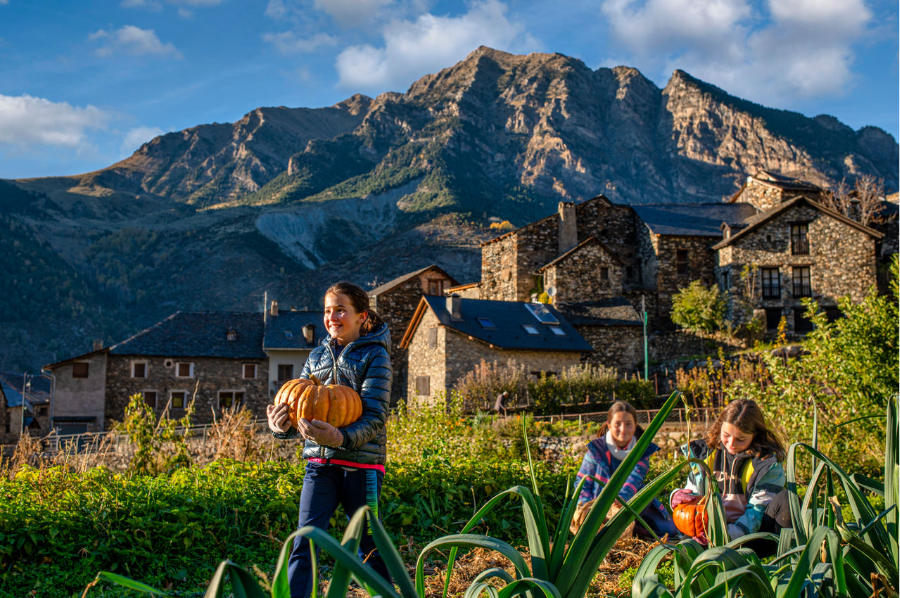
Children harvesting pumpkins in Boí during autumn
5. Montseny: autumn around Santa Fe Lake
Less than two hours from Barcelona, Santa Fe del Montseny offers one of the most recognisable autumn landscapes near the city. During late October and November, the beech forest turns copper, gold and orange, framing the lake and reflecting across its calm surface.
An easy circular walk leads through the forest and around the water, making it a relaxed option for experiencing the season. More active visitors can continue along the Empedrat de Morou route, climbing through dense woodland towards rocky viewpoints overlooking the Santa Fe valley.
It is an accessible change of scenery that feels far removed from Barcelona’s Mediterranean streets.
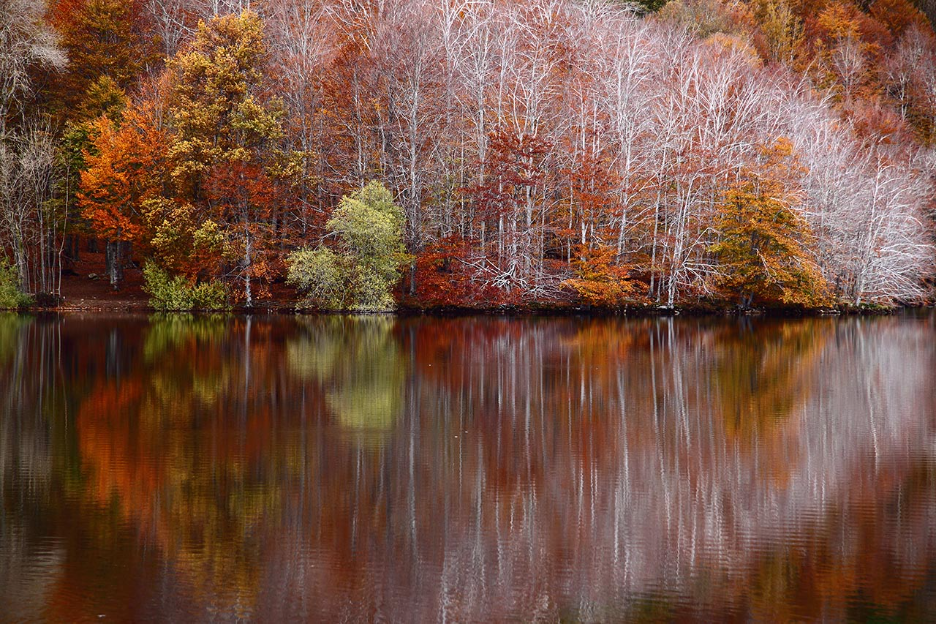
Autumn at Santa Fe Lake in Montseny Natural Park
About us:
The Catalan Tourist Board is the official tourism promotion body of the Government of Catalonia, a region in north-eastern Spain whose capital is Barcelona. The organisation is responsible for positioning Catalonia internationally as a leading travel destination, promoting its culture, gastronomy, nature, heritage, meetings industry and premium travel experiences.
Through its headquarters in Catalonia and its network of offices abroad, the Catalan Tourist Board works with the tourism sector to promote a high-quality, sustainable and diverse tourism model.