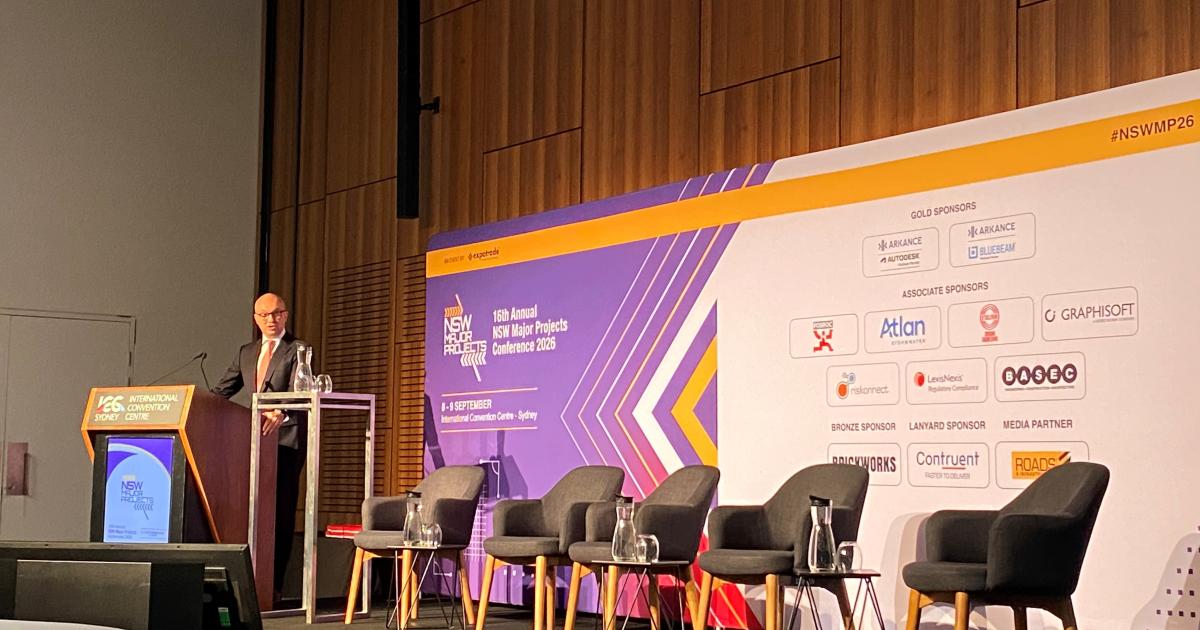
Big thanks to Misha for the introduction and the invitation to speak with you again this morning.
We’re on Ngunnawal country of course – so I acknowledge elders, culture and traditions in the customary way.
This Summit always draws such an impressive crowd of chairs, CEOs and leaders.
There are at least 7 reasons there couldn’t be a more important time to catch up with you all and in the time available I’m going to touch briefly on each of them.
The first is to take stock of what we’ve achieved together.
We aren’t just defending super we are strengthening it together.
So much progress has been made.
All of it familiar to you but worth reminding people because this is the sort of progress our opponents will put at risk.
We enshrined the objective of super in law.
We increased the Super Guarantee to 12 per cent.
We’re now paying the SG on Paid Parental Leave, which means around 200,000 parents have an extra $285 million in their super in the first year.
Payday super means fewer workers are missing out.
We boosted the Low Income Superannuation Tax Offset benefitting more than a million workers.
We also made the tax concessions more sustainable, making the system fairer from top to bottom.
Not a bad list, and more to do.
All up already, these reforms mean a young low‑income worker taking a couple of periods of parental leave over 10 years could see a $28,000 increase in their super at retirement.
The second set of points I want to make today is about the Intergenerational Report I’ll be releasing on Monday 21 September.
The IGR is Treasury’s best sense of how changes in our economy and society will play out over the next 4 decades.
Superannuation will be front and centre.
That’s because super is absolutely crucial to making the future work for us not against us.
It is one of the most important ways we will outperform the world in the decades to come.
There is no better or broader antidote to the serious intergenerational pressures we face together.
Because of super, no other developed country will do a better job than Australia at taking pressure off the pension system, while boosting retirement incomes at the same time.
Today I want to give you an early peek at some of the most important numbers in the document that go to this.
In the new Treasury projections, the number of Australians over Age Pension age will almost double to around 9 million by 2066.
But the IGR analysis shows the share of older Australians receiving a pension or income support payment is expected to fall, from 66 per cent last year to 52 per cent by 2066.
This means spending on age and service pensions is projected to fall from 2.3 per cent of GDP last year to 1.8 per cent in 2066.
In comparison, that number is nearly 10 per cent by 2060 in the UK, 8 per cent in Canada, 7 per cent in New Zealand, and 6 per cent in the US.
If Age Pension expenditure in Australia was still at 2.3 per cent in 2065-66, the annual bill would be $31 billion higher in today’s dollars.
Super takes serious pressure off social security outlays, and makes the budget much more sustainable as a consequence.
That is phenomenal in an ageing society and it’s essential.
Think of it this way: total pension spending is expected to go up in most OECD countries, in Australia spending as a percentage of GDP will go down.
Having super at the core of the best retirement incomes system in the world means pension spending as a share of the economy will be the lowest in the OECD but even as those costs moderate, retirees will have more economic security not less.
The median retirement age balance is set to approach $450,000 over the next decade.
That’s a big leap from a bit over $200,000 in the latest data – another considerable improvement on the $115,000 a decade earlier.
And drawdowns from superannuation are projected to double to around 6 per cent of GDP by 2066.
The $4 trillion super pool you manage is also a key driver of the growth in foreign income inflows, supporting our gross national income.
So while it’s boosting retirement incomes it’s helping to unlock investment here and abroad, reduce reliance on the pension, strengthen international relationships and deepen our capital markets.
This is fiscal responsibility, more economic security, higher living standards and a stronger economy all rolled up in one.
Third point: we’re now in the middle of the next set of important reforms to ensure super is working in members’ best interests.
I want to pay tribute to Daniel Mulino and his outstanding work on consumer protection, advice and compensation.
As he set out at the Press Club, the collapse of Shield and First Guardian exposed unacceptable vulnerabilities in parts of the system and we are addressing them.
Fourth point: we’ve made really good progress on the consultation we promised, to strengthen the Performance Test.
We sought views on how to remove unnecessary barriers to investment while upholding high standards, and I’m grateful for your input to that process.
The feedback suggests there is strong support for more targeted changes, such as a new asset class with a benchmark set relative to CPI.
Many considered this would provide a more neutral way to test performance for assets that are not well represented by the current benchmarks, such as residential property and energy investments.
I want to be really clear again: we will not weaken or water down protections for members.
We also had feedback on the case to expand the test to more products over time, especially in the platform market where only a very small number of products are captured by the current test.
Our objective here is to reduce unnecessary hurdles to making productive investments while still ensuring member interests come first – that will always guide us.
We are still working through the consultation outcomes, so will have more to say on this in coming months and I look forward to keeping you updated on it.
Fifth point: there’s a lot more work going into the retirement phase as well.
We’re taking steps to ensure the retirement phase of super delivers more for members.
We’ve refreshed MoneySmart to provide better independent guidance, released best practice principles for retirement income solutions, and APRA is implementing a new retirement reporting framework.
And as part of our broad productivity push, we are working to remove unnecessary red tape so funds can continue to innovate and improve their products.
Soon we’ll open up consultation on the innovative income streams regulations so funds can offer product features like money back guarantees and purchasing in instalments, and provide fairer treatment for couples.
This is all about supporting innovation in retirement products so that members can make the most of their super.
Right now, too many people aren’t using their super to its full capacity – diminishing the quality of the retirement they’ve worked so hard for.
As super balances in retirement continue to grow, it will become even more important that retirees are supported to draw on their superannuation savings in retirement with more confidence.
Sixth point: we do see a big opportunity to improve information sharing between government services, superannuation funds and advisers.
A number of you have raised this with me and I appreciate it.
We know that ensuring people have a complete picture of their circumstances, including Age Pension eligibility, when they are making decisions about their retirement will help them choose the right products and strategies.
Through the Consumer Data Right, the government is already exploring how data sharing, including ATO‑held information, can help create a more comprehensive overview of someone’s financial position.
There’s a range of relevant information across government that could help with these kinds of decisions, including in Services Australia systems.
The key task here is to ensure that any information sharing is done in a safe and secure way that keeps people in control of their own data and protects their privacy and independence.
There is a lot of ideas here and I welcome them all, because I want to see what more we can do.
Same goes for super for under 18s.
We still have a substantial reform agenda to develop and deliver first, but we want to look at what is responsible and possible there down the track, and I know you all have a big interest in it as well.
I hope you’ll understand the last set of points are where all of this policy intersects with the politics.
We’re witnessing now the biggest threat to compulsory super, with preservation at its core, in the 4 decades since it began.
The crazy announcement by One Nation and the supportive comments from parts of the Coalition have made this very clear.
They will end super as we know it and millions of workers will be poorer as a consequence.
The next election will be super’s existential moment.
It will help determine whether we make the most of our intergenerational advantages or trash them.
Whether workers are more secure in retirement or poorer.
This Council’s modelling showed a median full‑time worker would see their retirement income cut by $25,000. A couple would be more than $50,000 worse off.
Every dollar a 25-year-old withdraws now would mean they lose around $3 by the time they retire.
We cannot let One Nation, the Liberals and Nationals diminish or destroy one of the best things Australians and Australia have going for us now and in the decades to come.
They would put at risk the fiscal sustainability, higher living standards and stronger economy that the IGR shows will be supported by a strong and maturing super system.
We will not let this happen.
We will always defend it from the dangerous anti‑super, anti‑worker ideology of all 3 of our political opponents.
So that we can continue to strengthen it in the interests of our people and our economy, now and in the decades to come.