Images here: https://dams.wwf.org.au/resourcespace?c=6679&k=d3cd0fb014
Citizen scientists have shared shocking images with the World Wide Fund for Nature to raise awareness that whales can suffer horrific injuries or death from vessel strikes and these collisions are an increasing threat.
WWF is pushing for improved protection through its collaboration with partners on the Blue Corridors Initiative.
Meeting in Hobart, the International Whaling Commission passed a resolution on Friday 2 October confirming the issue is an increasing problem on a global scale and calling for safer shipping routes, slower vessel speeds in high-risk areas and better reporting to reduce collisions with whales and dolphins.
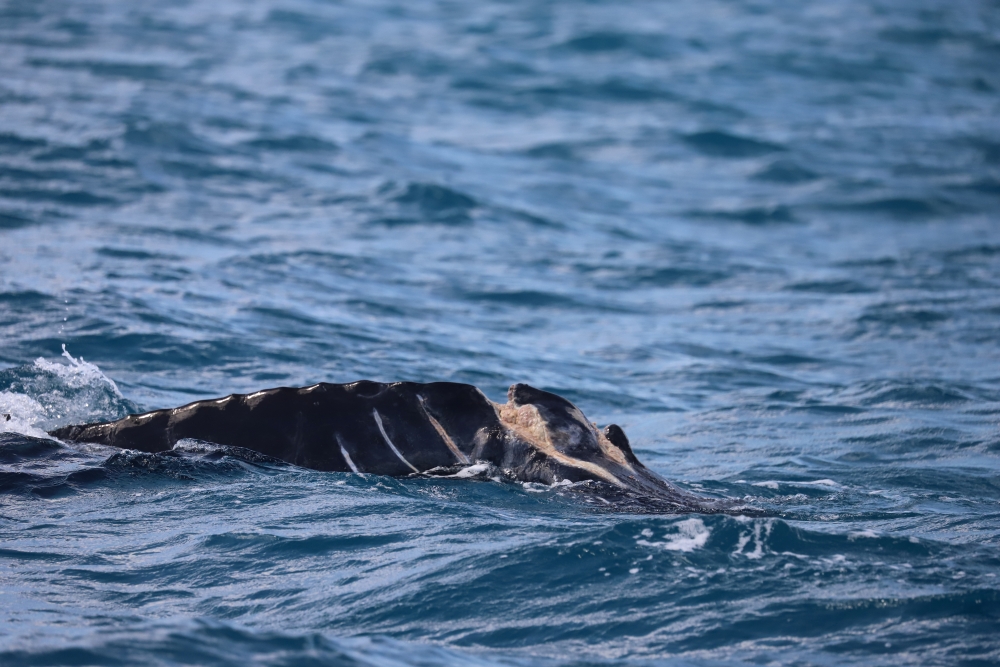
Fresh propeller injuries on a humpback calf in Hervey Bay 13 September 2026 © Isabel Taylor Pacific Whale Foundation Eco Adventures Australia
Shockingly, among the pictures released by WWF are two humpback calves who at the start of their lives have injuries caused by vessels. One has fresh propeller wounds; the other blunt force trauma to its tail. They were photographed in Hervey Bay in September by Isabel Taylor, a Senior Naturalist and Tour Guide with Pacific Whale Foundation Eco Adventures Australia.
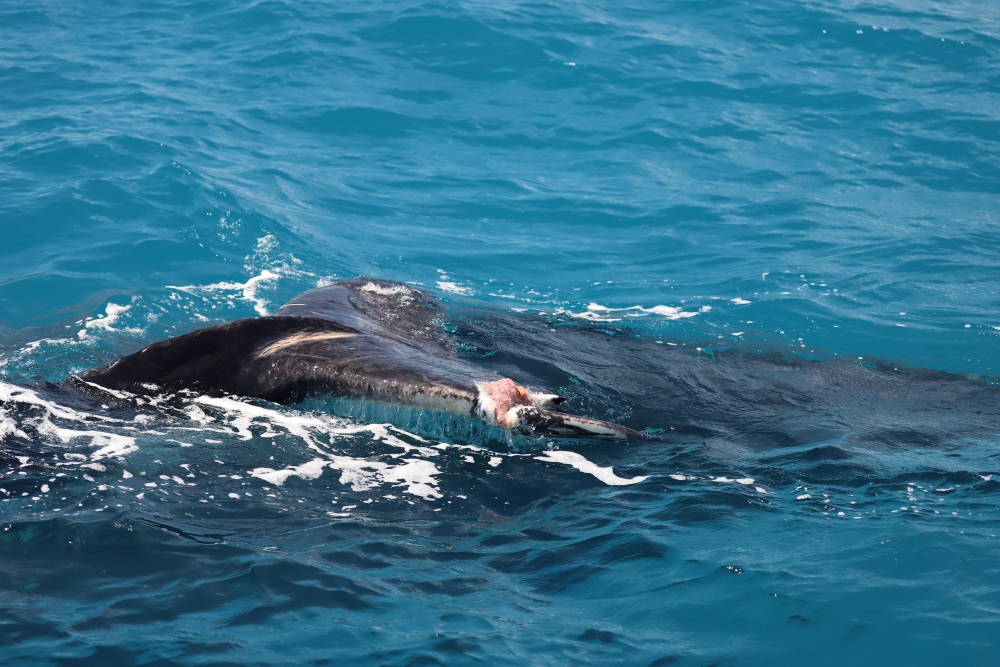
Blunt force trauma to a calf’s tail 27 September © Isabel Taylor Pacific Whale Foundation Eco Adventures Australia
“I felt a mixture of shock, then concern, then anger, and then sadness. I’m still thinking about these individuals and will be for a long time. It was pretty disturbing for our whale watch guests to witness. I also think it highlighted one of the biggest direct threats these animals face, and I fully support increasing public awareness through a reputable organisation such as WWF-Australia,” Ms Taylor said.
The mother of the calf with propeller injuries is known to researchers. It was first been seen in Hervey Bay in 2004 as a young subadult, and has a profile on the Happy Whale identification site.
On 28 August, also in Hervey Bay, Silke Stuckenbrock filmed another reminder of the impact even a small vessel can have on a whale, this time a subadult.
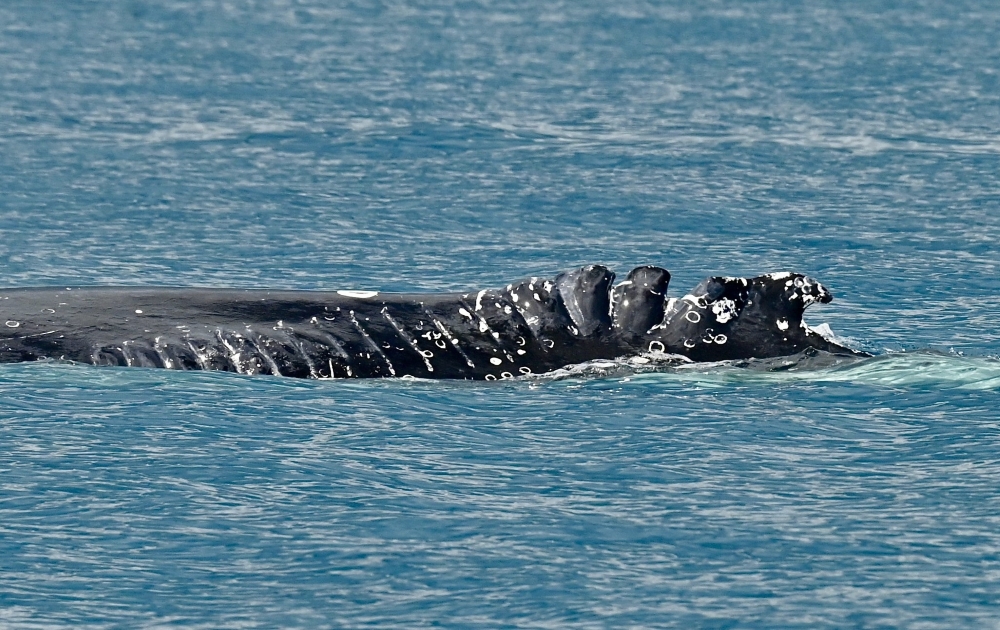
Propeller injuries extend along the left side of a subadult humpback in Hervey Bay 28 August 2026 © Silke Stuckenbrock/ Blue Dolphin Marine Tours
“For me it was a first to see such an extensive boat-related injury. And looking at the propeller marks it was clearly made by a very small vessel, so seeing just how much damage it did to such a large animal, like a humpback whale that was really eye opening. A great reminder to all vessels to keep a proper lookout at all times and slow down, especially during whale season. This isn’t just for the whales, it’s also for your own safety, they are big animals . I am sure there would have been damage to the vessel as well,” said Silke Stuckenbrock, a citizen scientist and deckhand on Blue Dolphin Marine Tours.
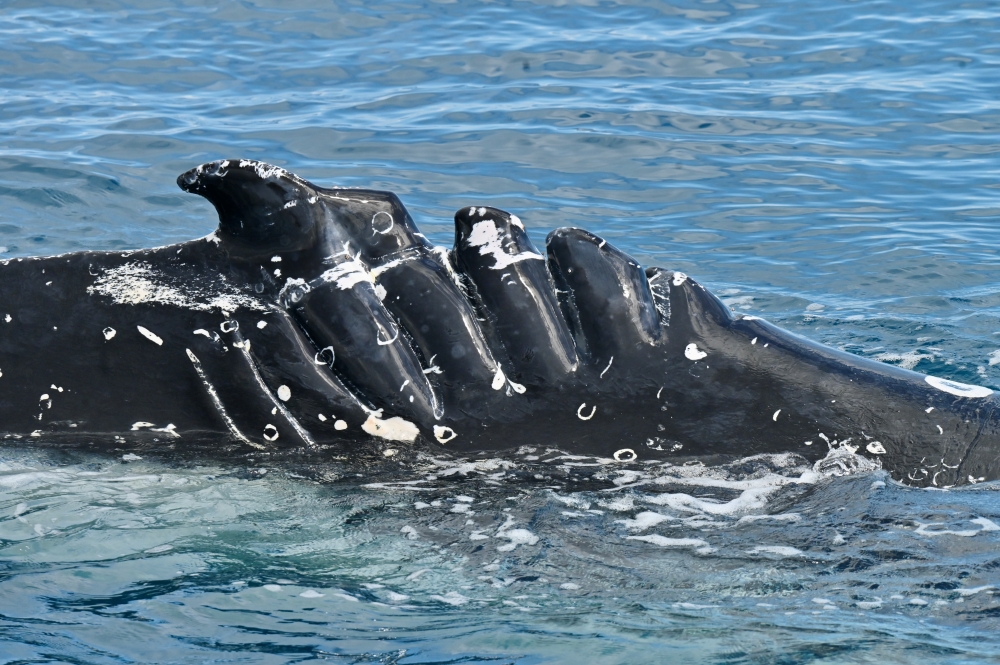
Propeller injuries on the right side of the same humpback in Hervey Bay 28 August 2026 © Silke Stuckenbrock/ Blue Dolphin Marine Tours
Another humpback victim was recorded in June by Jason Iggleden who runs Drone Shark App. The whale was in the distance off Bondi and it wasn’t until he looked at his video he realised what he’d captured.
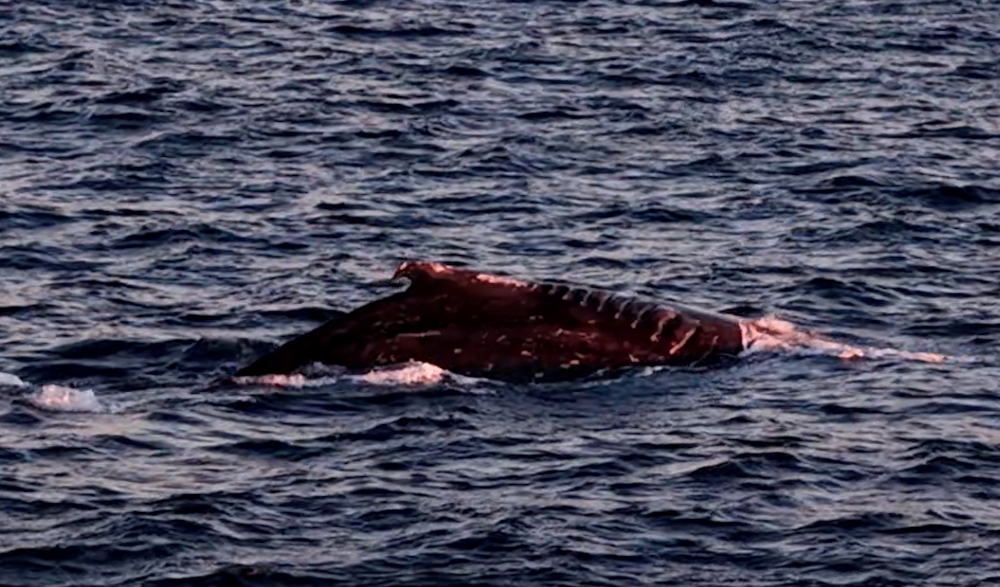
A humpback with propeller injuries filmed off Bondi, 21 June 2026 © Drone Shark App
“These images are heartbreaking reminders that vessel strikes pose a real risk to whales migrating along Australia’s east coast. Even small vessels can cause severe injuries,” said Chris Johnson, WWF’s global lead on whale and dolphin conservation.
“Reducing that risk will take a mix of measures, including seasonal speed limits in areas where whales and vessels are likely to cross paths, and detection systems that give operators time to slow down or change course. These approaches are being used elsewhere and could be adapted to Australian waters.
“WWF is calling for a vessel strike plan to be developed with local communities, science, NGOs, industry and government. Working together, we can make coastal waters safer for whales and people while better protecting vital migratory blue corridors.”
The huge number of humpback whales that migrate to Australia’s east coast ramps up the urgency of finding a solution. From a low of 200 to 500 animals in 1962 (before the whaling ban), there are now between 50,000 to 60,000 east coast humpbacks.
Their migration path overlaps with heavy commercial shipping traffic and recreational boating activity making Australia’s east coast a hotspot for whale vessel collision risk. Other hotspots include the west and east coasts of North America, the southern waters of South America and Africa, Northeast Asian seas, and the eastern North Atlantic Ocean.
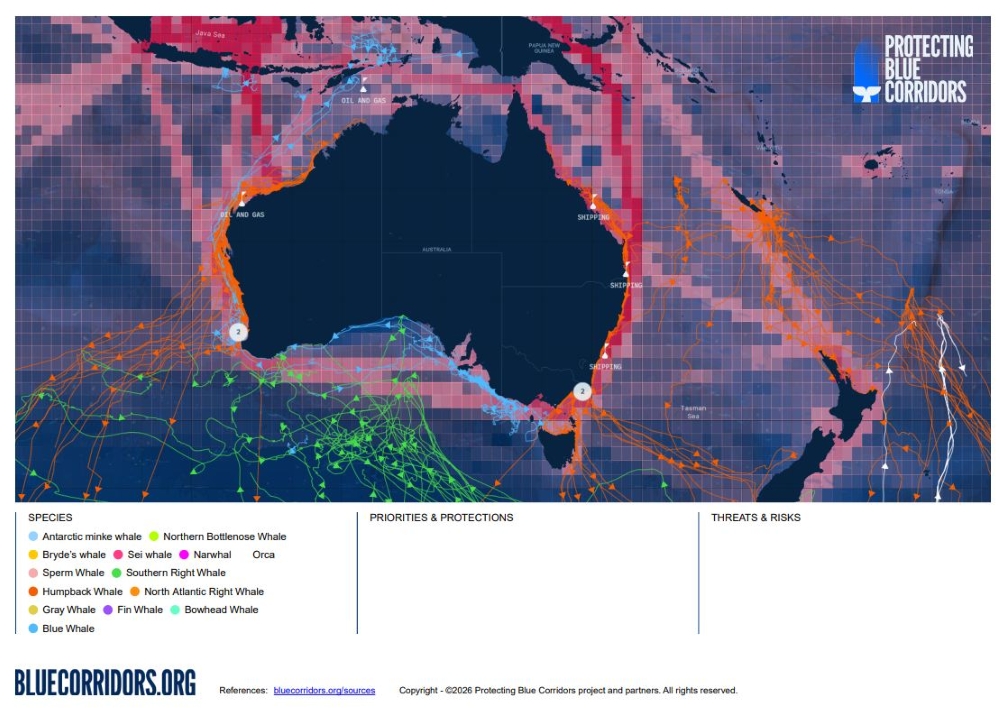
Red = ship traffic, orange = migration pathways of humpback whales
The most famous injured whale in the world is a female humpback named Bladerunner who migrates to Australia’s east coast each year.
She was reportedly injured off Sydney in 2001 and has attracted global attention because of the extensive propeller wounds down her left side.
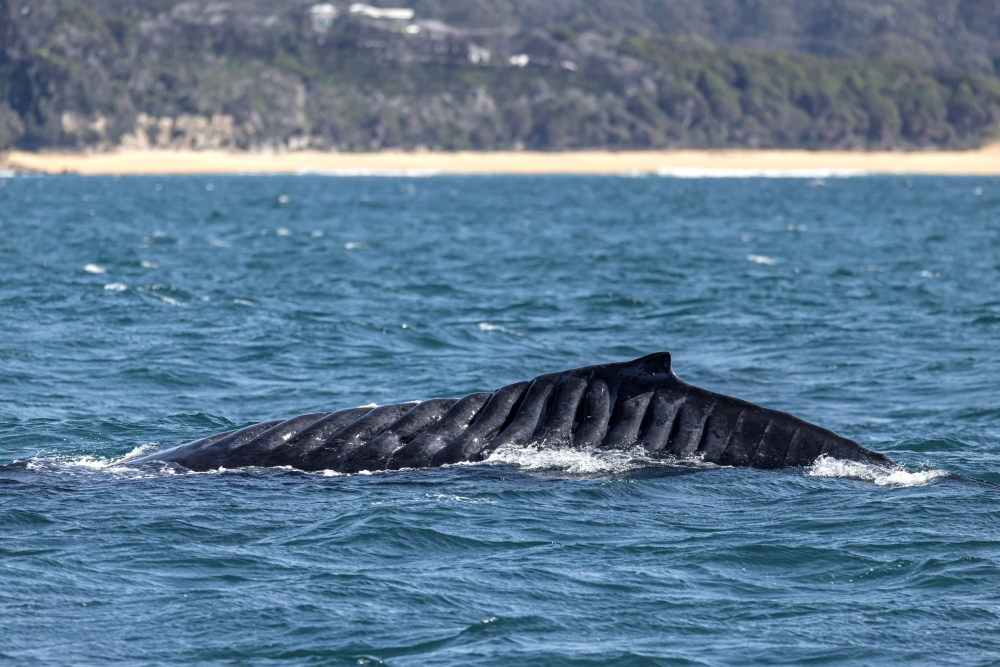 Bladerunner filmed off Eden 28 September 2024 © Tracey Harris
Citizen scientist Tracey Harris has photographed Bladerunner and is full of admiration for her grit.
“It’s sad to see the horrific injuries the whales have and yet wonderful to see their resilience to survive and live a long life. The first time l photographed Bladerunner, which at the time she was pregnant, l felt so sad but also realised just how incredibly strong she was to have survived such horrific injuries. The year after l photographed her with a calf. She is one incredible whale to have survived and to birth as many times as she has,” Ms Harris said.
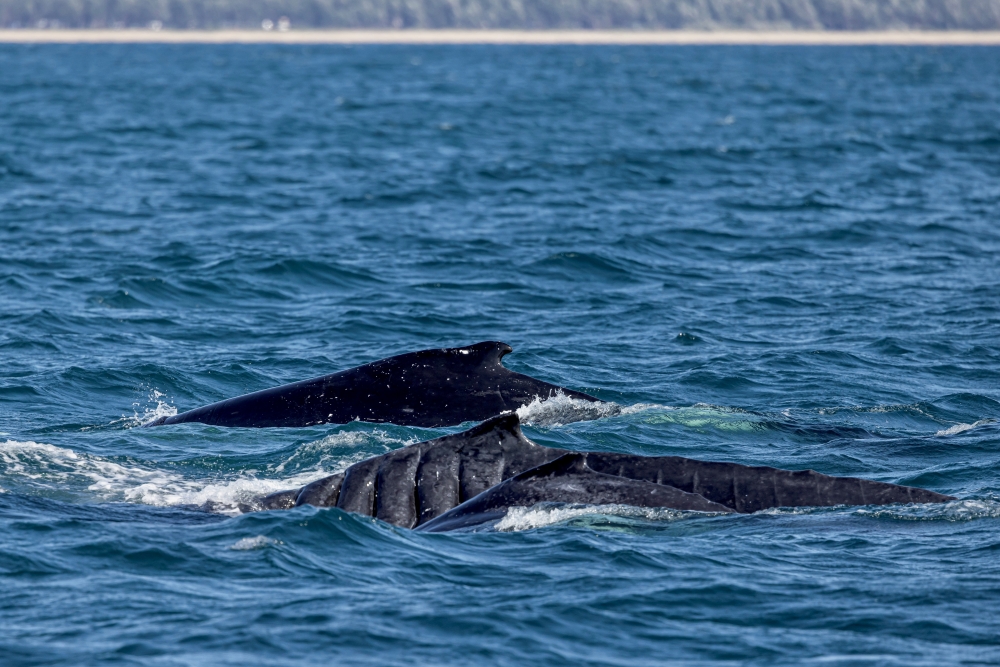 Bladerunner heading south 28 Sept 2024 with her calf and an escort © Tracey Harris