Dr Samara Walpole awarded prestigious US grant to investigate link between inflammation and neurotransmission
Could inflammation be a hidden driver of schizophrenia? A University of Wollongong (UOW) early-career researcher has won a global grant to find out, laying the groundwork for more personalised treatments for the illness.
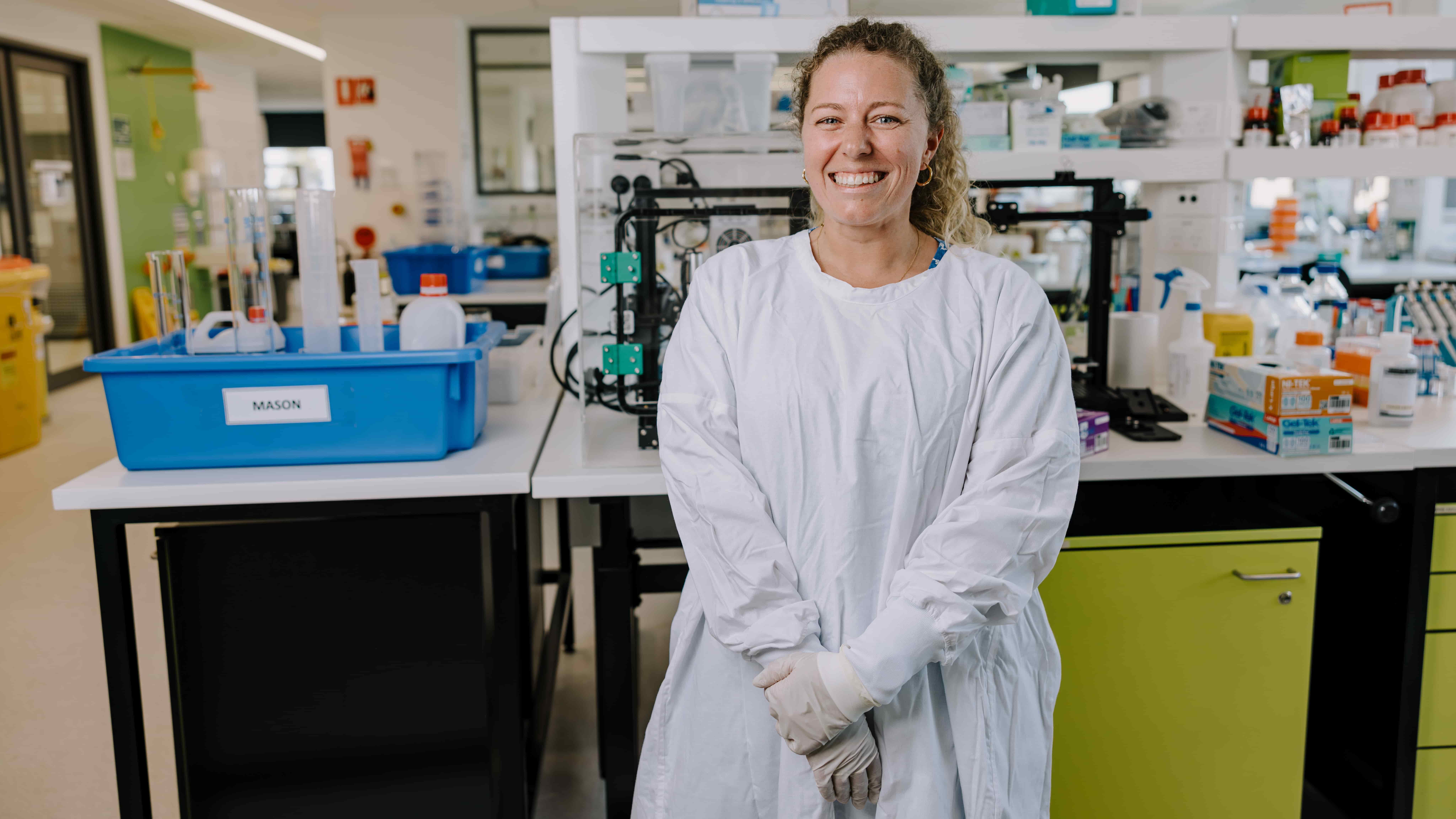
Dr Samara Walpole, a postdoctoral research fellow in UOW’s School of Medical, Indigenous and Health Sciences, was awarded a $97,000 Young Investigator Grant from the Brain & Behavior Research Foundation (BBRF) in the United States, to spearhead the project.
Using human brain tissue donated posthumously, Dr Walpole will investigate how inflammation disrupts the brain’s glutamatergic and dopaminergic signalling systems, and whether future therapies can target a patient’s biological factors.
“Current treatments, including antipsychotic medication, are not effective for everyone. We know with schizophrenia there is a disruption in how brain cells communicate but we don’t understand the full picture, so our treatments don’t adequately address these changes,” she said.
“I want to explore whether inflammation disrupts the glutamatergic and dopaminergic systems, which are both already linked to the illness, and how much these biological factors influence how schizophrenia presents differently from person to person. This could point to more targeted treatment options.”
Glutamate sends messages between neurons and plays a major role in learning and memory, while dopamine is associated with the brain’s reward centre, linked to memory, motivation, attention and behaviour.
For Dr Walpole, untangling whether schizophrenia patients can be grouped by their biology could deepen scientists’ knowledge of the illness. For example, for some patients, inflammation may only disrupt the glutamatergic system, not the dopaminergic system, presenting a unique set of symptoms that may not be experienced by others.
“Not everyone with schizophrenia has the same underlying biology, even if they share a diagnosis. If we can understand these biological subtypes, we are a step closer towards treating schizophrenia as the individual condition it is. Schizophrenia looks different from person to person, so treatment options should too,” Dr Walpole said.
“Access to donated brain tissue is rare and it’s what makes this research possible. It means we can study what’s actually happening in the brain and translate these findings into real-world outcomes for patients.”
Schizophrenia is a chronic mental illness that affects how a person thinks, perceives reality and processes emotions. According to SANE, it affects 20 million people globally.
About the research
Dr Samara Walpole’s project is supported in part by a 2026 NARSAD Young Investigator Grant from the Brain & Behavior Research Foundation.