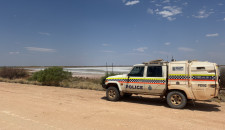
It forms part of one of the Pilbara’s largest policing sub-districts, covering hundreds of thousands of square kilometres of remote desert country, isolated communities and challenging terrain.
For many officers, the thought of working at a Multi-Function Police Facility (MFPF) can seem daunting.
Distances are vast, resources can be limited and no two days are the same.
For those who embrace it, however, the rewards can be just as big. Karratha Sergeant Richard Hood recently spent a couple of weeks working alongside the Officer in Charge at Jigalong, including a four-day patrol through some of the district’s most remote communities.
The patrol took officers to Kunawarritji, near the northern reaches of the Canning Stock Route, and Punmu, where they spent time speaking with community members, addressing local safety concerns and seizing illicit drugs.
In communities where populations can be relatively small and support services limited, the impact of removing illicit substances from circulation can be significant.
“The satisfaction of achieving tangible results in remote policing is difficult to describe,” Sgt Hood said.
“Unlike metropolitan environments, officers often see the direct impact of their actions and the difference they make within the communities they serve.
Getting between these communities means travelling hundreds of kilometres on rough, corrugated roads. On this particular trip, even the police vehicle decided it had had enough.
“Despite Toyota’s long-standing reputation for being built tough, the relentless corrugations decided to put that claim to the test,” Sgt Hood said.
“Somewhere between communities, the constant vibration caused the bonnet latch to snap like a dry twig. What followed was a scene straight out of an outback travel
documentary, with the bonnet bouncing around like an emu attempting its first flight.”
With no mechanic nearby, a ratchet strap and some bush ingenuity kept the bonnet secured until the vehicle reached a mechanic about six days later.
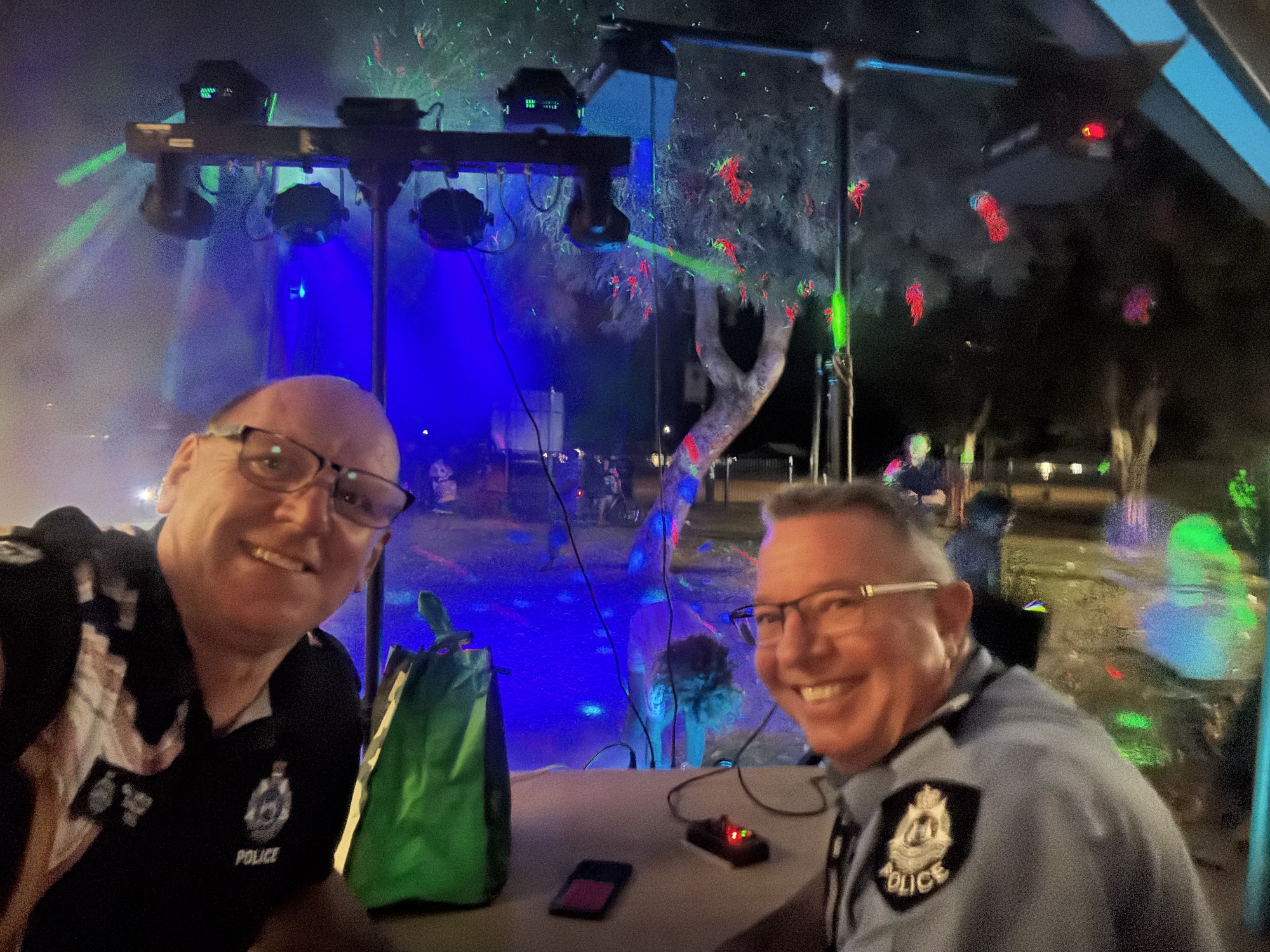
But remote policing is about far more than enforcement and bush repairs. One highlight was helping facilitate a Blue Light Disco, bringing children, families and elders together for an evening of music, laughter and dancing.
“Building trust and fostering positive relationships remains one of the most valuable aspects of policing in remote communities,” Sgt Hood said.
“One minute you may be conducting a patrol through some of the most isolated parts of Australia, the next you may be delivering community engagement initiatives, supporting vulnerable people, attending emergencies, conducting investigations or helping organise events that bring a community together.”
MFPF postings provide officers with opportunities to develop a broad range of skills, work more independently and gain exposure to policing functions that would
normally be spread across multiple work areas at larger stations.
There are financial and practical incentives too, including allowances, accommodation arrangements and unique leave and travel benefits.
But for many officers, it is the professional growth, friendships, community connections and stories that become the lasting rewards.
For anyone considering an MFPF posting, Sgt Hood’s advice is simple: take the opportunity.
“Remote policing is not always easy,” he said.
“It can be demanding, unpredictable and occasionally uncomfortable. Yet it is also some of the most rewarding policing you will ever experience.
“And every now and then, it even teaches you how to repair a Toyota bonnet with nothing more than a ratchet strap and a bit of bush ingenuity.”