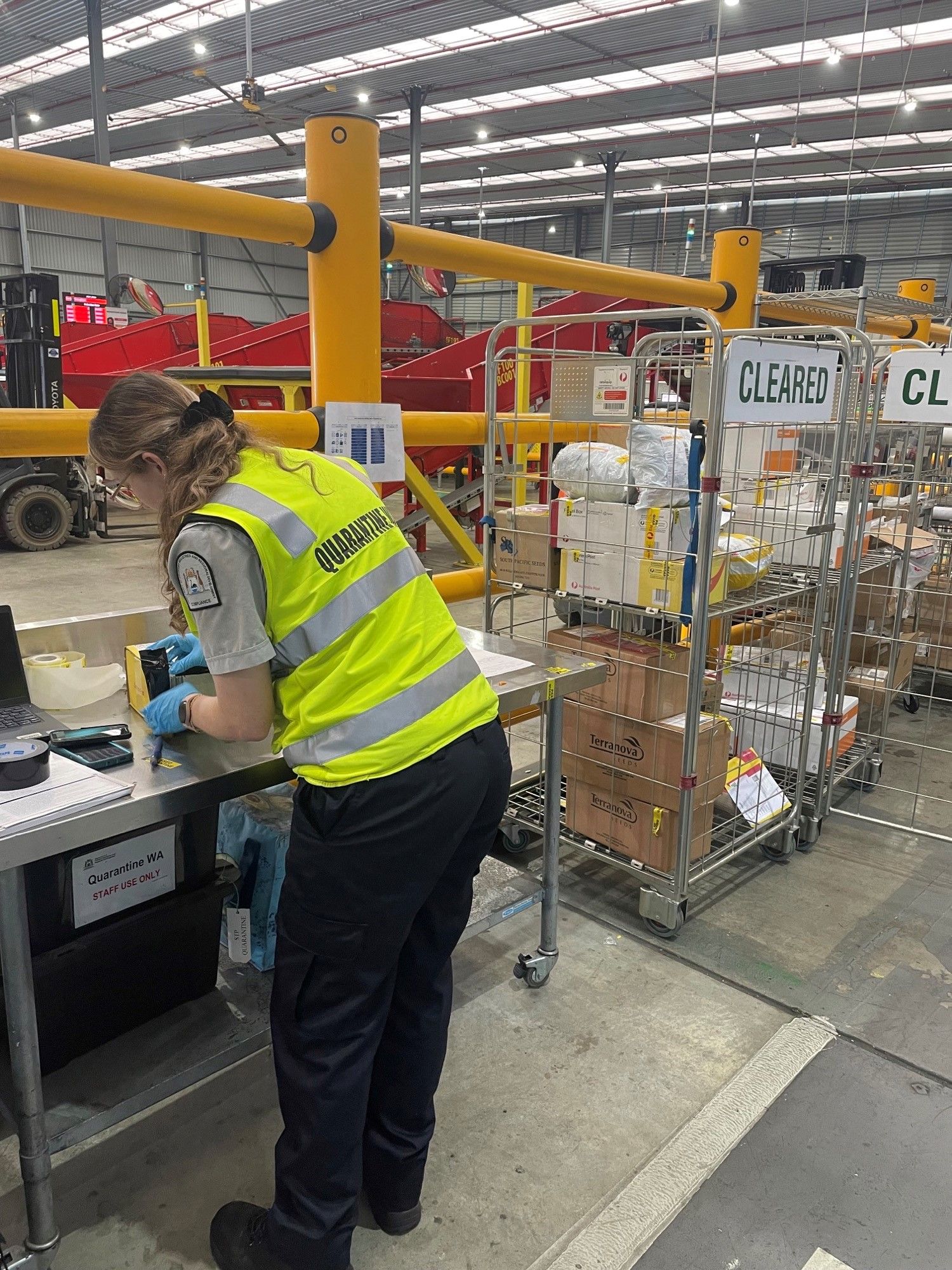
Recent data from the Department of Primary Industries and Regional Development’s (DPIRD’s) Quarantine Western Australia service demonstrates the important work of the State’s biosecurity defences.
Recent data from the Department of Primary Industries and Regional Development’s (DPIRD’s) Quarantine Western Australia service demonstrates the important work of the State’s biosecurity defences.
DPIRD undertakes a range of inspection and screening activities to protect WA from unwanted pests, weeds and diseases, which could arrive on freight, cargo and other items brought in from interstate.
2025-26 figures show DPIRD officers intercepted more than 54 tonnes of quarantine risk material from travellers entering the State via various entry points.
Among the intercepts were over three tonnes of honey, as well as some large individual intercepts in airport luggage, including 50 kilograms of fresh chillies and 18.5kg of mud crabs.
Analysis shows WA’s enviable biosecurity status was protected by intercepting 120 imports contaminated with significant insect pests, including mealybugs, leafminers, aphids and caterpillars.
Separately, 91 prohibited plant and animal species were identified and contained, reducing the risk of exotic pests becoming established in WA.
Fortunately, there were no detections of exotic species post border due to failures in interstate quarantine processes and procedures.
Principal quarantine inspector Grant MacDonald said the service’s inspections were diverse, spanning air, rail, road and sea freight and passengers, as well as postal and livestock.
“WA is fortunately free of many of the world’s worst pests, weeds and diseases, which could arrive via freight, cargo and other items brought in from interstate,” he said.
“Quarantine inspections, together with interstate quarantine regulations help to control the movement of goods, which could carry and introduce a biosecurity risk that could impact our valuable primary industries, the environment, economy and our lifestyle.”
A total of 405,362 quarantine inspections were undertaken in 2025-26.
This included 135,214 vehicles, 2,327 airline passengers and 40,468 parcels.
The data shows 134,001 lines of imported quarantine risk material were inspected, while 23,304 interstate livestock movement were recorded and 70,048 livestock inspected for adherence to intrastate movement requirements.
Screenings to identify the presence quarantine of risk items is also an important component of DPIRD’s quarantine activities, with nearly two million undertaken in 2025-26 across road, rail, air and sea channels, as well as postal.
The 2025-26 analysis reveals 1,976,227 quarantine screenings were undertaken, including 56,461 trucks, 113,142 commercial trailers, 356,989 airline passengers and 156,318 rail/sea containers.
A total of 1,293,367 interstate parcels were screened at postal facilities across Perth.
Nearly 4,800 imported lines were inspected and held pending further clarification or assessment, of which about 3200 were released, 680 treated, 222 re-exported and 680 destroyed.
“It was great to see most people do the right thing and 99 per cent compliance with import requirements, although there were still over 3,530 non-compliances,” Mr MacDonald said.
“We encourage the community to remain vigilant and to adhere to import and movement regulations to help maintain our enviable biosecurity status, which is also important to access valuable export markets.”
For more information visit the ‘QuarantineWA border checkpoints’ webpage or the ‘Importing and exporting ‘QuarantineWA’ webpage .