The unique skillset required for the successful live broadcast of sporting and other events is the focus of a new partnership involving QUT Sport and the creative industries disciplines of film, animation, technical production and journalism. animation, technical production and journalism.
Led by Dr Joe Carter, Senior Lecturer in Film Production with the QUT School of Creative Arts, 34 film, animation and journalism students recently gained valuable hands-on industry experience working on the three-day 2026 UniSport National Athletics Championships. This followed their efforts on the 2026 AusCycling Track National Championships at Brisbane’s Anna Meares Velodrome.
“With Brisbane hosting the 2032 Olympic and Paralympic Games, we are seeing increasing opportunities within live sports broadcasting in Queensland,” Dr Carter said.
“Our goal at QUT is to respond to the changing media landscape and prepare our students for increased demand for live content production, including sporting events but other key cultural moments.
“Sport is unique though, because worldwide, the desire to see sporting contests live is growing. Television and streaming networks therefore need the people to work on those broadcasts, on screen and behind the scenes.
“By working with broadcast partners, our aim is to not simply to teach technical skills, but to place students in an authentic production environment.”
The UniSport event, held at the Gold Coast Performance Centre in late April, bridged classroom learning with the realities of live production through real-time decision making, technical problem-solving and teamwork.
“It was an extraordinary opportunity for QUT students. Working across a 12-camera live production, they gained hands-on industry experience in roles spanning commentary, camera operation, vision mixing, graphics, audio, production coordination and floor management,” Dr Carter said.
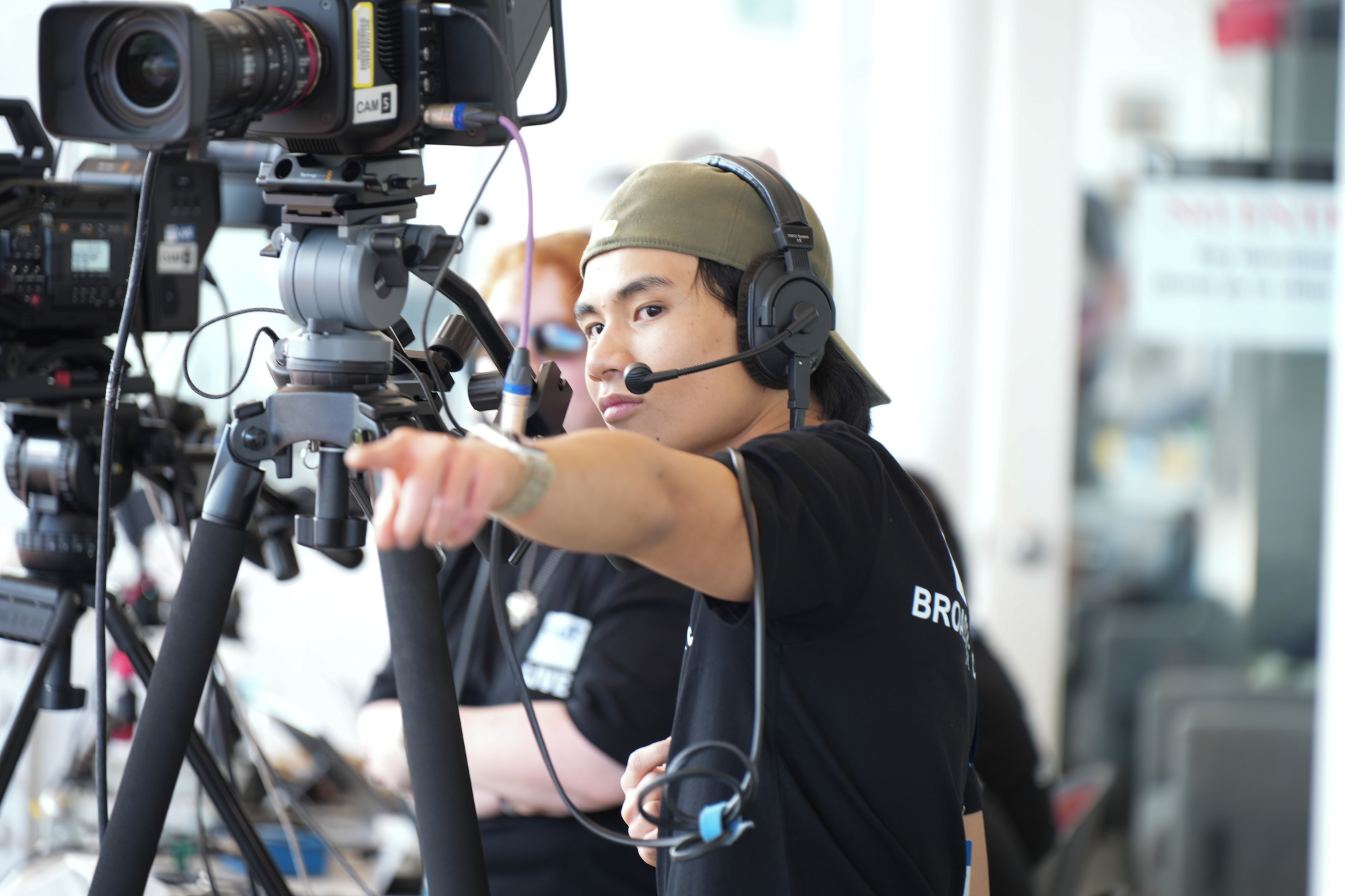
“The learning experience was as important as anything they could do in a classroom and they worked under a great deal of pressure capturing athletes – potentially future Olympians – competing at a national championship to be streamed live each day on UniSportTV. The stakes were high for everyone.”
Students were assessed on technical execution, along with their understanding of audience engagement, storytelling, teamwork and the broader objectives of live sport broadcasting.
“It is important students don’t just learn how to operate cameras or press buttons, they need to understand what audiences want from a live event and how broadcasters can help create that experience,” Dr Carter said.
QUT student Ashley Cuff (Bachelor of Fine Arts) said the experience transformed classroom concepts into practical application.
“Working with a client to produce a real-world broadcast seen by people across the country gave us the chance to work in a professional industry setting in new environments we weren’t familiar with,” she said.
“We were constantly having to adapt and adjust our approach depending on what was happening. Live changes in schedules and developing weather conditions meant we had to learn how to adapt quickly, work together, communicate and stay calm when things didn’t go exactly to plan.”
For fellow student Don Philip Alabata (Bachelor of Fine Arts), the experience provided an opportunity unlike anything typically available to university students.
“To be given important positions on a broadcast of the scale of the UniSport Nationals Athletics simply trumps any other experiences I’ve personally had. It’s a whole different beast doing rehearsals in the QUT TV studio than it is actually being in the grandstands watching real athletes do their thing,” he said.
Don Philip said the experience demonstrated how skills developed through creative industries study could transfer directly into live sport broadcasting.
“Film production forces you to develop skills of improvisation and thinking on your feet, which thankfully translates quite well to commentary. I’m not a journalism student, but I quickly developed the skills to conduct sideline interviews because of the adaptability and improvisation skills I had already built throughout my degree.”
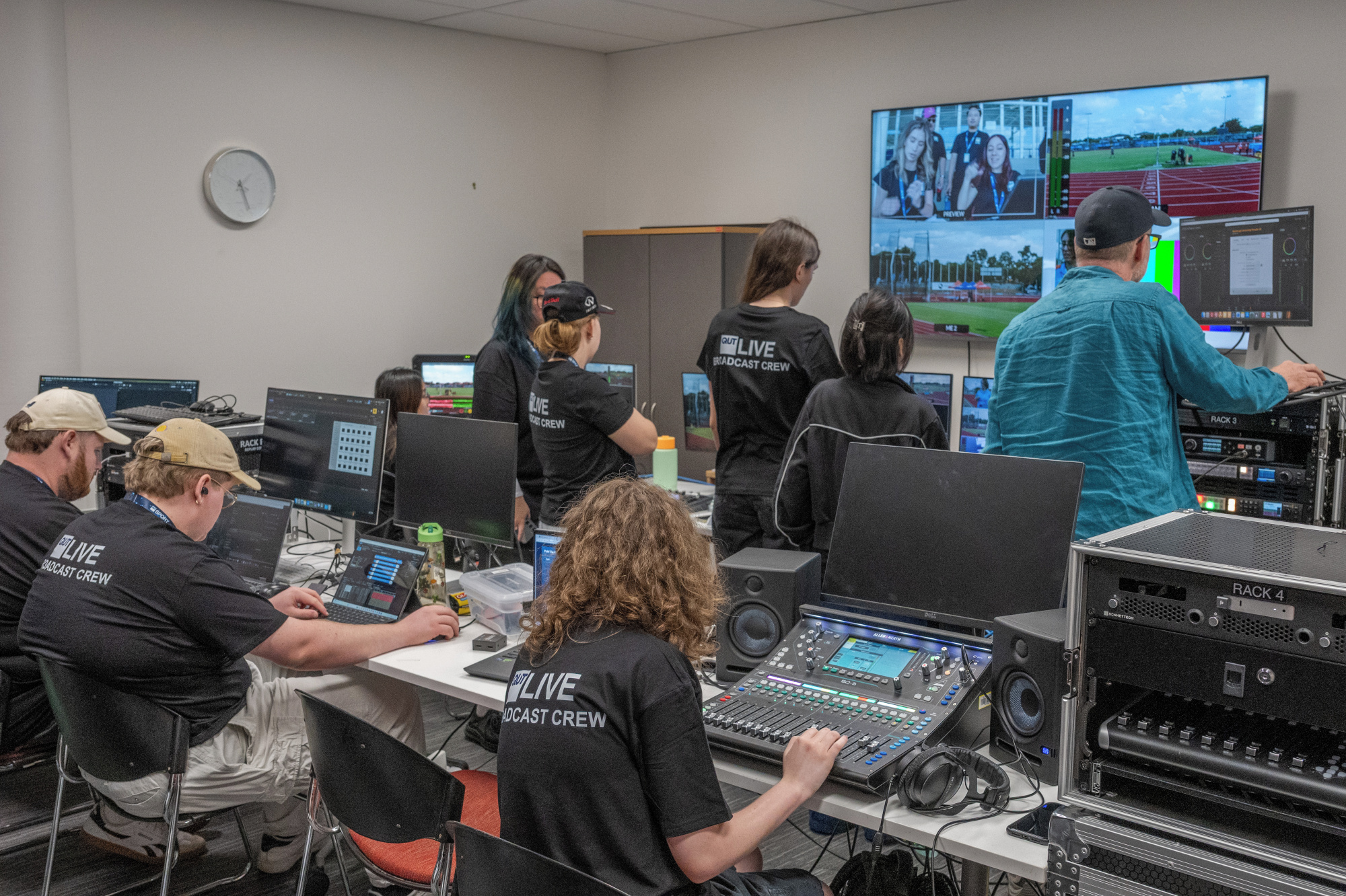
Dr Carter said those moments of pressure, adaptability and problem-solving were central to the educational value of the experience.
Rosa Boyd, Director of Sport, QUT, said the partnership with UniSport reflected how sport at QUT was evolving, creating meaningful opportunities for students beyond traditional pathways, not just as athletes but as broadcasters, storytellers and in this case, part of a live production environment.
“What makes this collaboration so valuable is that it’s a true win–win, UniSport benefits from high-quality live coverage, while our creative industries students gain hands-on experience that builds confidence and capability for their future careers,” Ms Boyd said.
“Importantly, this initiative also enhances the experience for our student athletes, enabling them to share their performances with broader audiences through live interviews and media engagement, equally preparing them for their future.”
Main image: QUT students caption camera operator George Wang sound checking with journalist Kailah Rushton at the 2026 UniSport National Athletics Championships. Photo: Voronoi.