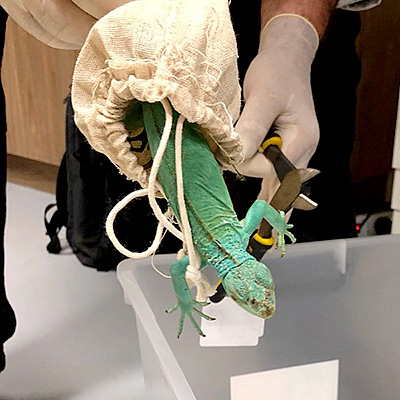
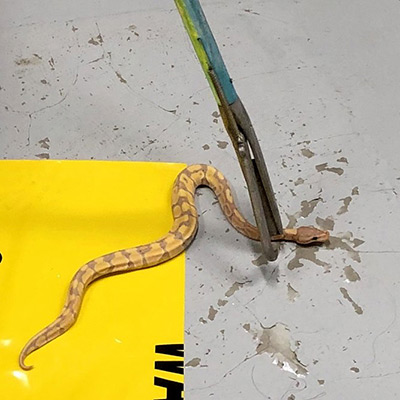
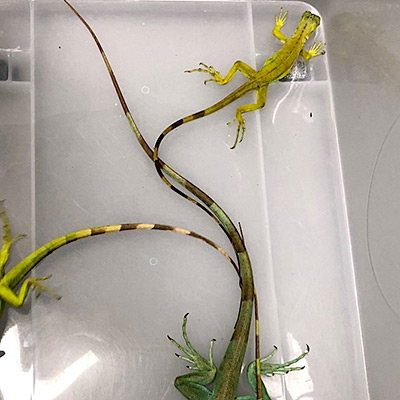
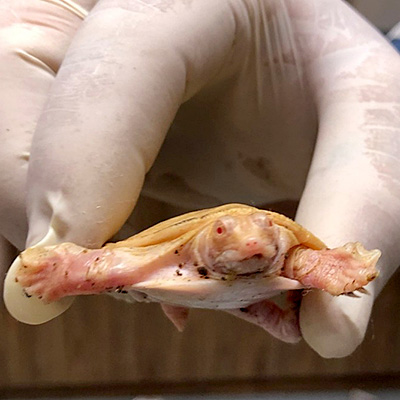
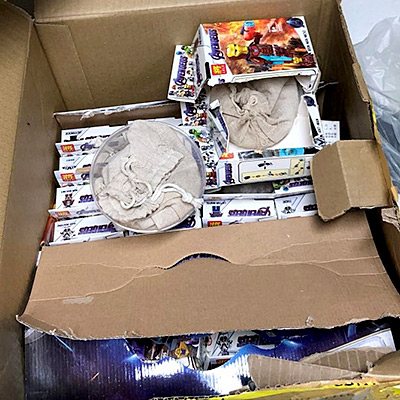
Pythons, iguanas and tarantulas were among the exotic animals Victorian man, Noah Ebert attempted to smuggle into Australia. The department soon put a stop to Mr Ebert’s criminal activities after intercepting parcels containing the concealed animals.
Our officers first detected the illegal animal trafficking, while inspecting an air cargo consignment that emitted an unpleasant odour.
Further investigations revealed that Mr Ebert was part of a wider network involved in illegally importing and distributing exotic wildlife.
In response the department launched Operation Cascade and counter network strategies were utilised to disrupt and dismantle the network, gather intelligence and support future enforcement action.
In collaboration with the Department of Climate Change, Energy, the Environment and Water and other federal and state agencies across Victoria, Queensland and Western Australia, our investigators gathered evidence that led to the prosecution of multiple offenders. In 2025, Jesse Sayeg was convicted and sentenced for animal trafficking offences. Other individuals connected to the network have also been convicted under state legislation.
Between August 2022 and August 2023, Mr Ebert attempted to illegal import 14 exotic animals from the Philippines, including albino softshell turtles, ball pythons, Burmese pythons, iguanas and tarantulas.
Mr Ebert was charged under the Biosecurity Act 2015 and the Criminal Code Act 1995 and appeared in the Frankston Magistrates Court on16 July 2026, where he was found guilty and sentenced to 4 months imprisonment. The court ordered his release on his own recognisance, subject to18 months good behaviour and a $1000 bond.
A criminal conviction can have significant and long-lasting consequences beyond the sentence imposed, including impacts on employment opportunities, international travel restrictions and damage to business and personal reputation.
Through intelligence-led investigations and coordinated enforcement action the department continues to work with partner agencies to disrupt criminal networks involved in the illegal importation and distribution of exotic animals.
Illegal wildlife trafficking for the pet trade is one of the world’s largest illicit industries and is frequently linked to organised criminal activity.
We have the capability and commitment to detect, investigate and take enforcement action against those who deliberately attempt to circumvent Australia’s biosecurity laws.
Know something? Say something.
Everyone has a role to play in protecting Australia’s environment, agriculture and biosecurity systems. You could help stop wildlife crime and protect Australia from serious biosecurity threats.
If you see something suspicious call the department’s biosecurity Redline 1800 798 636.
Thinking about buying a pet?
Only purchase your pets from reputable Australian breeders or traders. To learn more visit Unique or exotic pets.