ACIAR is supporting 21 emerging women leaders from across the Pacific through the Meryl Williams Fellowship.
A new cohort of women leaders in agricultural research for development has begun a nine-month program designed to strengthen leadership capability, expand professional networks and support career development.
The 2026-27 Pacific and PNG cohort of the ACIAR Meryl Williams Fellowship brings together 21 women from Fiji, Kiribati, Papua New Guinea (PNG), Samoa, Solomon Islands, Tonga and Tuvalu.
Over the coming months, the fellows will work with experienced mentors, participate in a collaborative leadership project and undertake activities that support both personal and professional growth.
For Pacific countries, strong leadership in agriculture, fisheries and food systems is increasingly important in responding to challenges such as climate change, rising fuel and food prices and food insecurity. The Fellowship creates opportunities for women working across these sectors to build leadership skills while strengthening regional connections and collaboration. Participants are selected through a competitive, merit-based process.
Building leadership in Pacific fisheries
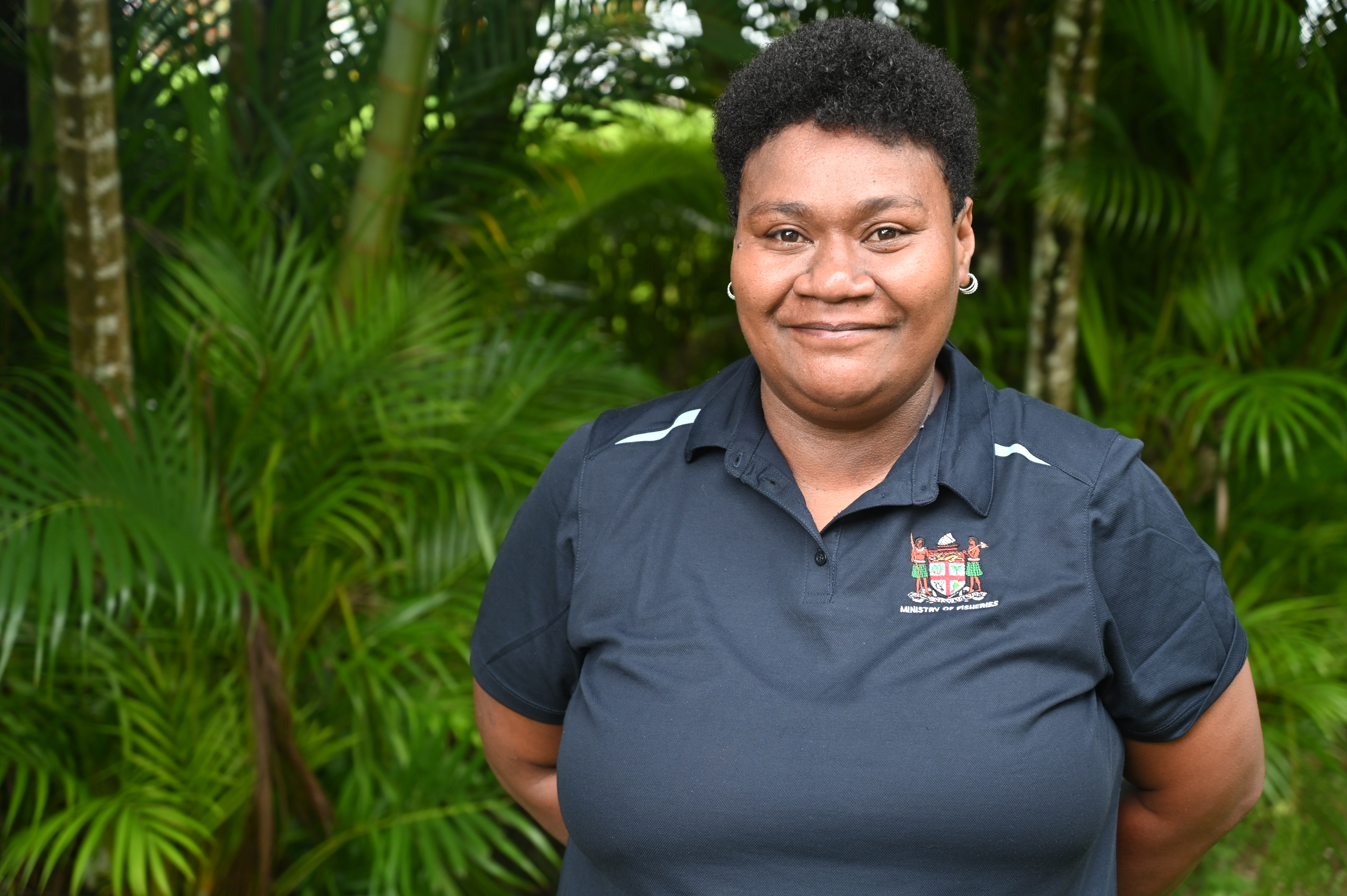
Among the new Fellows is Ms Iva Meo, a Fisheries Officer with Fiji’s Ministry of Fisheries, whose career has spanned fisheries research, aquaculture development and community engagement across the country.
Since joining the Ministry in 2012, Meo has worked across a range of technical and leadership roles, now serving as Fisheries Officer for Aquaculture and Officer-in-Charge of the Caboni Research Station. Meo helps oversee technical and hatchery operations across Fiji’s Northern Division. In 2025, she also worked closely with the ACIAR-supported project on Research in Agribusiness Partnerships for Innovation and Development (RAPID) to strengthen Fiji’s beekeeping and tilapia sectors by redesigning value chains and building the capacity of farmer organisations.
‘The ACIAR project highlighted the importance of linking research, government, industry and farmers to create practical outcomes for aquaculture development,’ said Ms Meo. ‘It reinforced the need for strong leadership and collaboration to support farmers in accessing resources and connecting with markets.’
For Ms Meo, the Meryl Williams Fellowship presents an opportunity to further develop the leadership skills needed to strengthen Fiji’s aquaculture sector and support climate-resilient food systems. She believes strengthening these skills is important to balancing the sustainable use of wild fisheries resources with the growth of climate-smart aquaculture enterprises.
‘My vision is to help create a stronger agribusiness platform for aquaculture farmers and investors, from access to quality fingerlings through to local and export markets,’ said Ms Meo.
‘There is significant potential to expand aquaculture in ways that support food security, and livelihoods.
‘The next step is ensuring farmers have access to the resources and partnerships needed to build sustainable businesses and supply high-quality products to local and international markets.’
Supporting Kiribati’s agricultural future
Three fellows from the Ministry of Environment, Lands and Agriculture Development represent Kiribati: Ms Tekataake Oromita, Ms Karoti Toto Kabwebwenibeia and Ms Kauanga Rimai.
For Ms Kauanga Rimai, an Agricultural Officer with the Information, Training and Extension Section of Kiribati’s Agriculture and Livestock Division, the Fellowship represents an opportunity to enhance her leadership skills while strengthening food systems.
‘Farmers in Kiribati work in a difficult environment, with limited land, poor soil conditions, scarce freshwater resources and the increasing impacts of climate change,’ said Ms Rimai.
‘At the same time, many face challenges accessing planting materials, technical support, markets and transportation, particularly on the outer islands.
‘For me, addressing these challenges requires more than simply increasing production. We need to strengthen the entire food system and ensure that women and communities are meaningfully included in shaping solutions.’
As a Fellow, Ms Rimai hopes to further develop her ability to bring people together, support collaboration and create opportunities for others to thrive.
‘To me, leadership is about taking responsibility, having the courage to speak up and creating opportunities for others to grow. A good leader listens, learns from others and works with people to find solutions,’ said Ms Rimai.
‘As a woman working in agriculture, I believe leadership means being a role model for other women and showing that women can contribute meaningfully to decision-making, technical work and agricultural development.’
Creating connections across PNG and beyond
‘The strength of the Pacific lies in the knowledge and experience within our communities and institutions. Leadership is about creating the connections that allow that knowledge to come together and influence the decisions we make,’ said Ms Rachelle Morehari, ACIAR Assistant Manager in PNG, who is also one of the fellows.
Through her work supporting ACIAR partnerships and agricultural research-for-development initiatives in Papua New Guinea, Ms Morehari helps connect research activities with national development priorities and local communities.
Ms Morehari was joined at their first professional development workshop by seven fellows from PNG including Ms Michelle Pius (PNG Biosecurity Authority), Ms Rose Sabub (PNG National Agriculture and Research Institute), Ms Tindora Matainaho (National Fisheries Authority of PNG), Ms Tabitha Manjobi and Ms Samaria Mambere (Cocoa Board of PNG), Ms Marylin Apa (Biosecurity Authority of PNG) and Ms Iga Anamo (Fresh Produce Development Agency).
Other participating fellows include: Mere Valu (Fiji Ministry of Agriculture), Deepika Goundar (Fiji Ministry of Fisheries), Sera Dau (Pacific Community), Tetalo Siona (Fiji National University), Mary Vakeke (Solomon Islands National University), Sharydia Tusa-Maua (Agriculture Division of Samoa), Asena Faanunu (Tonga Ministry of Agriculture, Food and Forests), Fatai Hoponoa (Tonga Ministry of Agriculture, Food and Forests) and Marietta William (Tuvalu Department of Agriculture).
The foundation workshop marked the beginning of a 9-month program that will support fellows to strengthen their leadership capabilities. Over that time, each fellow will be paired with an experienced mentor and will participate in a collaborative project designed to build leadership skills, providing an opportunity for participants to build lasting professional relationships with agricultural researchers in Australia and the region, and women working across the Pacific.