Deadly isn’t a word Marcia Townson uses lightly.
But when she talks about making cast nets by hand, it’s the first word that comes to mind.
“It makes me feel deadly,” Marcia Townson said.
“I love being able to make something with my hands and look at it when it’s done and say, ‘Wow, I did that.'”
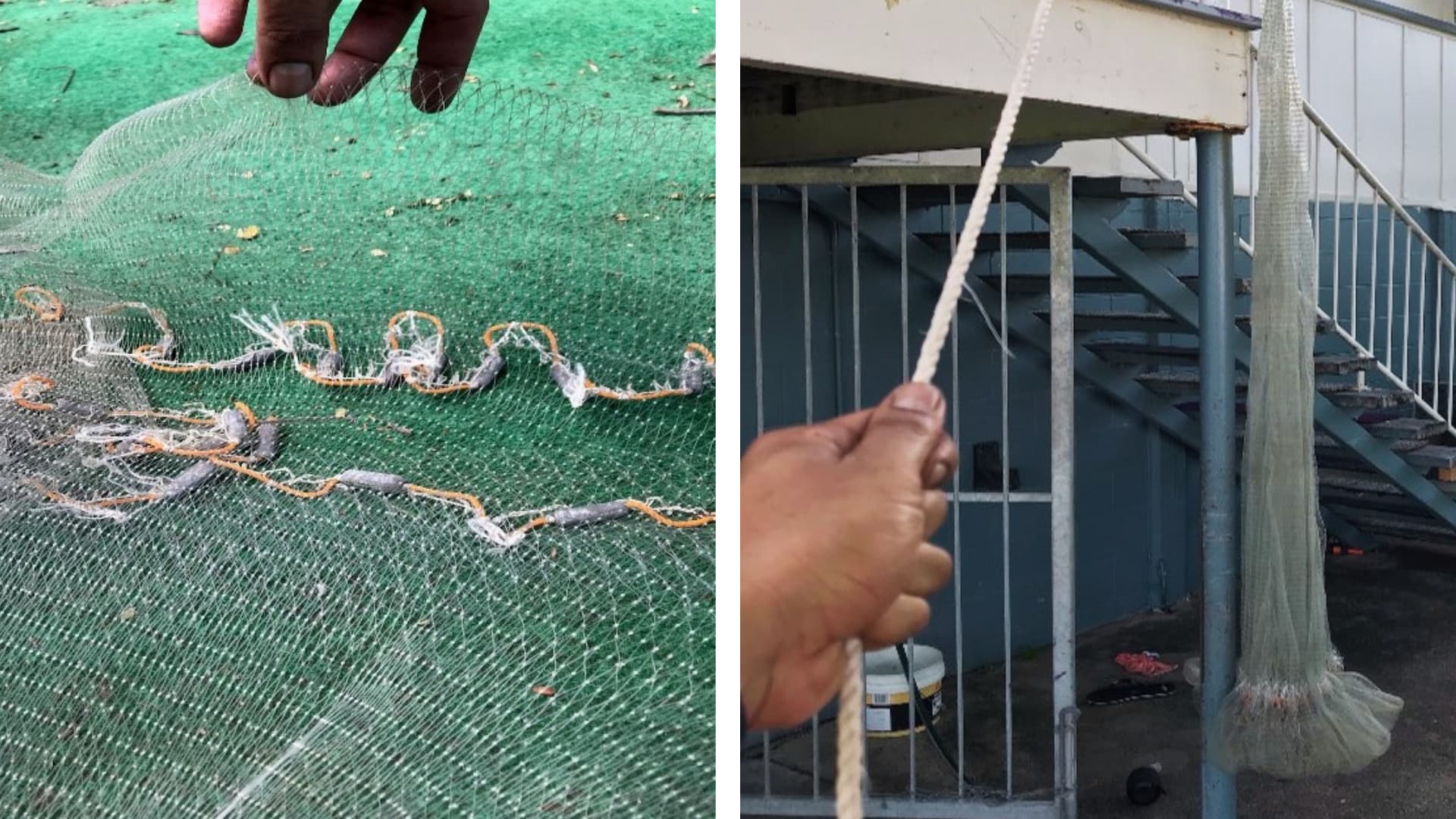
Cast netmaking is a traditional craft that takes patience, precision and hundreds of carefully tied knots to create a single circular net.
For Marcia, cast netmaking wasn’t a hobby – it was a way to support her growing family.
“My stepfather taught me how to make cast nets. I was getting married at the time, and I had a bunch of kids behind me, and he was looking at ways to support me. He said, ‘I’m not going to give you money, but I’ll teach you how you can make it.’
“The more nets I made, the better I got at them. I got to learn the tricks of that trade – from the heat seals to your swivels, to the splicing.
“By the time I’d made my fourth net, I was like wow – that looks professional!”
While the average fisher might head to their local bait and tackle shop to buy a cast net, according to Marcia, handmade nets consistently set themselves apart.
“The handcrafted ones, they’re the ones that last.
“You can make them to your own specifications, and they end up being quality nets.”
With eight children in tow, Marcia spent many afternoons on the shoreline, perfecting her pitch.
“Me and my boys would stand out near the water, and we’d all try to see how many different techniques there were to fully open a net up. It was a fun activity.
“Some nets would be full of barramundi.”
Marcia’s children have always been her north star.
“Thinking about what I wanted to be when I was growing up…I wanted to be a mother – a nurturer, a teacher, a guide.”
Through raising her children, Marcia discovered a keen interest in education.
“I was very involved in my children’s education, and I was always on an Aboriginal Student Support and Parent Awareness program (ASSPA) committee.”
ASSPA committees bring parents, teachers, and students together to support better educational outcomes for First Nations students.
“I’ve always been passionate about education, especially the sharing of culture and truth telling in schools.”
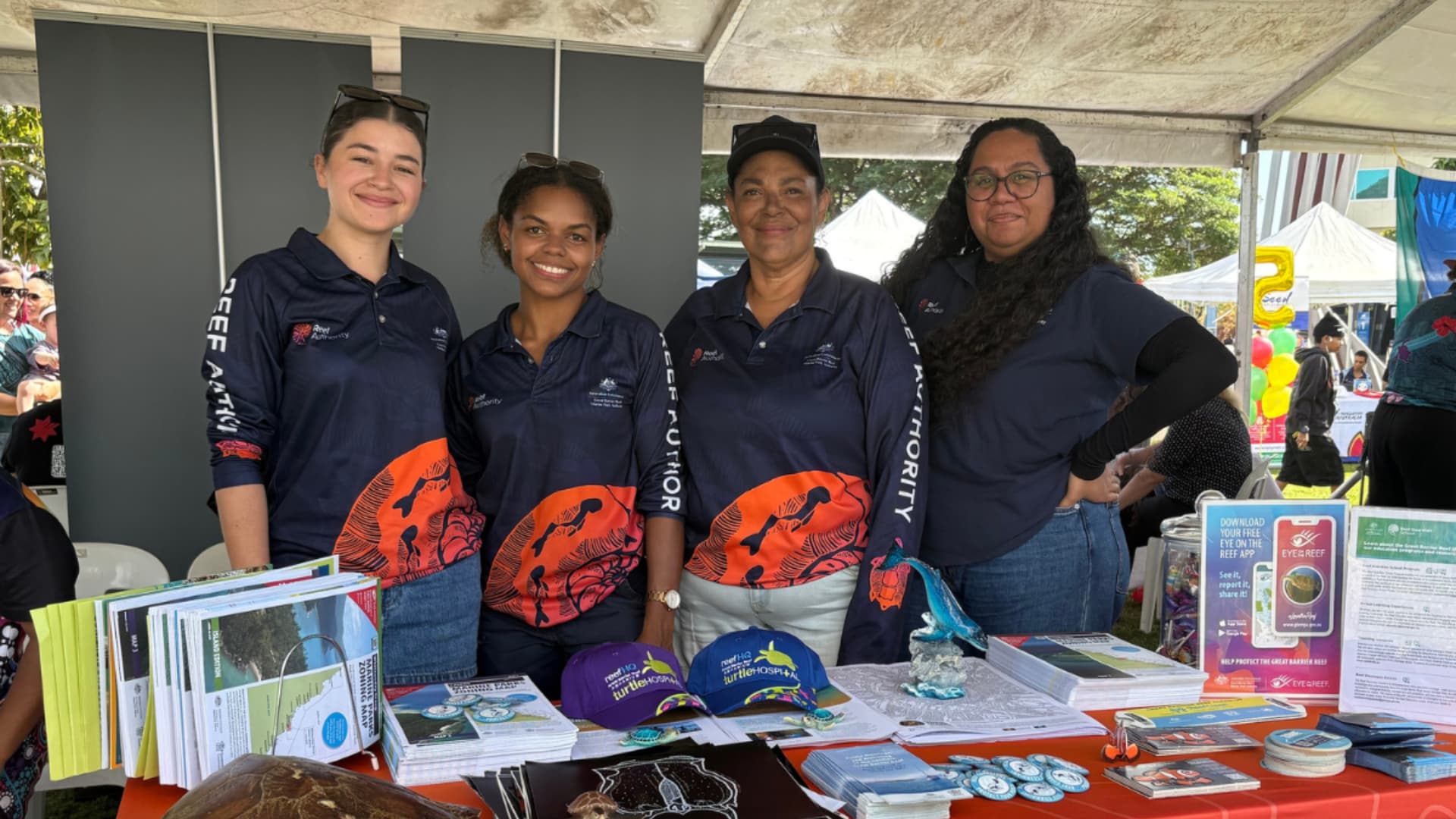
That passion for education underpins her current role at the Reef Authority as an Education and Engagement Support Officer in the Reef Guardian School team.
Since joining the Reef Authority through the Indigenous Apprenticeships Program in 2023, Marcia has become part of the Reef Guardian School team, helping support a network that now includes more than 500 schools.
“My role involves empowering children and teachers to access resources that promote the sustainable use of the Reef, and the actions school children can take to look after the Reef.
“I think it’s also about promoting how healing it can be out there on the Reef.”
Marcia understands firsthand how healing Sea Country can be.
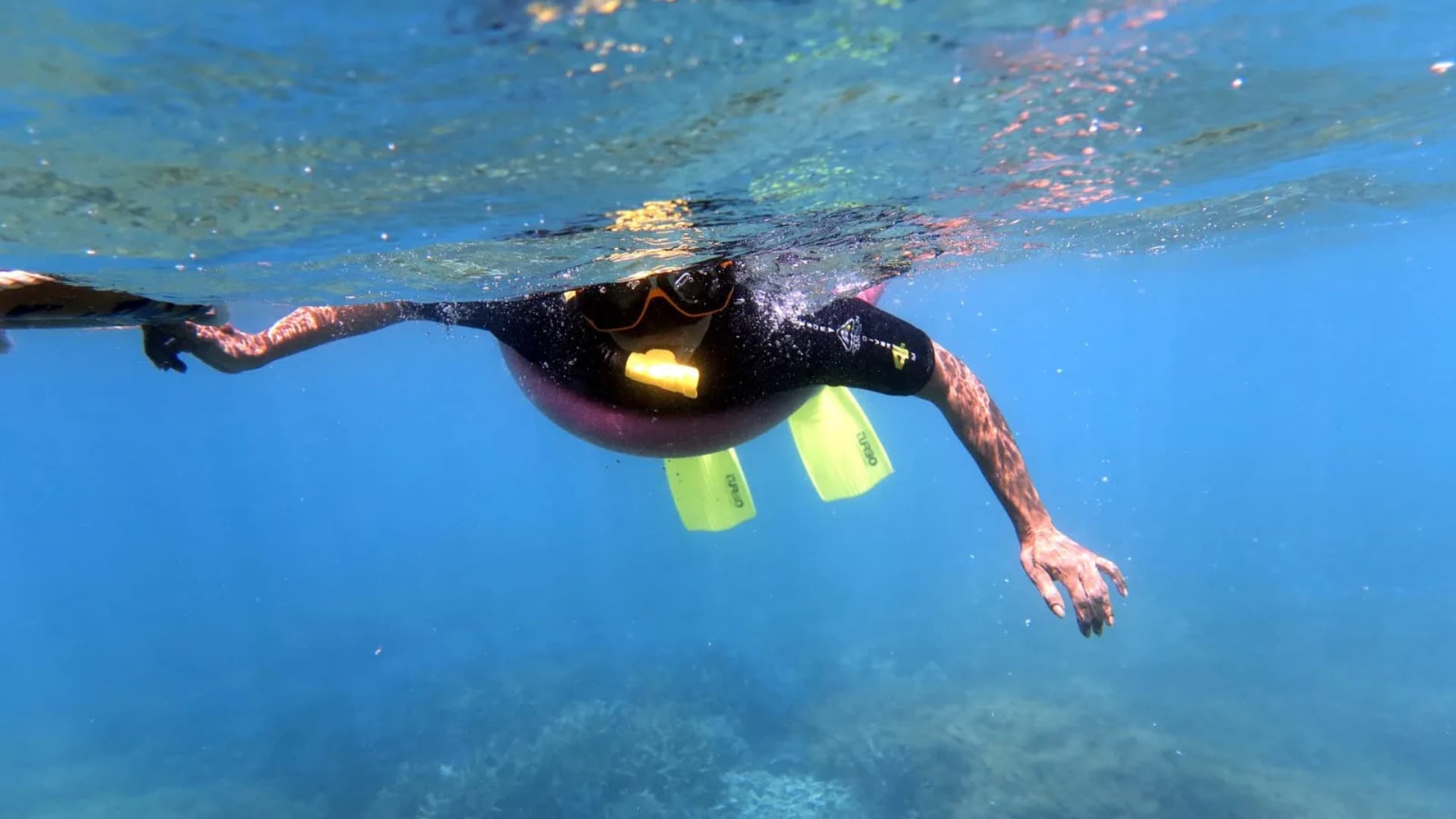
“I find comfort in going to the beach and being by the sea.
“It’s like a recharge.”
As a descendent of the Koedal and the Samu tribes of Saibai Island and the Torres Straits, Marcia’s deep ancestral ties to land and Sea Country inspire her outlook on life.
“Me being a saltwater person, I always compare myself not to people but to salt water.
“When push comes to shove, I think I want to be like water.”
If cast netmaking has taught Marcia patience, water has taught her resilience.
“Water will go places nothing else can go. Water just flows. So, flow like water. You come across a rock or an obstacle in your path; you find another way and go around it.
“And water is strong. Water will actually shape some of the hardest things – the walls of gorges and canyons are carved from rock by flowing water. So, just flow.”
A lover of metaphor, Marcia strives to live by the ‘turtle theory’:
Turtles don’t rush or panic. They don’t care who’s ahead. They just keep moving, taking one stroke at a time, through calm and chaos. They always reach the shore. Because speed doesn’t define progress, patience does.