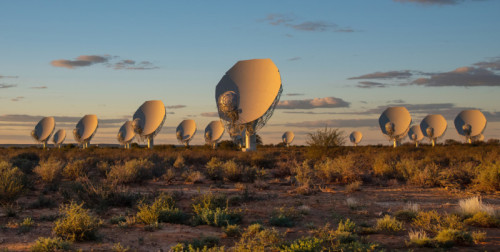
UQ researchers are investigating better ways to predict the impact of wind-driven hail by combining various observation technologies.
(Photo credit: The University of Queensland
)
Key points
- The technology we use to measure hail and severe weather is not suited to predicting conditions below cloud level.
- This means it is difficult to forecast or track the impact of highly localised hail events.
- A collaboration betweent UQ, Suncorp, and Natural Hazards Research Australia aims to fill this critical information gap by linking fixed and mobile weather observation during storms over the next 2 years.
Southeast Queensland weather experts are investigating whether they can better predict hail fall and the damage it causes in severe thunderstorms.
The University of Queensland will join with Suncorp and Natural Hazards Research Australia to link fixed and mobile weather observation during storms over the next 2 years.
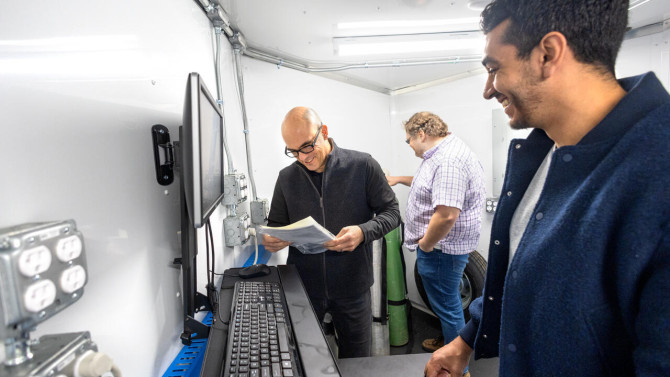
Associate Professor Matthew Mason from the UQ School of Civil Engineering said measuring the influence of near-surface winds on hail trajectories would fill a crucial information gap that occurs below cloud level.

Associate Professor Matthew Mason at one of the HailNet monitoring stations at UQ’s Pinjarra Hills Research Precinct.
(Photo credit: The University of Queensland.)
“Thunderstorms are a predictable fixture in Southeast Queensland summers but the speed at which they develop, and their impact at a ground level, can be quite unpredictable,” Dr Mason, from UQ’s School of Civil Engineering , said.
“Bringing together hail observations and radar data with wind measurements might provide us with that clearer picture of what is happening closer to the ground.”
Professor Hamish McGowan who leads a multidisciplinary weather research group at UQ, said the project could ultimately improve understanding of hail and damage risk.
“We will be deploying UQ’s mobile Doppler radars during thunderstorm and the data we capture will be analysed alongside readings from Bureau of Meteorology radars and automatic weather stations and 10 HailNet sensors,” Professor McGowan said.
“We might not be able to prevent storms from happening, but we can get a clearer picture of which areas are going to get hit harder than others, and how severe that damage could be.”
The collaboration launch comes nearly a year after destructive hailstorms caused a reported $2.2 billion in insured damages across Southeast Queensland and Northern NSW.
Suncorp climate scientist Dr Rhys Whitley said the scale of last year’s event underlined the importance of better understanding severe weather.
“One year on, we have an opportunity to turn what we learn from events like this into better knowledge about the severe weather risks facing Queensland communities,” Dr Whitely said.
“There are still important gaps in our understanding of the impact of wind-driven hail at ground level which matters because the damage on the ground is ultimately what Queenslanders experience.”
Collaboration and acknowledgements
The project is part of Suncorp’s $3 million Future Ready Resilience Program, which brings together leading researchers, government and industry experts to better understand natural hazards and strengthen resilience across Queensland.
The program was announced last year as part of Suncorp’s commitment to the Queensland Government following the sale of Suncorp Bank in 2024.
Suncorp has commissioned Natural Hazards Research Australia to deliver this research. Natural Hazards Research Australia is highly valued and respected as the national centre for natural hazards resilience and disaster risk reduction research.