Researchers from QUT and staff at Metro North Health and Clinical Excellence Queensland will partner on a new project to address hospital flow, with $1,474,488.80 awarded through the National Health and Medical Research Council (NHMRC) Partnership Projects funding scheme.
Access block contributes significantly to emergency department overcrowding, ambulance ramping, delayed care and patient harm, with flow-on effects across the entire health system.
The project, led by Professor Jed Duff from the QUT School of Nursing, QUT Centre for Healthcare Transformation and Chair of Nursing at the Royal Brisbane and Women’s Hospital, will implement the SAFEST Patient Journey Home Framework, an evidence-informed, multi-component intervention developed by Clinical Excellence Queensland for the Australian healthcare context.
“Over the last six years, there has been a significant increase in demand for emergency department services in the state’s busiest hospitals,” Professor Duff said.
“This demand is projected to intensify, and emerging trends suggest that Queenslanders need more urgent care than ever before.
“While access block has traditionally been viewed as an emergency department issue, increasing evidence shows it reflects broader, system-wide patient flow failures.
“Although the SAFEST Framework brings together well-established patient flow strategies, these approaches have failed to become embedded in routine care.
“To close this implementation gap, we will use a structured capacity-building program that empowers frontline interdisciplinary teams to lead evidence-based practice change.”
The project will be the largest interventional study on patient flow conducted in Australia and will include experiential learning, team-based problem solving, implementation coaching and structured executive support.
Using a stepped-wedge cluster randomised trial, the research will be conducted across four major hospitals within Queensland’s largest public health provider, Metro North Health.
“Our primary objective is to evaluate the effect of the SAFEST Framework on patient flow, access block, and broader health system performance,” Professor Duff said.
“A cost-consequence analysis will also assess the economic implications of implementing the framework.”
The multidisciplinary research team includes QUT chief investigators Dr Grace Xu, Professor Evonne Miller, Professor Samantha Keogh, Associate Professor Nicole White (AusHSI) and Associate Professor Hannah Carter (AusHSI) and associate investigator Dr Thomasina Donovan (AusHSI).
Other chief investigators include Dr Nina Meloncelli, Metro North Hospital and Health Service, Professor Louise Cullen, Royal Brisbane and Women’s Hospital, Associate Professor Peter Jones, University of Auckland, and Associate Professor Andrew Staib, Metro South Hospital and Health Service.
Other associate investigators include Dale Trevor, Royal Brisbane and Women’s Hospital, Ila Stuer, Metro North Hospital and Health Service, Champika Pattullo, Royal Brisbane and Women’s Hospital, Dr Louise Purtell, Metro North Hospital and Health Service, Dr John Burke, Royal Brisbane and Women’s Hospital, Dr Kim Hansen, Metro North Hospital and Health Service, Dr Angela Wood, Metro North Hospital and Health Service, Julie Bunting, Metro North Hospital and Health Service, Sharon Montgomery, Metro North Hospital and Health Service, Laureen Hines, Clinical Excellence Queensland, and Deanne Steele, Clinical Excellence Queensland.
The industry partnership will ensure the research is embedded directly into clinical practice, accelerating translation from evidence to system-wide impact.
“Partnering with Metro North Health and Clinical Excellence Queensland means this is not research conducted in isolation,” Professor Duff said.
“Our industry partners will help to ensure solutions are practical, scalable and immediately relevant to the realities of Queensland hospitals. That level of collaboration is essential if we are to achieve meaningful, sustainable improvements in patient flow and safety.”
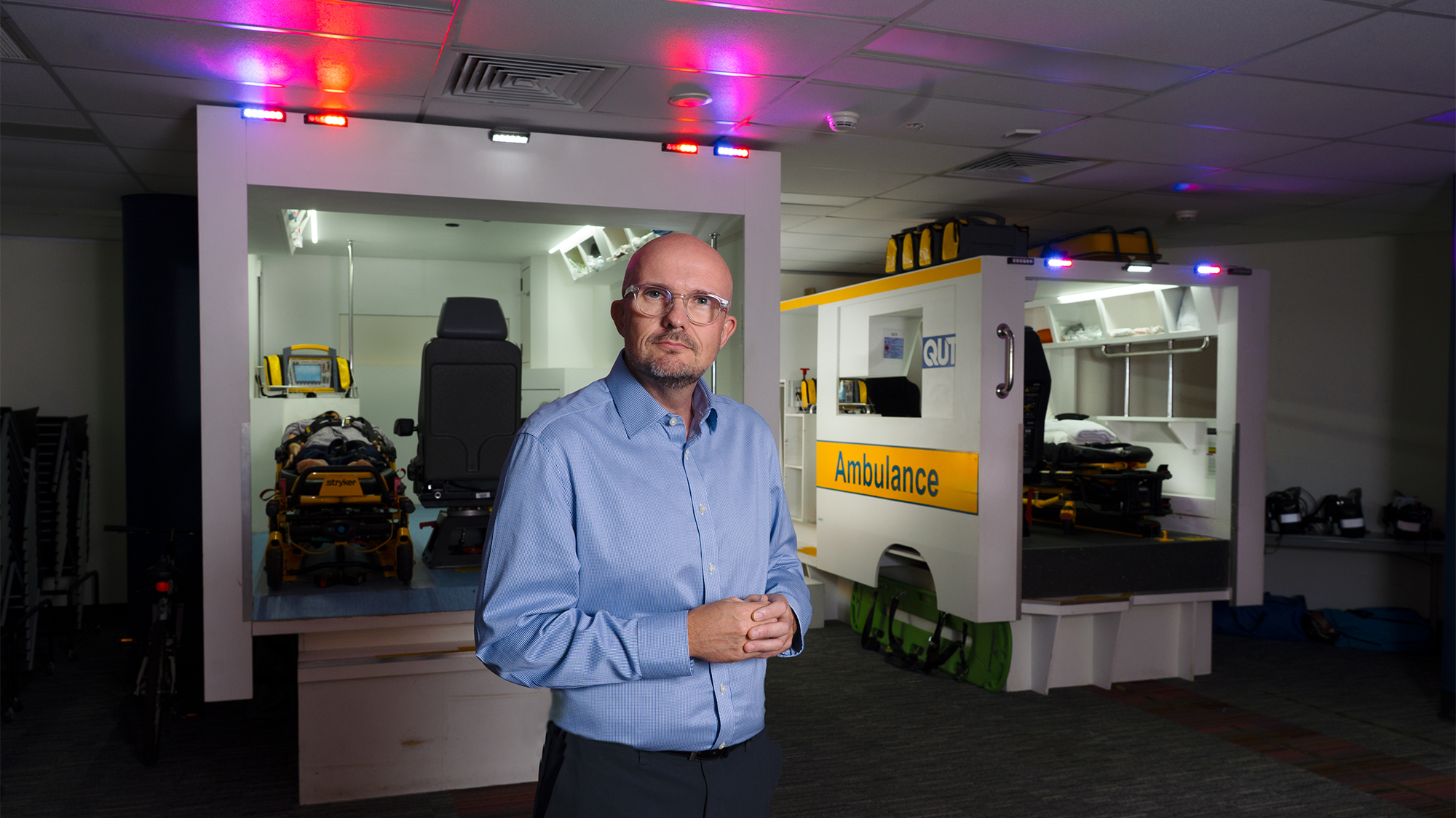
Inset (top to bottom): Associate Professor Hannah Carter and Dr Thomasina Donovan. Main photo (left to right): Dr Grace Xu, Professor Evonne Miller, Professor Jed Duff, Associate Professor Nicole White and Professor Samantha Keogh.