Ngauwudu, the Wunambal name for the Mitchell Plateau, sits within Wunambal Gaambera Country and the Uunguu Indigenous Protected Area, which spans about 25 000 square kilometres of the Kimberley.
As the Wunju (late wet season) settled over the East Kimberley last March, staff from the Australian National Insect Collection travelled to Kununurra in Western Australia and then flew to Ngauwudu (Mitchell Plateau).
This was the first major insect collecting field trip to this biodiverse region during a wet season. The average rainfall for the area is 1000-1400 mm from November to April.
One of the main goals was to survey vine thicket rainforests, which are distinctive, threatened and fragmented ecosystems in Western Australia.
The highlight of the field trip was learning from Traditional Owners, whose knowledge of insects helps guide their understanding of weather, seasons and ecosystem health.
Here’s a glimpse of the team’s experience.
CSIRO staff Ethan and Mengjie setting up a light trap to attract insects
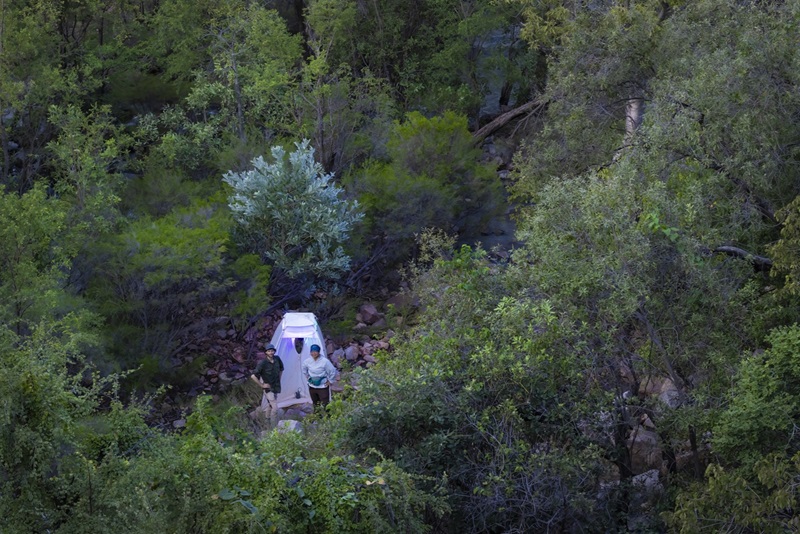
Two teams of six researchers from CSIRO spent around 10 days on Ngauwudu. They collected insects in many different ways, including using light traps, hand nets, Malaise traps, pan traps, flight intercept traps and leaf litter sampling.
The field trip brought together CSIRO staff, the Wunambal Gaambera People, who hold exclusive native title, and the Western Australian Department of Biodiversity, Conservation and Attractions (DBCA).
A fruit fly with reflective eyes
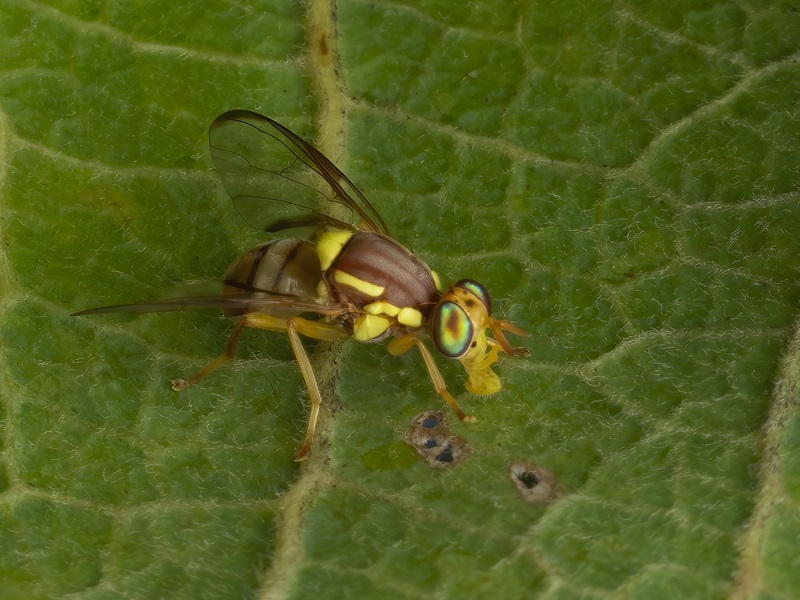
Not all fruit flies are pests, but this native species (Bactrocera jarvisi) can cause problems for fruit growers.
Dr Keith Bayless, a specialist in flies, observed it feeding on honeydew produced by scale insects.
“This fly’s eyes are its most striking feature,” said Keith.
“The reflective green colour helps the fly see more effectively in bushland environments, which are dominated by green vegetation. The effect is a little like wearing ski goggles designed to enhance contrast in snowy conditions.”
Documenting native insects like this fruit fly helps scientists distinguish native or long-established pest species from potential new arrivals from overseas.
A lab with a view
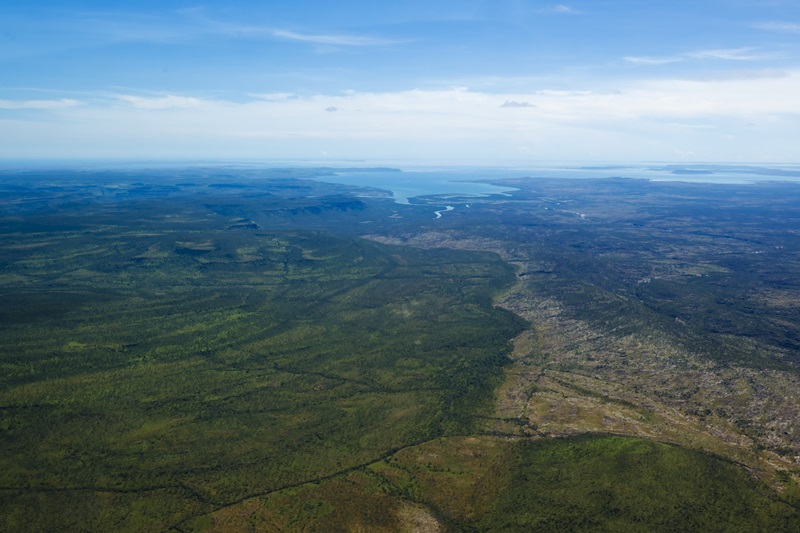
“We travelled to Kununurra in Western Australia and then flew with our equipment and food into Ngauwudu in small planes, where we stayed at a ranger station,” said Keith.
The wet season timing was perfect. Many insects are active only during this period and the team of Traditional Owners and scientists recorded dozens of species likely to be new to science, along with many species never before recorded from the Kimberley or Western Australia.
Jeremy Kowan, Uunguu Ranger and Wunambal Gaambera Traditional Owner, reflected on the experience.
“It was a good experience to work with the scientist from CSIRO looking for insects. We found some species that they hadn’t seen before,” said Jeremy.
Engineers in the treetops
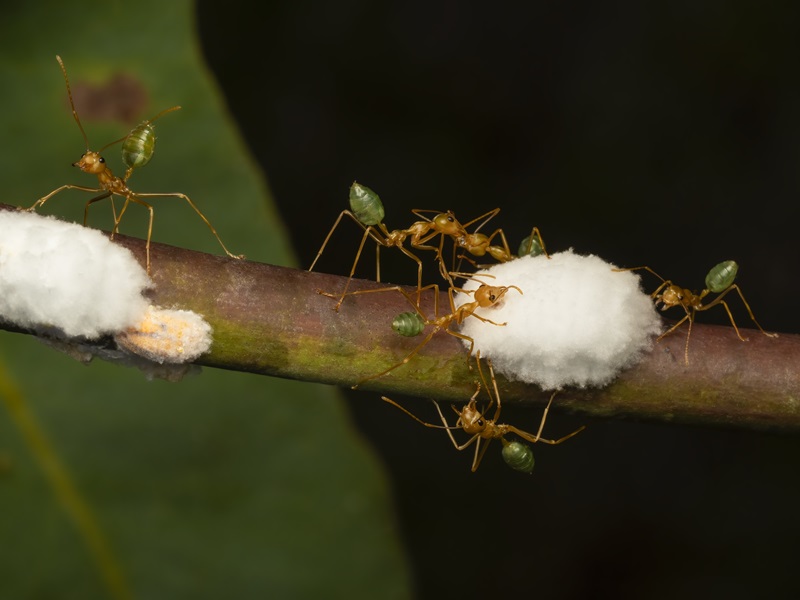
Green tree ants are an edible insect with a citrusy flavour. They live in northern Australia and Southeast Asia.
“These ants don’t make permanent nests, they sew leaves together using silk produced by their larvae. They can even move their house around,” said Keith.
“If you bump into one, you might end up covered by angry ants.”
Green tree ants are beneficial in agricultural areas, where they will eat pest insects and then move on. This habit can create problems for entomologists when green tree ants devour the contents of their insect traps.
When adventure travel is your day job
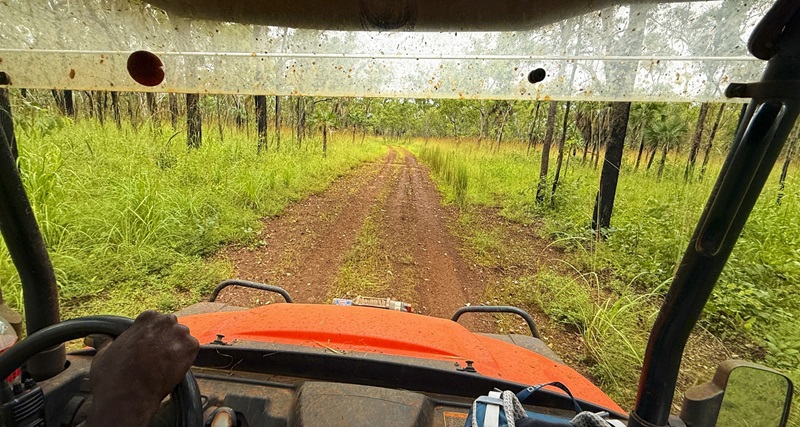
“We worked alongside the Traditional Owners in the field, travelling by utes and ATVs to reach remote collecting sites,” said Keith.
“One evening, clouds of crickets flew into camp. Although this signalled rain was coming, the Traditional Owners noted that green tree ants were still active, indicating the rain would not be heavy.”
A tent, but not for camping
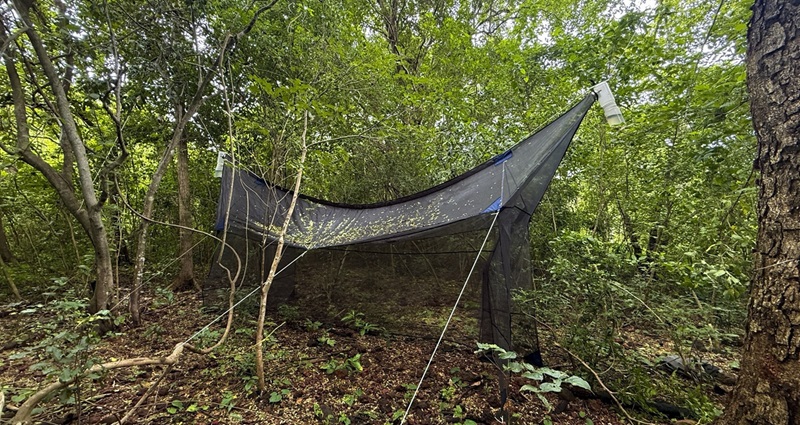
This is a Malaise trap laid in the rainforest.
Its tent-like structure funnels flying insects into a bottle of ethanol, which preserves them for later study. Different traps are better at catching different kinds of insects. The team worked day and night, deploying 11 different collecting methods across 300 collecting events.
The insect specimens collected during the field trip are now at the Australian National Insect Collection in Canberra, in agreement with the Wunambal Gambera people. They are being curated and studied and will be kept safely as a permanent, accessible record of biodiversity on Ngauwudu.
A hunter on a leaf
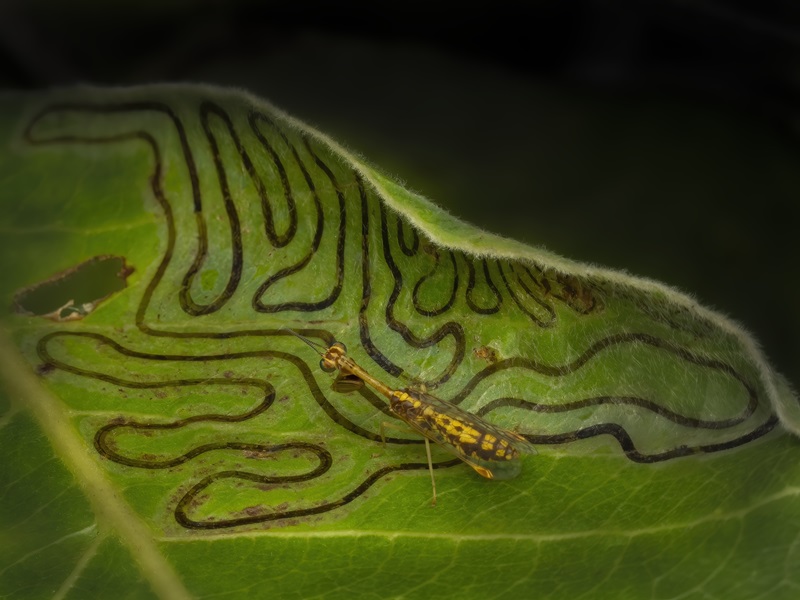
This insect is a mantisfly. But it’s not a praying mantis and it’s not a fly.
Mantisflies have unusual life cycles. Adults hunt insects and their larvae are parasites of spiders. Some species live in the lungs of spiders feeding on their haemolymph (blood). Other species develop in the egg sacs of spiders and eat the baby spiders.
The leaf where this mantisfly is resting, or perhaps hunting, has been scarred by a larval leaf mining beetle, a little grub that has chewed through the tissue inside the leaf in a formation that resembles a map of a river. Tunnelling inside a leaf keeps the larva safe from predators.
A prickly character
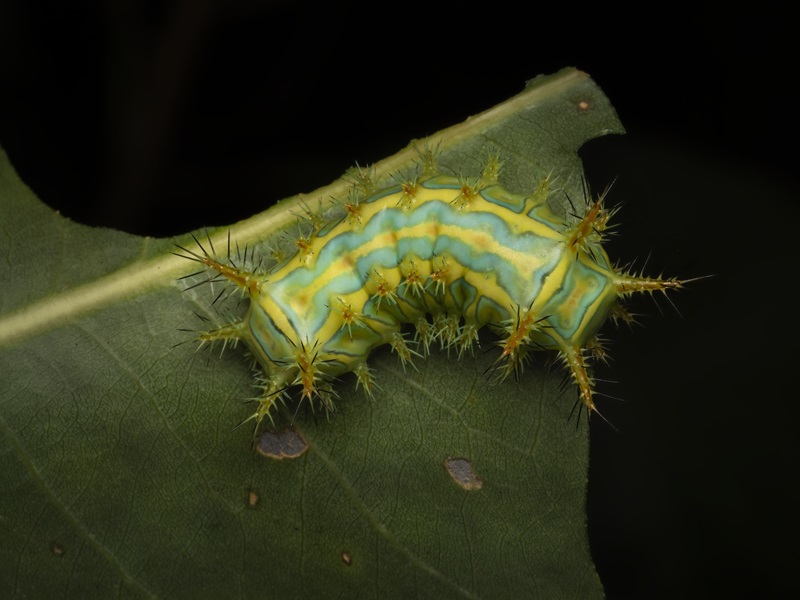
This beautiful larva is called a “nettle caterpillar”, which warns predators with bright, aposematic colours of its painful sting. Its many spines are connected to venom glands, with some species known to produce a cocktail of up to 150 different toxins.
Little is known about this particular caterpillar, which is similar to Queensland’s “Rainbow Battleship” and probably the still unknown larva of a species in the genus Comana.
When the caterpillar is ready to pupate, it will spin a hard cocoon from which a fluffy, brown moth will emerge through a circular opening, leaving an empty “cup” on a twig. Based on their characteristics, moths in this family are commonly referred to as cup moths, nettle moths or slug moths, but unambiguously as Limacodidae by scientists around the world.
Birds on a wire
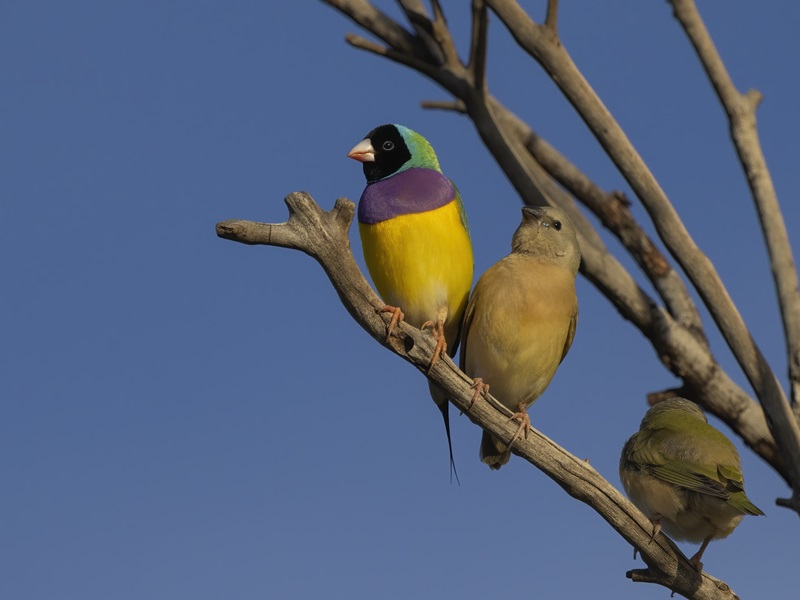
Our entomologists are focussed on insects but were treated to some beautiful sights throughout the East Kimberley, like these Gouldian finches. The male of the species is brightly coloured.
Palm forest
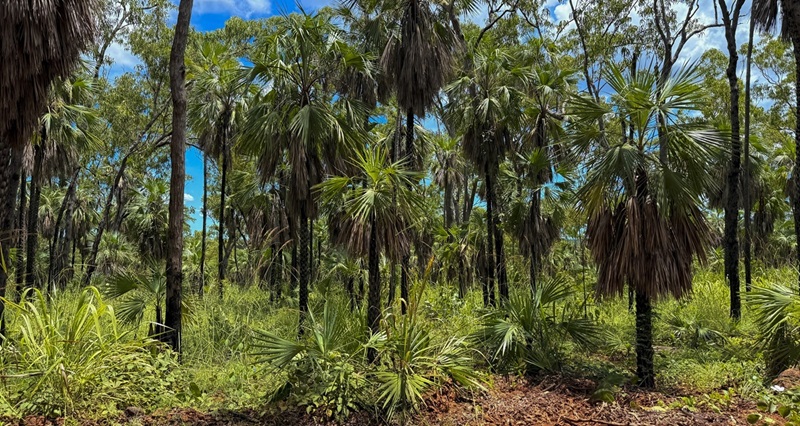
The East Kimberley is a highly biodiverse region. Ngauwudu encompasses starkly different ecological communities including grasslands, rainforest and river systems. Dangana (Livistona eastoni) form palm-dominated woodlands and open forest communities unique to the region.
The team aimed to collect in each ecosystem to understand more about the insects’ diverse niches and ecological roles.