The University of Newcastle’s Gosford Central Building has been recognised as a world-leading example of sustainable building design and construction, awarded a 6-Star Green Star rating by the Green Building Council of Australia (GBCA).
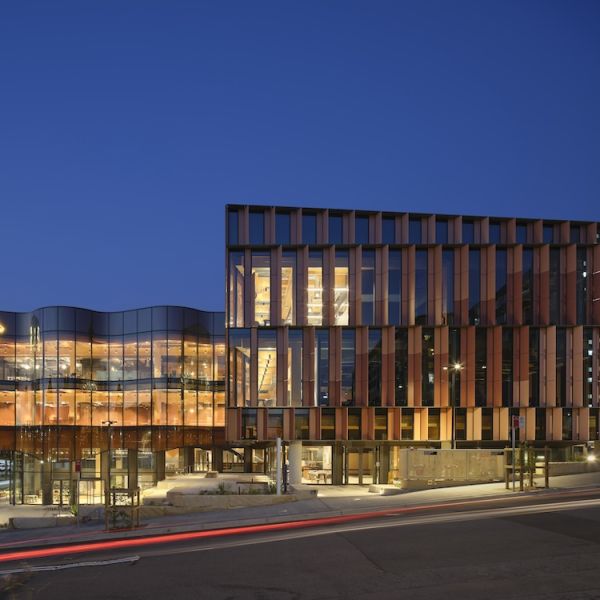
Gosford Central is the first building on the Central Coast to achieve this recognition, and just the third in regional NSW. The University’s Q Building was the first building in regional NSW to achieve a 6-Star Green Star certification.
This is the highest level of certification available and represents world leadership in environmentally sustainable development.
The achievement recognises the University’s commitment to creating a campus that not only minimises environmental impact but also supports the wellbeing of students, staff and the wider community.
The University was also recognised this week as 119th globally in the 2027 QS World University Sustainability rankings, strengthening its standing as a global leader in sustainability. Together with the 6-Star Green Star rating, it demonstrates the University’s reach beyond its campuses.
University of Newcastle Vice-Chancellor Professor Alex Zelinsky said the 6-Star Green Star rating marked a significant milestone for the University and the Central Coast community.
“We are proud to deliver the Central Coast’s first 6-Star Green Star certified building, a reflection of the university’s commitment to embedding sustainability across our campuses and operations,” said Professor Zelinsky.
“Our university is globally recognised for our dedication to sustainability. By embedding sustainability across our research, teaching and our actions it shows we can tackle environmental challenges locally and create real-world impact.
“Gosford Central demonstrates how we can combine world-class education facilities with environmental leadership, while delivering lasting benefits for the Central Coast community and the region,” he said.
The Gosford Central Building was designed with sustainability integrated throughout every stage of the project, including energy, water, materials, waste, ecology, resilience and community wellbeing.
GBCA CEO Davina Rooney said the Gosford Central building shows how universities can reduce their environmental impact while creating healthier, more comfortable places to learn and work.
“Achieving 6 Star Green Star Buildings certification is a significant achievement for the University of Newcastle and sets a strong benchmark for education facilities on the Central Coast,” Ms Rooney said.
“What’s particularly impressive is the focus on reducing emissions from the outset, with innovative mass timber construction and lower-carbon materials helping to cut upfront carbon significantly. Combined with renewable energy, water efficiency and spaces designed around the needs of students and staff, it’s a great example of what can be achieved when sustainability is considered from the start.”
Gosford Central is the latest example of the University’s sustainability commitments at work, which aligns to the United Nations Sustainable Development Goals (SDGs).
Key sustainability features
Waste
- 95 per cent of construction waste was diverted from landfill through material separation, recycling and responsible construction practices.
Energy
- The fully-electrified building is powered by 100 per cent renewable electricity and includes 105 rooftop solar panels making a 60kW rooftop solar system
- A 240kWh battery storage system reduces the building’s demand on the electricity grid in peak periods
- During a black out, the building would be able to remain powered thanks to battery and solar energy
- High-performance fritted-double glazing and energy-efficient air conditioning also increase its energy efficiency
Materials
- Low-carbon and responsibly sourced materials were used throughout the project, including engineered timber and carbon-neutral certified concrete
- It is the first and largest timber-structure building on the Central Coast
Water
- A 48kL rainwater harvesting system supplies toilet flushing and cooling tower operations, reducing potable water use
- Native and drought-tolerant landscaping further reduces irrigation demand
Resilience and nature
- The building has been designed to respond to future climate conditions while incorporating extensive landscaping that supports biodiversity, habitat creation and connections to nature
Health
- The building has been designed with user health front of mind, with air quality, lighting, daylighting, acoustics, toxins and nature inspired design embedded