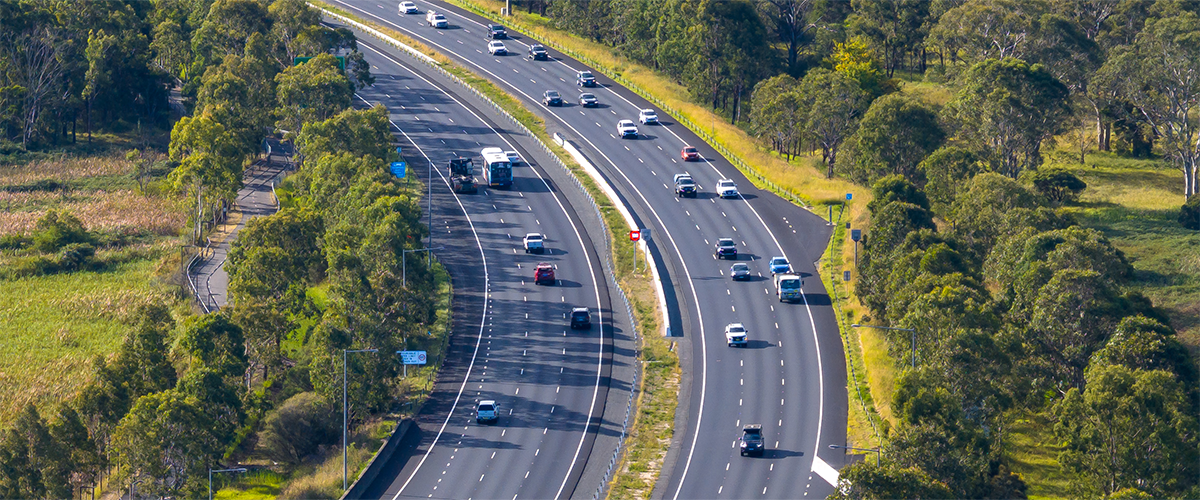
Families across Western Sydney are under real pressure. With longer commutes, a greater reliance on cars and sharper exposure to fuel prices, the cost of mortgages, rent, groceries and fuel is felt acutely across the west.
This Budget acts on a simple principle: relief for today and reform for tomorrow – building a state working Australians can afford.
Relief for cost-of-living pressures
Relief in this Budget is practical and immediate, and it reaches Western Sydney households
where costs bite hardest, on the road and in fuel and tolls. It delivers:
- $100 off private vehicle registration, worth $435 million across 4.4 million vehicles, with an $80 cut for motorcycles (excluding caravans and trailers). The benefits are particularly significant for Western Sydney, where households are more likely to run two or more cars.
- Lowering the weekly toll cap from $60 to $50 for 2026-27. Western Sydney households make more than half of all toll-relief claims, with more than $186 million paid to the region since 2024.
These relief measures sit in a wider statewide package, comprising:
- $557.1 million through the Home Energy Saver program: interest-free loans and discounts to install energy-efficient appliances and cut power bills over time.
- Scrapping toll administration fees from July, saving at least $10 a notice, and ending a charge that cost motorists $60 million last year, in some cases twice the toll itself.
- Opal fares held at 2025 prices for the year.
- A $1,000 cost-of-living payment for more than 120,000 NSW Government employees, triggered because Sydney CPI growth exceeded 4 per cent between the March quarters of 2025 and 2026.
Healthier Western Sydney communities
Health is the largest single commitment in this Budget.
Across NSW, a historic $10.3 billion increase in health funding over four years, delivered with the Australian Government, will recruit 9,000 more health workers and fund around 2,900 more planned surgeries a year.
This sits alongside $11.9 billion for health infrastructure including 32 new and upgraded hospitals and more than 2,500 beds.
Western Sydney shares fully in that program. Of the $11.9 billion statewide, $3.8 billion is invested in Western Sydney hospitals over the next four years, including Bankstown Hospital, Rouse Hill Hospital and Fairfield Hospital.
Nurses and midwives receive the largest pay rise in more than twenty years, and the largest ever for enrolled nurses, backed by an additional $2.9 billion in this Budget.
In Western Sydney, more than 15,200 nurses and midwives and 3,641 police officers are among those benefiting from the high wage economy this Government is building.
Better schools, closer to home
Every child deserves a world-class education, wherever they live. This Budget invests $9.2 billion statewide over four years for new and upgraded schools, of which $4.1 billion is for Western Sydney. The Minns Labor Government is delivering new and rebuilt schools across Western Sydney, close to the communities they serve.
In North West Sydney, the new and upgraded schools will add new permanent capacity for more than 17,000 public school students, with 800 modern classrooms replacing more than 160 ageing demountables.
In South West Sydney, the new and upgraded schools will add new permanent capacity for more than 13,500 public school students, with 650 modern classrooms replacing more than 100 ageing demountables.
Transport and connectivity
Reliable transport keeps Western Sydney connected and moving. This Budget invests $3.5 billion in additional transport infrastructure and roads for Western Sydney, alongside the major projects reshaping the region, including Sydney Metro West and the new Western Sydney International Airport with its dedicated metro line.
It also delivers:
- $400.0 million in partnership with the Australian Government for Windsor Road upgrades at Rouse Hill to improve capacity, reduce congestion and ensure safe access to the new Rouse Hill Hospital.
- An additional $400.0 million for the Fifteenth Avenue upgrade and $200.0 million for the Elizabeth Drive upgrade, bringing total NSW investment to $1.4 billion in a $2.4 billion project funded with the Australian Government.
- $2.4 billion of new investment for Parramatta Light Rail stage 2.
- A new Bankstown bus interchange to support thousands of new homes, and improve connectivity to the Sydney Metro and Bankstown Hospital for $46.5 million.
The Budget also includes funding in 2026-27 to reconstruct and reopen the Great Western
Highway at Victoria Pass as soon as possible. $50.0 million is also provided for immediate
upgrades to provide a safe detour, and $3.6 million to support local businesses.
Safer Western Sydney communities
Domestic and family violence affects families across Western Sydney.
This Budget makes a $184.1 million investment in six frontline domestic and family violence programs, helping thousands more women, children and people impacted by violence access specialist support and stay safe. This is a 50 per cent increase phased in over four years.
Community workers also receive a 4.75 per cent pay increase under the Fair Work Commission determination, in line with the Fair Work Commission determination and which the Minns Labor Government is passing on in full.
The Budget also delivers new emergency services facilities and firefighters for Western
Sydney through $22.2 million for a new fire station, fire appliance and 20 firefighters at
Marsden Park.
Responsible decisions make these investments possible
This Budget can provide cost-of-living relief and continue investing in essential services because the Government has spent the past three years making responsible and difficult decisions to strengthen the state’s finances.
That work has been done without privatisation and without bringing back an unfair wages cap, while keeping public assets in public hands and maintaining an independent umpire for wages and conditions.
As global uncertainty and higher fuel prices place additional pressure on families and businesses, this Budget provides support now while continuing the work of returning the state’s finances to surplus in 2027-28.
It’s about supporting families today, while securing NSW’s future.