Silicosis – a devastating and incurable lung disease caused by inhaling silica dust – is surging worldwide, fuelled by a new wave of aggressive cases in young tradespeople working with engineered stone. Despite its growing impact, the biological triggers that turn silica exposure into life‑threatening lung inflammation and scarring have remained poorly understood.
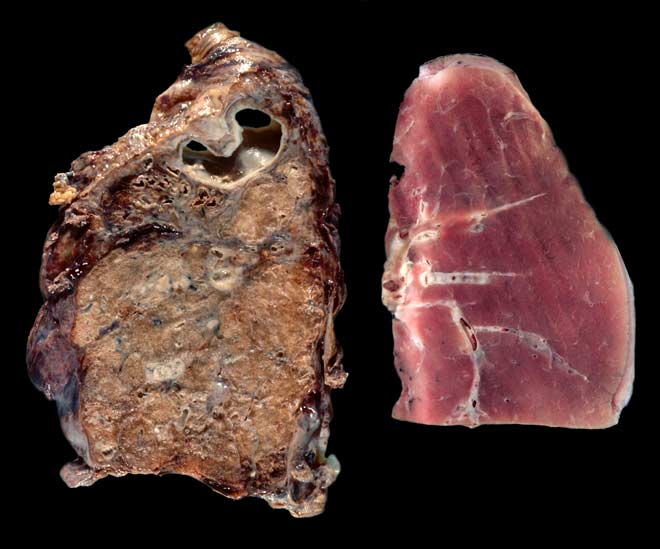
Now, researchers at Hudson Institute of Medical Research have overturned decades of scientific assumptions, revealing that the structural cells lining the airways – not immune cells – are major instigators of silica‑induced lung damage. The discovery identifies a new therapeutic target for a disease that currently has no cure.
“This research fundamentally changes how we understand silicosis,” says Dr Maggie Lam, first author of the study. “For years, immune cells were thought to be the main culprits. But our work shows that the airway epithelium is actually a key driver of inflammation and fibrosis.”
Published in the international journal Particle and Fibre Toxicology, the study provides the strongest evidence yet that targeting the airway lining could halt disease progression – opening the door to precision therapies that could stop the disease before irreversible damage occurs.
Rapidly escalating global health crisis
Silicosis has traditionally been associated with decades of exposure in industries such as mining and quarrying. But the rise of engineered stone – used widely in kitchen and bathroom benchtops – has created a new and alarming pattern of disease.
Between 1990 and 2019, global silicosis prevalence increased 91.4%, and annual incidence rose 64.6%. Unlike silicosis from chronic low-level silica exposure, which typically develops over 10-30 years, the high silica dust exposures associated with engineered stone can cause severe disease within months.
Once silica particles lodge deep in the lung, the body cannot effectively clear them – meaning inflammation and scarring can progress long after a worker leaves the job, or even after the 2024 ban in Victoria removed the risk of future exposure to engineered stone dust.
“This is why new treatments are urgently needed,” says A/Prof Michelle Tate, senior author and head of the research team. “Silicosis is irreversible and the damage accumulates silently over time. We need therapies that can stop the disease in its tracks.”
Breakthrough in understanding how silicosis begins
For decades, scientists assumed that immune cells – particularly macrophages, the lung’s resident scavenger cells – were primarily responsible for sensing silica particles and triggering the damaging inflammatory cascade that leads to fibrosis.
The Hudson Institute team has now shown that this long‑held assumption was incomplete.
Their research reveals that lung epithelial cells, which line the airways, are the true early responders to silica particles. These cells contain a protein called NLRP3 that acts as an alarm system, sensing when the cell is under stress.
“When silica particles enter the lung and are taken up by epithelial cells, they cause significant stress, triggering NLRP3 and initiating a powerful inflammatory response,” explains Dr Lam.
To test the importance of this pathway, the team removed NLRP3 specifically from epithelial cells in experimental models. The results were striking:
- Early inflammation was dramatically reduced
- Recruitment of a damaging and persistent pro‑fibrotic immune cell population was blocked
- Long‑term lung damage and scarring were significantly decreased
“This is the first study to show that removing NLRP3 from epithelial cells alone is enough to limit chronic silica‑induced inflammation and fibrosis,” says A/Prof Tate. “It resolves a longstanding paradox in the field and shifts the therapeutic focus toward the airway epithelium.”
The team also identified a previously undescribed pro‑fibrotic neutrophil population in the silicotic lung – a discovery that could further refine future treatment strategies.
A new path toward targeted treatments
Silicosis currently has no effective treatment. Patients are offered symptom management, oxygen therapy, or – in severe cases – lung transplantation. No existing therapy can halt or reverse the underlying inflammatory and fibrotic processes.
The Hudson Institute findings open a promising new avenue.
Because epithelial cells line the airways, they are directly accessible to inhaled or locally delivered drugs. This means future therapies could:
- Target the disease at its source
- Avoid the side effects of systemic immune‑suppressing medications
- Potentially halt disease progression before irreversible scarring occurs
“This research gives us a clear therapeutic strategy,” says Dr Lam. “If we can develop drugs that block epithelial NLRP3 activation, we may be able to stop silicosis in its early stages.”
A/Prof Tate agrees: “This is a precision‑medicine approach. Instead of broadly suppressing the immune system, we can intervene exactly where the disease begins.”
Global leadership role for Hudson Institute
The study builds on a growing body of silicosis research at Hudson Institute, supported by the Medical Research Future Fund.
Hudson Institute’s leadership in this field reflects its unique strengths in inflammation biology, respiratory disease research, and translational science.
“Silicosis is a preventable disease, but for thousands of workers already exposed, prevention is not enough,” says A/Prof Tate. “Our goal is to deliver real therapeutic options – and this discovery is a major step toward that.”
A future where silicosis is treatable
As governments around the world grapple with the consequences of engineered stone exposure, the need for effective treatments has never been more urgent. The Hudson Institute team’s discovery – that airway epithelial cells drive the earliest and most damaging stages of silicosis – represents a paradigm shift with global implications.
“This is a disease that has taken too many young lives,” says Dr Lam. “By understanding its root cause, we can finally begin to change that.”
With new therapeutic targets identified and a clear path toward precision inhaled treatments, Hudson Institute researchers are working to ensure that silicosis – once considered untreatable – may one day be stopped before it causes irreversible harm.