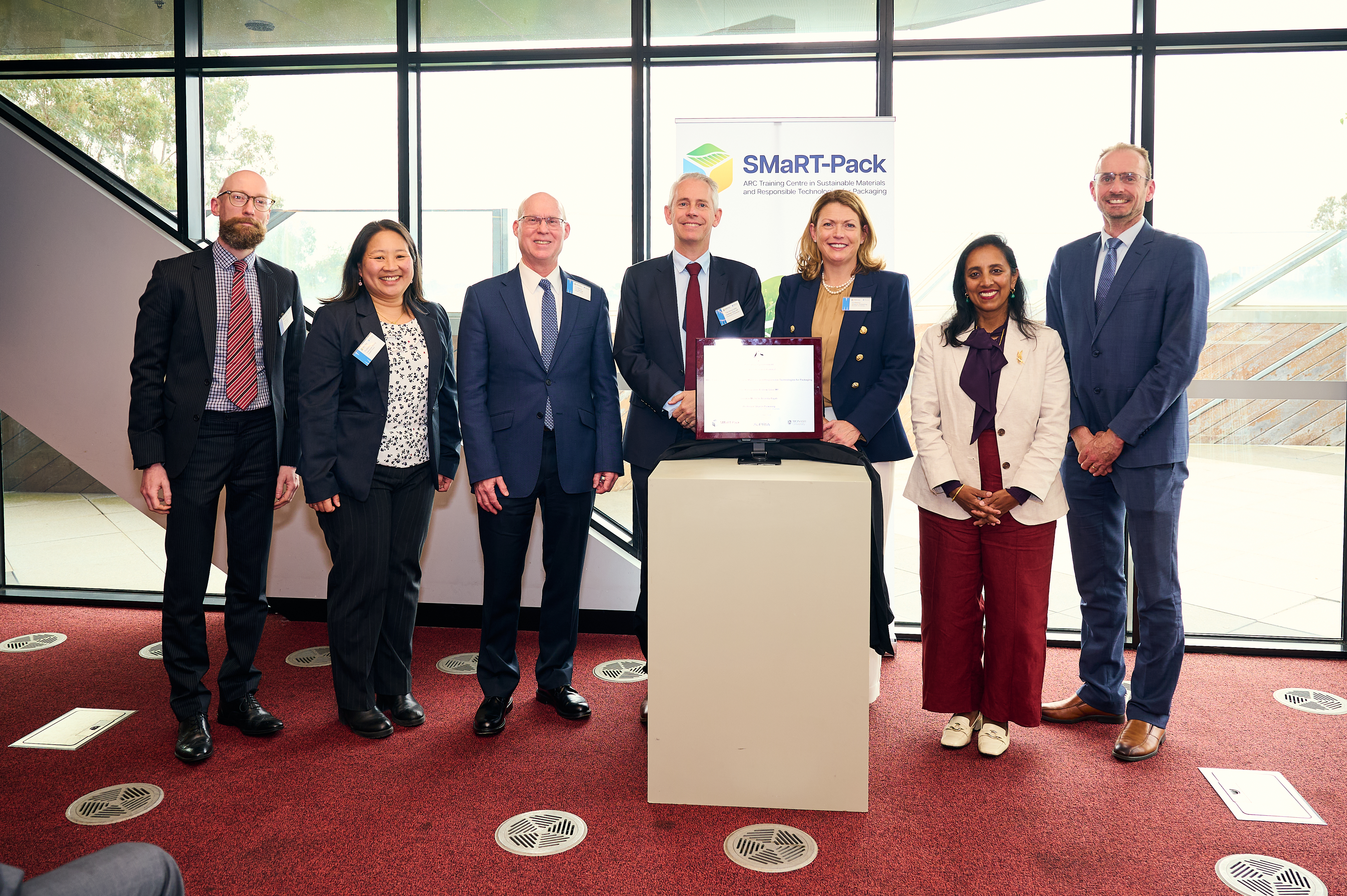
Australia’s shift towards a more sustainable, circular economy has been strengthened with the launch of the Australian Research Council (ARC) Training Centre in Sustainable Materials and Responsible Technologies for Packaging (SMaRT-Pack), led by Monash University.
The ARC Training Centre in Sustainable Materials and Responsible Technologies for Packaging (SMaRT-Pack) is supported through the ARC’s Industrial Transformation Training Centre scheme, which fosters collaborative research and industry training in areas of national importance.
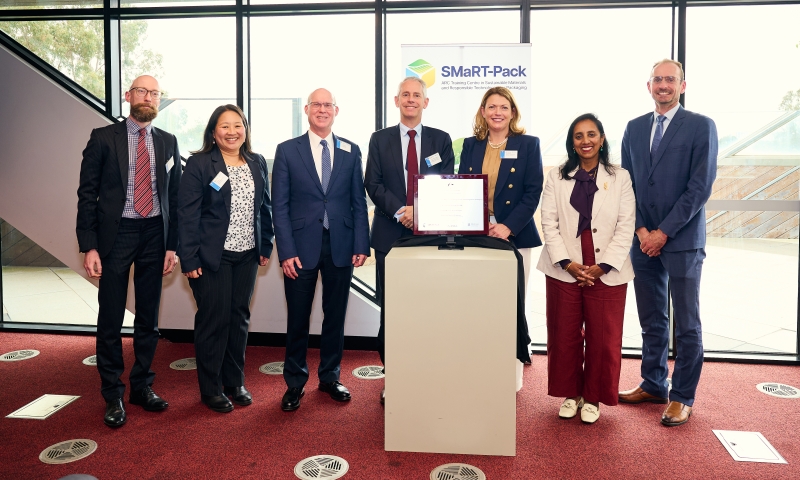
ARC Deputy Chief Executive Officer Mr Anthony Murfett joined Senator Michelle Ananda-Rajah, Senator for Victoria, researchers, industry representatives and government partners at the launch, celebrating a national collaboration to develop more sustainable packaging solutions for Australia.
From food wrappers to takeaway containers, packaging is part of everyday life. However, many products marketed as paper-based still contain hidden plastic layers, making them difficult – or impossible – to recycle through standard Australian waste systems.
SMaRT-Pack has been established to address this challenge by developing sustainable fibre-based packaging alternatives, supported by the testing, standards and policy frameworks needed for widespread adoption.
Turning waste into opportunity
The Centre brings together researchers, industry, government agencies and community organisations to create a more sustainable and responsible packaging system.
Its work spans new material development, recycling system improvements and policy advice. Through close industry collaboration, SMaRT-Pack aims to accelerate the shift from fossil fuel plastics to packaging made from sustainable plant-based fibres.
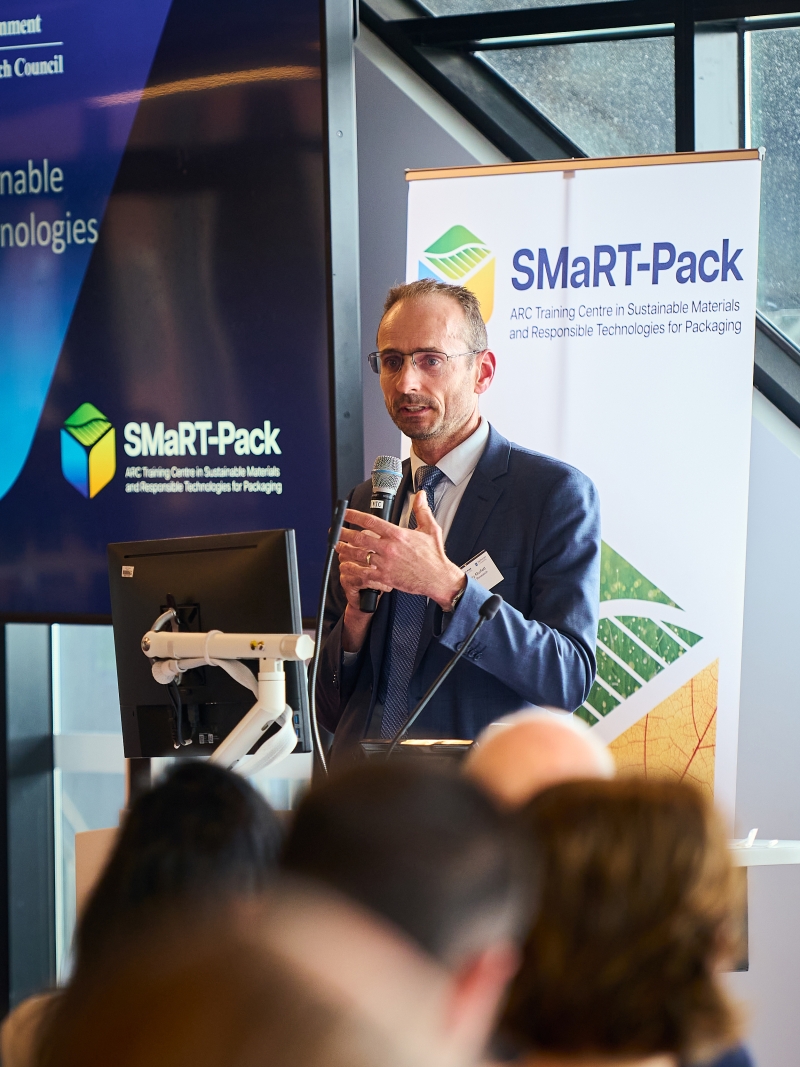
‘Initiatives bring researchers and research students into close contact with industry and other partners, giving the next generation of researchers the opportunity to understand real-world challenges and develop the skills, networks and experience to help address them. And the benefits of that investment can extend well beyond the life of a Centre.’
One research focus is engineering high-performance coatings from forestry and agricultural by-products, including timber waste, wheat straw and sugarcane bagasse. These natural coatings are designed to protect food and other products from moisture and oxygen without plastic layers.
Another priority is developing scientific testing methods and evidence-based standards to ensure next-generation packaging can be recycled, composted and safely integrated into Australian waste systems.
Building a circular packaging economy
SMaRT-Pack is also investigating ways to turn agricultural and forestry residues into high-value packaging products and bio-based coatings.
Materials such as wheat straw and sugarcane bagasse are often discarded, burnt or left unused after harvest. By creating new uses for these by-products, the Centre aims to deliver additional value for primary producers while supporting local manufacturing and regional industries.
This work aims to support new economic opportunities, skilled jobs and stronger Australian manufacturing capability in sustainable materials.
Training the workforce of the future
A key focus of SMaRT-Pack is training the next generation of researchers, engineers and industry leaders to drive innovation in sustainable packaging.
Working closely with industry partners, researchers will gain practical experience turning scientific discoveries into real-world solutions. This will help ensure Australia has the expertise to lead advances in packaging technology, recycling systems and environmental regulation.
What it means for Australians
Over time, the research may contribute to more effective recycling systems, reduced soft plastic waste and greater confidence that recyclable packaging can be recovered and reused.
The research seeks to support efforts to reduce plastic pollution in landfills, waterways and oceans, while improving understanding of the impacts of microplastics and other chemicals on food systems and the environment.
For industry and regional communities, SMaRT-Pack offers opportunities to develop new products, strengthen manufacturing capability and strengthen Australia’s position in sustainable packaging innovation.
As Australia moves towards a more circular and sustainable economy, SMaRT-Pack is helping build the research capability, industry partnerships and skilled workforce needed for a cleaner future.