A stretch of east coast holiday destinations has given rise to concerns about a ‘whooping cough corridor’, with new vaccination data revealing alarmingly low childhood protection against the highly contagious and potentially deadly disease.1,2
The 2026 Whooping Cough Report Card by the Immunisation Foundation of Australia identifies eight local are as stretching from the northern rivers of New South Wales to the top of the Sunshine Coast – interrupted only by Brisbane and its surrounds – where vaccination coverage for one-year-olds is up to 35 per cent lower than Australia’s best-performing areas.1,2
The Richmond River Coast and Tweed Valley in northern NSW and Coolangatta, Gold Coast Hinterland, Nambour, Maroochy, Noosa and Noosa Hinterland in south-east Queensland, are joined by Sydney’s Dural-Wisemans Ferry and Western Australia’s Gascoyne region in the bottom 10 for whooping cough vaccination coverage among one-year-olds.1
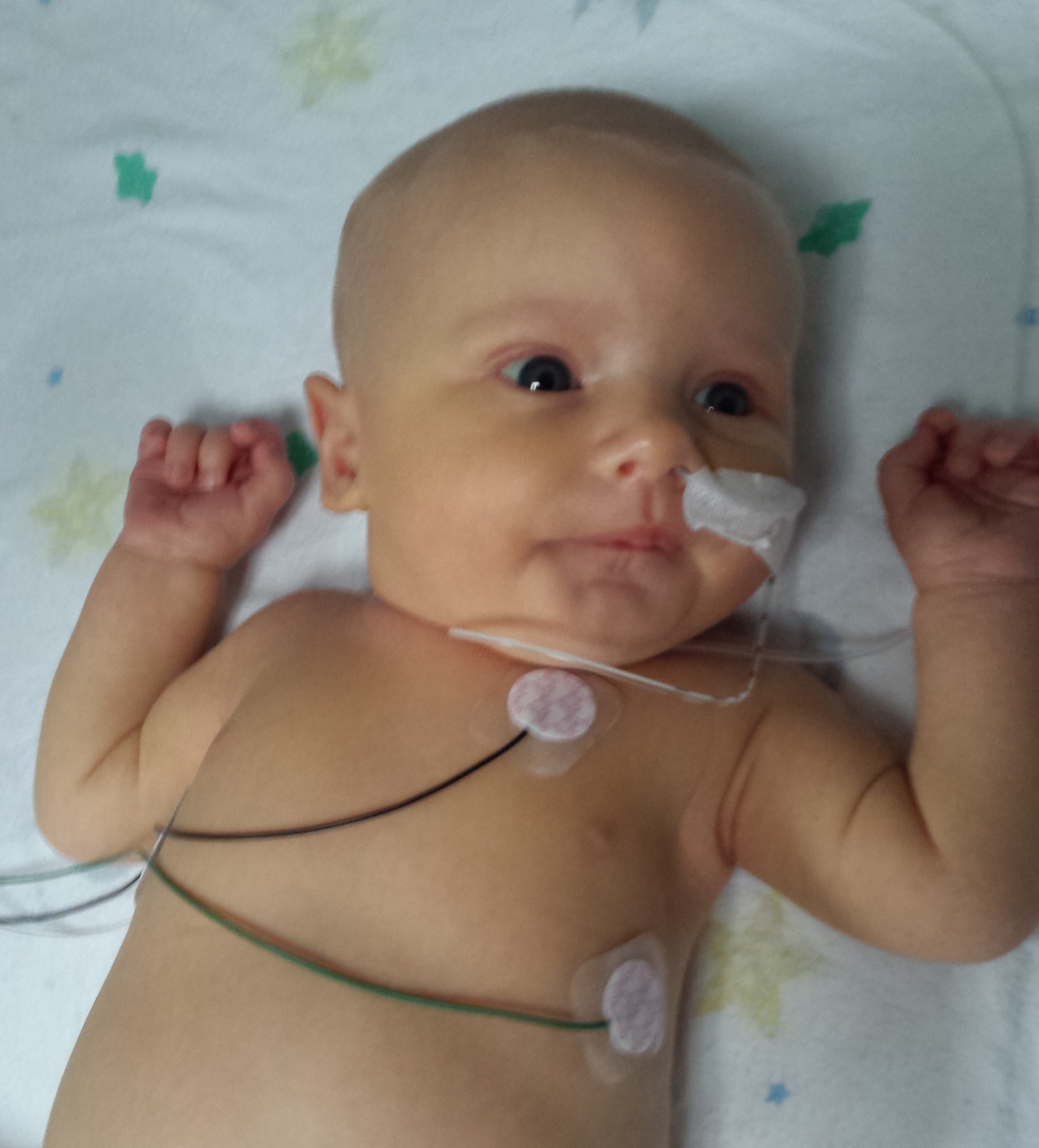
Immunisation Foundation of Australia founder Catherine Hughes AM, whose 32-day-old son Riley died from whooping cough in 2015, said the data revealed anti-vaccine sentiment was likely spreading from community to community, leaving children exposed to a potentially deadly disease.
“We must stop the spread in its tracks and turn it around before vaccination gaps allow whooping cough to run rampant in more communities – many of which are more heavily populated during the summer period,” Ms Hughes said.
“These coastal regions are among Australia’s most beautiful places to live and visit, and families deserve to enjoy their summer holidays knowing they are safe. Being up to date with whooping cough vaccinations is critical.”
The nation’s top 10 areas for infant whooping cough vaccination coverage include three in the ACT, three in Hobart, two in Sydney’s north, one in Brisbane’s inner-west and one in the Top End surrounding Darwin.1
“In many parts of the country, youngsters are well protected against whooping cough. This not only helps to keep them safe, but also protects others around them,” said Ms Hughes.
The findings come as Australia enters the warmer months when whooping cough infections often surge.3 With the holiday season approaching, the Immunisation Foundation is urging families with young children to check their vaccination status before travelling.
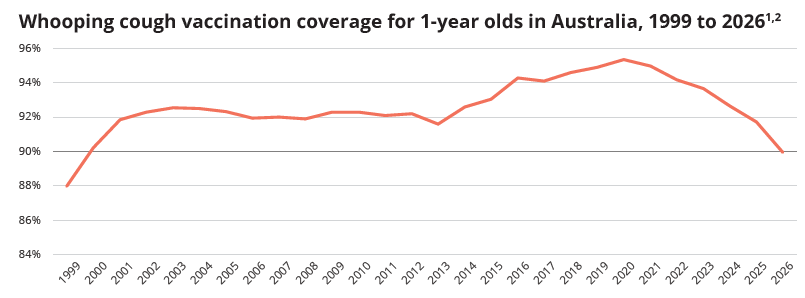
“For the first time in over 25 years, the proportion of Australian one-year-olds who are up to date with whooping cough vaccination has dropped below 90 per cent,”1 Ms Hughes said. “We need to understand why children are missing out on protection against a disease that can have devastating consequences.
“I know firsthand the cruelty of whooping cough and the suffering it can inflict on young babies, so it’s incredibly disheartening to see Australia going backwards.”
Professor Tom Snelling, infectious disease physician and Director of Health and Clinical Analytics in the School of Public Health at the University of Sydney, described geographically concentrated gaps in vaccination coverage as “a particular vulnerability”.
“Even relatively small declines in vaccination coverage can increase the risk of outbreaks,” said Professor Snelling. “Geographic pockets with low vaccination uptake tend to experience higher rates of whooping cough infection.”4,5
The Immunisation Foundation’s 2026 Whooping Cough Report Card also turns the spotlight on teenagers, with adolescent vaccination rates revealing similar geographic differences in whooping cough vaccine coverage. Of note, Noosa Hinterland has the lowest coverage rate nationally for both infants and adolscents.1
“Teenagers are an important part of the whooping cough picture. School-aged children experience high rates of the disease and can pass the infection to babies who are at greatest risk of serious illness,” Professor Snelling said.4,6
Australian research reveals that the introduction of school-based vaccination programs resulted in 95% fewer whooping cough notifications among teenagers, alongside 60% fewer infections among babies aged under six months.7
One vaccination, protection against three diseases
The Immunisation Foundation is reminding adults that the three-in-one booster widely used to vaccinate against whooping cough also protects against diphtheria and tetanus.
Diphtheria has recently returned to the national spotlight, with Australia’s Chief Medical Officer declaring it a “communicable disease incident of national significance” in May 2026 following a sharp increase in reported cases.8
“Whooping cough, diphtheria and tetanus are all serious diseases, but we have vaccines that help protect against all three,” Ms Hughes said. “It’s another reason for Australians to check whether they’re due for a booster.”
Whooping cough: A spring and summer threat
Whooping cough is a highly contagious bacterial infection that affects the airways, causing prolonged coughing fits and, in severe cases, difficulty breathing. It can be life-threatening for young infants.9
Sometimes called the 100-day cough, whooping cough can remain infectious for around three weeks after coughing begins if left untreated. It is estimated that each infected person could pass the infection to as many as 17 others in a population without immunity.10-12
With Australia at the tail end of a record-breaking epidemic in 2024-25, and more than 8,900 cases already reported in 2026, vigilance is required as the peak period approaches.3,6
The Immunisation Foundation of Australia will mark Whooping Cough Day on 8 November with a call for all Australians to remain up to date with whooping cough boosters.
This year, Whooping Cough Day marks the 10th anniversary of the Immunisation Foundation of Australia. A powerful new video featuring baby Riley, whose tragic death inspired the Foundation’s establishment, highlights the devastating realities of whooping cough.