Key points
- Radio interferometry allows astronomers to see further into the Universe in more detail than individual antennas allow.
- Signals collected by separate antennas are combined to make a better image of the sky than they could manage alone.
- Radio interferometry was pioneered at CSIRO, from the first ever observations to technology and techniques that underpin modern radio astronomy.
Like all fields of science, astronomy is about pushing the boundaries of discovery, seeing further and learning more. But when the things you study are in space it’s not easy to take a closer look.
Bigger is always better, until it’s not
For more than 400 years telescopes have allowed us to expand our view, collecting more light from space than we can with our eyes alone. The bigger the telescope, the more light it collects and the further into the Universe it lets us see.
Radio telescopes follow the same relationship, but radio waves are much weaker than other types of light. The size of radio telescope needed to collect distant signals can get unmanageable quickly.
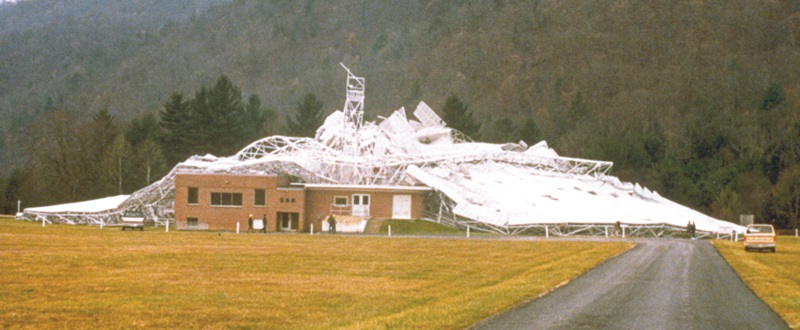
Always wanting to see further and gather more light, astronomers use a technique called radio interferometry to create a virtual large radio telescope from lots of smaller ones. It’s one of the lasting legacies from CSIRO’s first 100 years
The birth of radio interferometry
The world’s first radio interferometry observation was at Sydney Harbour in early 1946. CSIRO radio physicists Ruby Payne-Scott , Joseph Pawsey , and Lindsay McCready used radar equipment to observe the Sun .
While they only had one antenna, they used the radio waves reflected off the ocean as their second signal. From there they further developed techniques to create an image from multiple radio antennas, called aperture synthesis. Colleagues in the UK then built the first radio interferometer that had two antennas.
A new global field of study was born, but how does it work?
How to create a giant radio telescope, virtually
A single-antenna radio telescope can only measure how strong the radio waves are from one location in the sky. How small an object it can see, its resolution, depends on the antenna’s size. The bigger the antenna, the more detail captured – and better the resolution.
Astronomers use radio interferometry to imitate a giant telescope as big as the longest distance between antennas used.
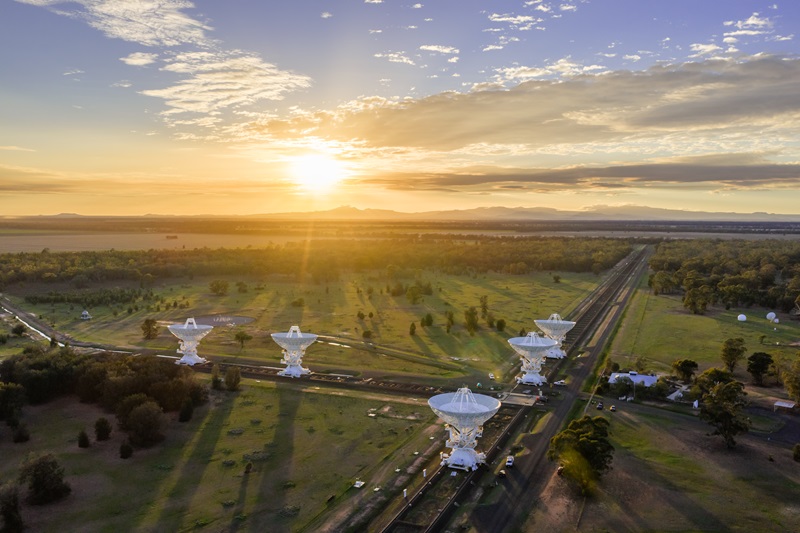
Signals from pairs of antennas are compared to form an image. The distance between each antenna pair is called a baseline. The longer the baselines, the better the image resolution.
Combining signals from multiple radio antennas together lets you capture smaller details without having to build a larger antenna.
How much detail can a virtual telescope capture?
The longer the baseline the more detail can be seen, so what’s the longest baseline out there?
In Australia we host many of the telescopes that are part of the aptly-named Long Baseline Array , achieving maximum baselines more than 6,000 km long – larger than Australia! – by combining signals with instruments in other countries. Other radio interferometers have even connected to antennas in space to increase their maximum baseline.
The longest baseline on the ground belongs to the interferometer formed by the Event Horizon Telescope (EHT)’s network of telescopes. It has a maximum baseline of more than 10,000 km – a virtual telescope the size of the Earth. The incredible resolution this allows was used to capture the first detailed picture of a black hole ‘s surroundings.

Is a virtual telescope as good as a real one?
Two smaller antennas spread apart can’t give the same result as a giant dish. But, the result can be improved through aperture synthesis.
Pioneered at CSIRO by Joe Pawsey, Ruby Payne-Scott and Lindsay McCready, aperture synthesis combines many observations from multiple pairs of radio antennas so they act like parts of a much larger telescope.
Each different baseline pair gives a new piece of information about the telescope’s target. As the Earth rotates, each baseline gives more new information, improving the result.
Astronomers then combine all those pieces of information into an image of the sky. The more different baselines between antennas, the better the image achieved.
However, this improvement comes with lots of extra effort. Extra antennas added to the telescope rapidly increase the number of signal pairs that need to be compared. ASKAP , our newest radio telescope, has 36 dish-shaped antennas, which means 630 baseline comparisons need to be calculated for every observation.
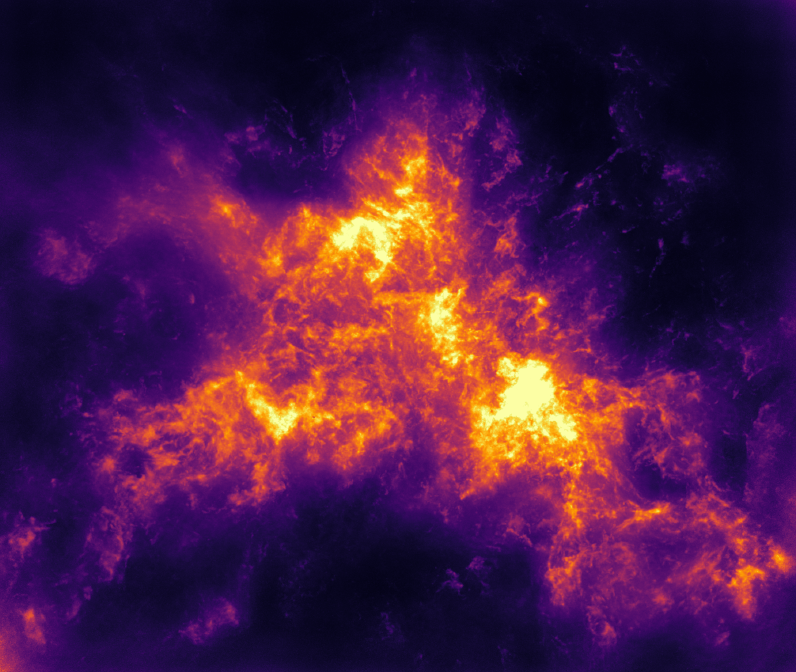
Computing the bigger picture
These comparisons used to be done by hand, but lucky for today’s astronomers, computers rapidly entered the mix. For modern radio telescopes, specialised hardware and software perform all the calculations required. For ASKAP’s 630 baselines, this is done using custom hardware on site before the information travels to the Pawsey Supercomputing Research Centre in Perth for further processing into images by astronomers.
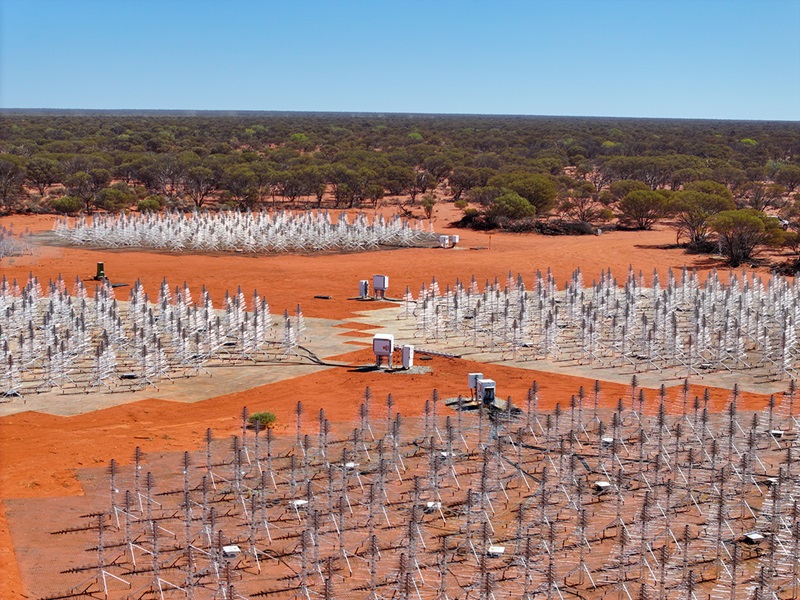
For the world’s largest radio interferometer, the Square Kilometre Array Observatory’s SKA-Low telescope , the number of baselines for the full array increases to 130,816, compared to ASKAP’s 630. SKA-Low’s baseline calculations will be completed by custom hardware and software being developed by an international team led by CSIRO engineers and developers at our Australia Telescope National Facility .
From the world’s first radio interferometry in 1946 to enabling the world’s largest radio interferometer 80 years later , CSIRO are world leaders in radio astronomy.