Child nutrition is shaped by more than food alone. Living conditions, health practices and the wider environment can all influence how children grow and develop.
In Timor-Leste, where child nutrition is a national priority, analysing the interconnected drivers of health is critical to understanding and improving child development for around 50% of Timorese kids, who still suffer from malnutrition.
A 4.5-year, A$2.1 million ACIAR-supported project is bringing together experts in human, animal and environmental health through a One Health approach to better understand these connections and generate knowledge that can inform future policies and programs.
Understanding what shapes children’s health
The Bacterial Enteropathogens and Nutrition (BEN) project is led by the Australian National University (ANU) and implemented by Menzies School of Health Research Timor-Leste, in partnership with Timor-Leste’s Ministry of Health, Ministry of Agriculture, Livestock, Fisheries and Forestry, and other local and international organisations.
It includes two major studies. The first compared 78 children admitted to Timor-Leste’s national referral hospital with severe acute malnutrition with 156 healthy children of a similar age from the same communities. The second is following 450 children from birth to the age of two across the municipalities of Dili, Ermera and Ainaro, bringing together experiences from urban and rural settings.
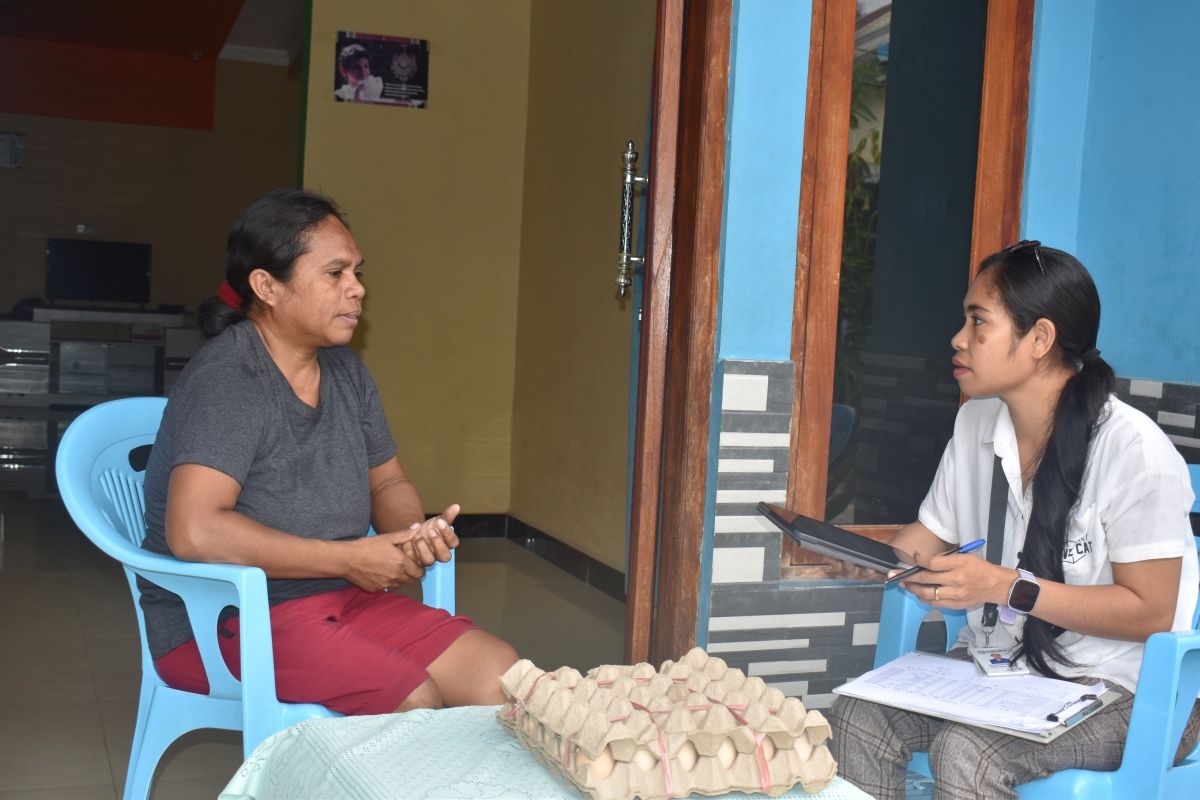
Researchers work closely with families, health centres, local authorities and mothers’ support groups. Through household visits, interviews and sample collection, the team is learning from parents and caregivers about everyday practices around food, water and childcare.
‘Through this partnership, ACIAR is bringing together Australian and Timorese research expertise to better understand the complex factors that shape child nutrition,’ said Dr Nick Harris, ACIAR Research Program Manager Livestock Systems.
‘By combining Australian research capabilities with Timorese leadership and local knowledge, the project is generating evidence that can inform practical solutions to help reduce malnutrition and stunting while strengthening research and laboratory capacity for the future.’
While the project is still underway, it is already generating valuable insights.
Early insights
Early findings suggest that children’s nutrition is influenced by a combination of factors, including food security, access to safe drinking water, maternal education, breastfeeding practices and immunisation, highlighting the need for action across these areas.
According to Project Leader Dr Samantha Colquhoun, the project brings together information types that are often examined separately.
‘By looking at nutrition alongside food, water and the home environment, we are developing a more complete understanding of what influences children’s health and growth in Timor-Leste.’
Dr Rosye da Silva, BEN Steering Committee Lead and Nutrition Directorate, Ministry of Health, Timor-Leste, said the One Health approach brings important value to the project.
‘The One Health approach is an important part of understanding and addressing malnutrition in Timor-Leste.
‘By bringing together evidence from people, animals and the environment, the BEN study is supporting more coordinated action across sectors.’
Strengthening local skills and systems
Beyond the findings, the project is strengthening local skills and systems. Staff from national laboratories, hospitals and research institutions have received training in laboratory testing, data management and research methods. New equipment and testing procedures are also expanding Timor-Leste’s capacity to conduct health research and disease surveillance.
For Mr Salvador Amaral, Senior Project Coordinator with Menzies Timor-Leste, local leadership is central to the research.
‘Timorese researchers, laboratory scientists and health professionals are leading important parts of this work,’ he said.
‘The knowledge and skills developed through the project will strengthen our ability to conduct research that responds to national priorities and community needs.’
The road ahead
Over the next phase of the project, researchers will continue following children enrolled in the study and revisit families involved in the earlier hospital study. They will also expand examination of household water quality to better understand where contamination occurs and inform future water safety policies and programs.
Findings will be shared with government agencies and development partners to help inform future investments in nutrition, health and water services.