A classic David and Goliath battle is playing out in Queensland’s Federal Court.
Earlier this year, Brisbane-founded fashion brand Sabo (formerly known as Sabo Skirt) launched an intellectual property lawsuit alleging fast-fashion giants Kmart and Shein, among others, copied 36 of its designs to create what are commonly known today as ‘dupes’.
At the centre of the lawsuit is the ‘Shoreline’ print, which Sabo founders Thessy Batsinilas and Yiota Kouzoukas registered with IP Australia in 2024.
But as Associate Professor Rita Matulionyte from Macquarie Law School explains, proving a fashion design is original is one of the toughest things to establish in court.
“Ultimately, the question of originality is difficult, even for courts,” Associate Professor Matulionyte says. “Judges compare the designs side by side and assess the overall impression. It is, to some extent, a subjective exercise.
“Sabo has taken a significant step by pursuing this litigation. There is a risk involved. If the case is unsuccessful, they may be ordered to contribute to the other side’s legal costs, although that remains a matter for the court’s discretion.”
The ‘Shoreline’ print is one of the disputed designs. Picture: Supplied/Sabo
How it began
Sabo has built a cult following in Australia since its launch in 2011. Batsinilas and Kouzoukas are best friends and sisters-in-law who began as fashion bloggers before emerging as two of Australia’s early influencer success stories.
Since then, the pair have expanded the business with sister brands and bricks-and-mortar stores around the country.
Kmart, through its in-house brand Anko, and Shein have surged in popularity through their ability to ‘dupe’ – effectively recreating the look and feel of more expensive brands – and sell similar products at a fraction of the price.
Sabo argues sales of the allegedly copied designs have damaged both its reputation and profit margins. Kmart and Shein, meanwhile, claim the designs are not original at all .
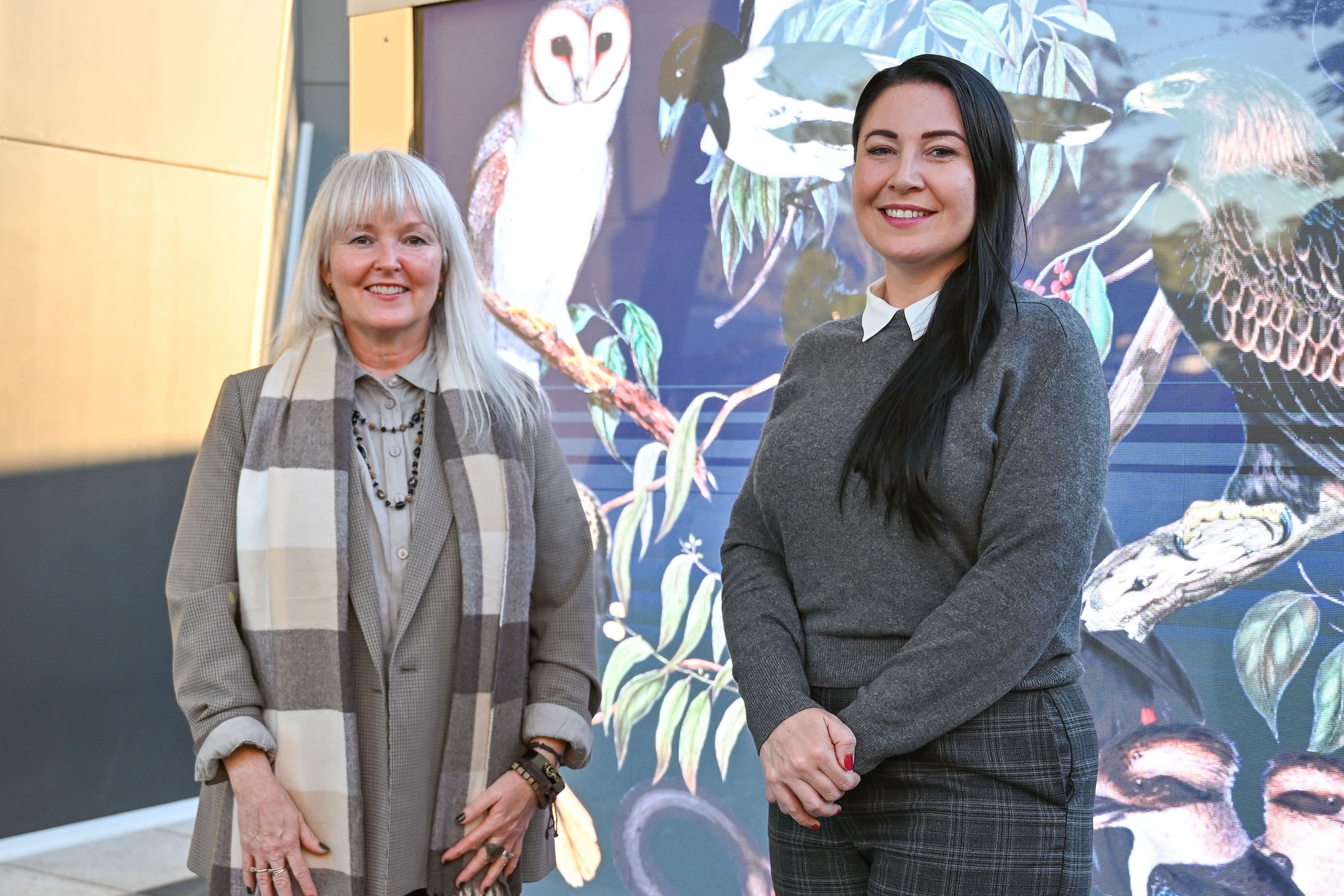
Sabo cofounders Thessy Batsinilas and Yiota Kouzoukas. Picture: Instagram/sabo
“A competitor might copy many elements of a garment but avoid the one feature that makes it distinctive. In that case, they may be able to argue they have not infringed,” Associate Professor Matulionyte says.
“The key question becomes: what is the distinctive feature? Is it a pattern, a particular cut, or some other design element that did not exist before? Even where a design is registered, larger retailers can challenge the validity of that registration by arguing that similar designs already existed.
“If they are ultimately found to have infringed, the consequences are often relatively limited. A court may issue an injunction requiring them to stop selling the product, but damages can be difficult to obtain because it is hard to prove the financial loss suffered by the original designer.”
How it’s going
Ultimately, says Associate Professor Matulionyte, if the case is driven by principle – if Sabo wants to deter copying in the future, or simply establish it was in the right – there could be several more twists and turns to come.
One of the designs Sabo alleges was copied. Picture: Supplied/Sabo
“Large retailers such as Kmart and Shein have significant advantages because they can afford highly experienced legal teams,” she says.
“That said, there is a great deal of legal uncertainty in these cases. This is not like a speeding offence where the rules are clear and the facts are obvious.
“Smaller players do sometimes win. Courts understand the imbalance and focus on the legal questions. These lawsuits are relatively rare because smaller designers must weigh the cost, risk and uncertainty of litigation against the likely outcome.”
The matter will return to court on July 7.