Key points
- Robots help scientists explore and work in environments that are too dangerous, remote or difficult for people to access, from coral reefs and disaster zones to caves and space.
- CSIRO’s robotics research spans more than 40 years, tackling challenges across agriculture, mining, environmental monitoring and space.
- Explore 10 robotics terms to better understand the technologies, tools and ideas shaping robotics.
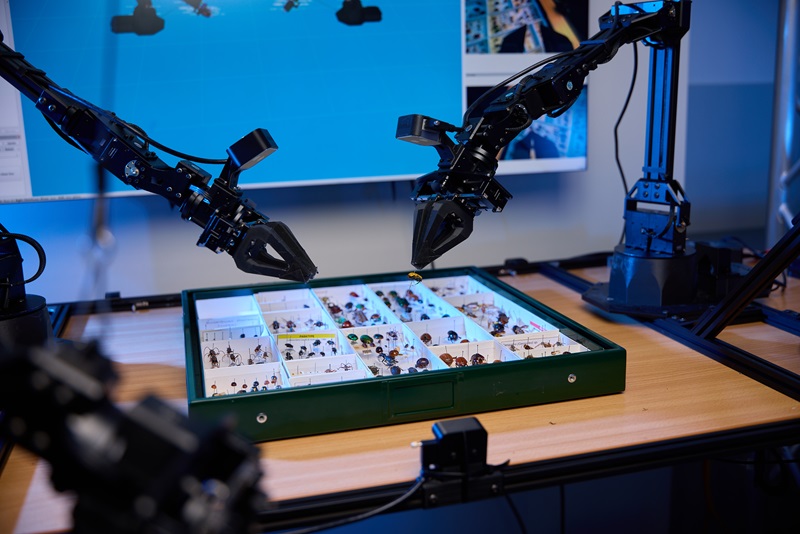
Robots are helping scientists tackle some of the world’s toughest challenges. From cultivating baby corals on the Great Barrier Reef to exploring lunar lava tubes that could one day shelter astronauts, robots are enabling research in places that are too delicate, remote or dangerous for humans to access.
While robotics may still seem like a technology of the future, CSIRO has been advancing the field for more than 40 years. Since the 1980s, our researchers have been developing autonomous and intelligent robotic systems that address real-world challenges across environmental monitoring, agriculture, mining, manufacturing and space exploration.
As robotics becomes a bigger part of our lives, understanding the language used to describe these technologies is more important than ever. We’ve pulled together this glossary to help you navigate some of the most common robotics terms and concepts.
1. Robot
A robot is a machine that can carry out complex tasks automatically. But robots are much more than machines that follow instructions.
They help us gather information, solve complex problems and work safely in environments ranging from bushfire zones and disaster areas to underground tunnels, deep underwater environments and even space.
As CSIRO Robotics Engineer Ted Vanderfeen explains, robots don’t replace people, they extend our reach.
“Robots are helping us answer questions and explore the world in ways we couldn’t otherwise,” Ted said.
2. Robotics and roboticist
Robotics is the field of science, engineering and technology focused on designing, building and using robots to help solve problems and perform tasks.
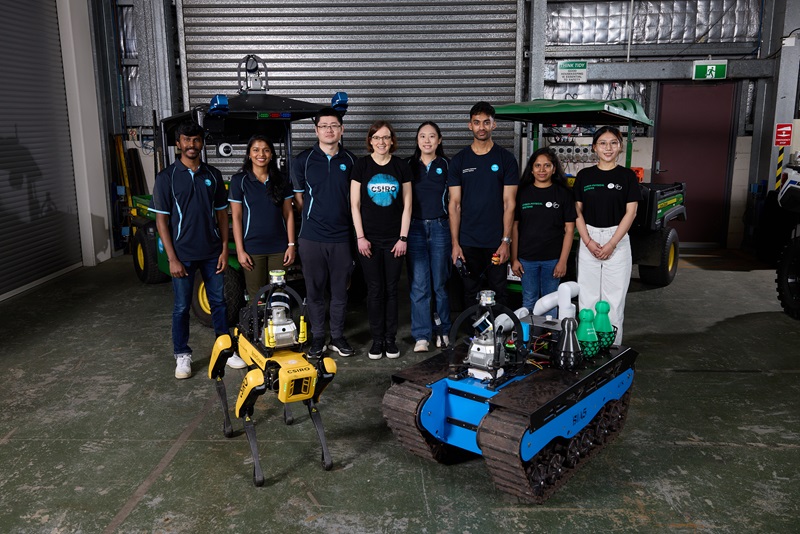
A roboticist is someone who works in this field, designing, building, programming and testing robots. Roboticists combine skills from areas such as engineering, computer science physics and mathematics to create technologies that help people tackle real-world challenges.
Robotics is often a team effort, with specialists working together on everything from coding and mechanical design to sensors, testing and autonomous systems.
3. Biomimicry
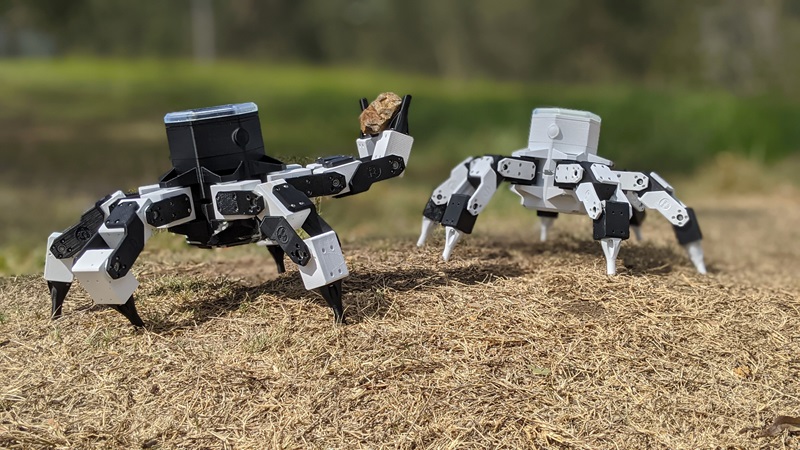
Biomimicry is the practice of designing products and technologies based on systems, structures and processes found in nature. In robotics, researchers study how animals move, grip, climb and navigate their environments, then apply those lessons to robot design.
One example is legged robots inspired by animals and insects. By studying how living creatures move across varied terrains, engineers can develop robots that climb, crawl and navigate environments that would be difficult for wheeled machines.
CSIRO’s Syropod is an example of this nature-inspired approach. Modelled on insects, the six-legged walking robot is designed to traverse challenging, unstructured terrain that is inaccessible to most wheeled and tracked robots. Its hexapod design provides stability, adaptability and mobility, allowing it to navigate obstacles and uneven ground where traditional non-legged vehicles may struggle.
4. Soft robotics
 Soft robotics is a branch of robotics that uses flexible, compliant materials instead of rigid components. By drawing inspiration from the way living organisms move and interact with their surroundings, engineers can develop robots that are more adaptable and gentle.
For example, CSIRO and CHARM (Coral Husbandry Automated Raceway Machine) have developed a world-first soft robotic gripper that can gently transfer and handle baby corals during coral propagation and reef restoration, helping automate a process traditionally done by hand.
“This gripper replicates the dexterity of a human hand, allowing it to handle delicate coral tissue without damaging them, while being strong enough to lift various sizes,” Dr Josh Pinskier, CSIRO Soft Robotics Scientist said.
The gripper was designed using CSIRO’s AI-powered generative design algorithms, which identified optimal structures for safely and effectively handling delicate coral.
5. Hexapod and quadruped
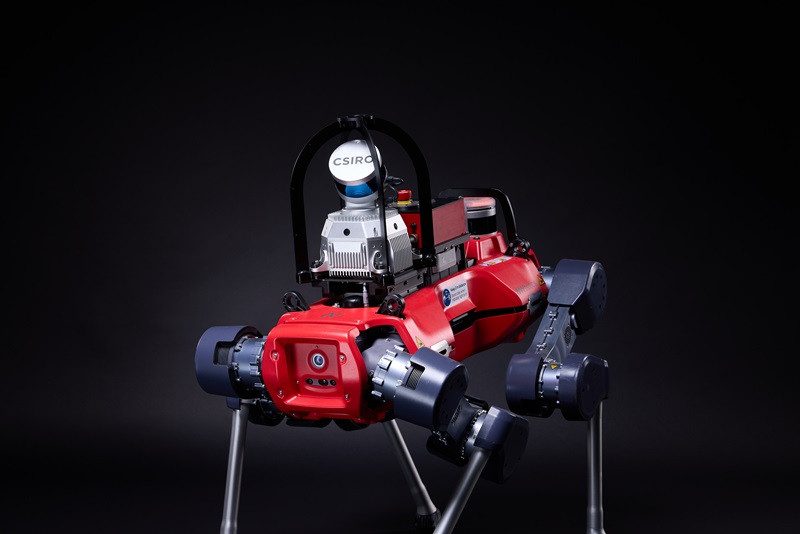
Not all robots move on wheels. A quadruped robot has four legs, similar to a dog or horse. A hexapod robot has six legs, like an insect.
The choice comes down to the environment where the robot will be operating. Smooth factory floors are very different from rocky cave systems, coral reefs or lunar landscapes.
Legged robots are often better suited to rough terrain because they can step over obstacles and maintain stability on uneven surfaces. Increasing the number of legs can also provide additional balance and redundancy. With six legs, a hexapod can often keep moving even if one leg is damaged or loses contact with the ground.
This idea highlights an important principle in robotics: the best design depends on the job.
6. Autonomous
One of the most misunderstood terms in robotics is autonomous.
Autonomous means a system can perform tasks without direct human control – that doesn’t mean a robot is “thinking” like a person. Rather, it can use sensors, software and decision-making systems to understand its surroundings and determine what actions to take next.
In many cases, a human still sets the mission. The robot then completes the task with minimal supervision.
Autonomy becomes especially important in environments where communication is difficult or delayed. A robot exploring a disaster zone, navigating underground caves or operating on another planet may need to make many decisions on its own because a human cannot easily guide every movement, due to being beyond communications range.
CSIRO technologies are helping support exactly this type of autonomous navigation, enabling robots to map and move through complex environments. On the International Space Station, CSIRO’s multi-resolution scanner helps robotic systems build detailed 3D maps of their surroundings, freeing astronauts to do other tasks. On Earth, similar technologies are being adapted to help robots navigate lava tubes that resemble those found on the Moon and Mars.
7. Machine learning
Robotic systems are often described as following a sense-think-act cycle. They gather information about their surroundings (sense), process that information (think) and respond (act).
Machine learning helps with the “think” part of this process. It is a type of artificial intelligence that enables computers to learn from data and recognise patterns without being explicitly programmed for every situation.
By analysing large amounts of information collected by robots, sensors and cameras, machine learning can help scientists and engineers identify patterns and gain insights more quickly than would otherwise be possible.
CSIRO researchers have applied machine learning to help detect crown-of-thorns starfish on the Great Barrier Reef. The system analyses underwater imagery in real time, identifying starfish and helping researchers understand where they have been detected.
8. Humanoid
A humanoid robot is one that resembles a person in appearance, movement or behaviour.
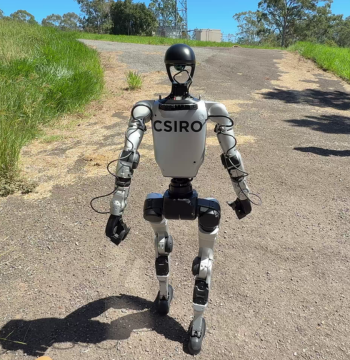
Humanoid robots can be useful because they are designed for environments already built around humans. Doors, stairs, tools and vehicles all assume a human shape and size.
But humanoid robots represent only a small part of robotics. In reality, most robots are designed around function rather than appearance. A robot exploring a cave may look more like an insect. An underwater robot may resemble a submarine. A space rover may use wheels, tracks or specialised mobility systems.
The most effective robot is generally not the one that looks most human, but the one that is best suited to its task.
9. Bionic
The word bionic describes technologies that combine biological and electronic systems to enhance or restore human capability.
Once considered science fiction, bionic technologies are now part of everyday life for many people. Cochlear implants, advanced prosthetic limbs and other assistive technologies combine engineering, computing and biology to help people interact with the world in new ways.
Bionics sits at the intersection of humans and machines. Rather than replacing people, it focuses on supporting or extending human abilities.
In this way, bionics and robotics share a common goal: helping people do things they otherwise could not.
10. Human-in-the-loop and human-on-the-loop
Human-in-the-loop (HITL) systems keep people involved in important decisions, even when AI or robotic systems perform much of the work. While AI can recognise patterns, process information and support decision-making, humans set goals, assess risks and provide approval or direction at key stages before the robot can proceed.
In contrast, human-on-the-loop (HOTL) systems operate with a high degree of autonomy. Humans set the overall mission and monitor the robot’s performance, intervening only when necessary rather than being consulted at key decision points throughout the task.
Even highly autonomous robots rely on human oversight. People define mission objectives, monitor progress and remain accountable for outcomes, helping ensure robotics and AI systems are used safely, ethically and responsibly.