New research has identified for the first time that bacteria can hijack RNA to take hold in our cells – shedding new light on how they establish infection and cause disease.
RNA modifications regulate many cellular processes that are essential for health and disease. These RNA modifications are controlled by a complex network of specialised enzymes, yet the enzymes actually responsible for most of these changes remain unknown.
Dr Kitty McCaffrey, from the Innate Immune Responses to Infection group at Hudson Institute of Medical Research, identified a new class of these RNA-modifying enzymes using Legionella pneumophila – the bacterium that causes Legionnaires’ Disease – and in doing so, also uncovered a previously unknown strategy that helps Legionella gain a foothold inside host cells.
A bacterial twist on RNA modification
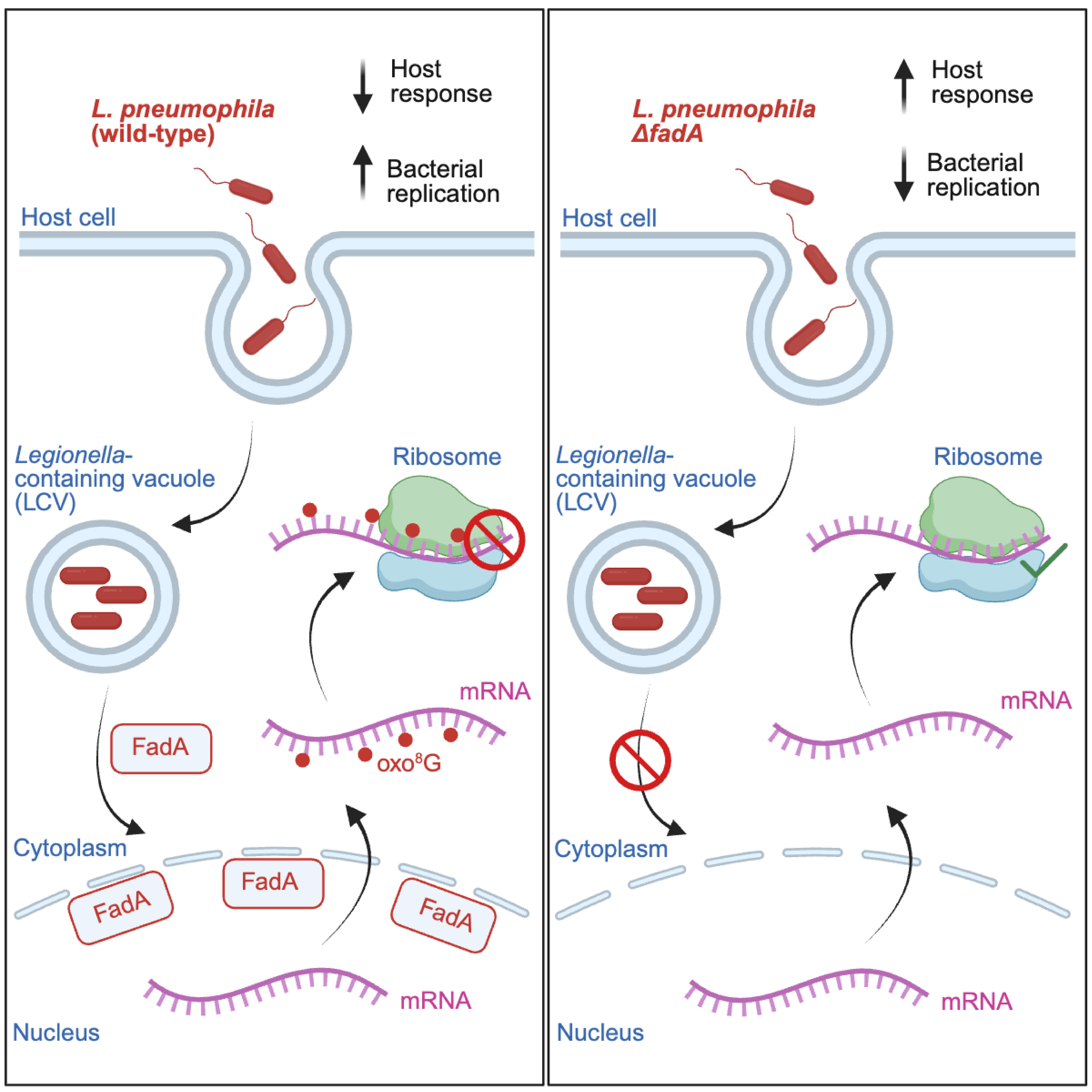
Dr McCaffrey’s research, published in Cell Host & Microbe with collaborators from Hudson Institute, ETH Zurich (Switzerland) and Johannes Gutenberg University (Germany), shows that a bacterial enzyme modifies host mRNAs to inhibit their expression and, in turn, block the host immune response – allowing the bacterium to replicate and cause disease.
This RNA-modifying mechanism has previously been demonstrated to help viruses establish infection, but had not been associated with bacterial infections until now.
“This the first example of a bacterial pathogen exploiting RNA modifications to limit host immune responses and promote virulence,” she said.
“This research also revealed a novel mechanism by which o8G-RNA modifications can be enzymatically regulated to influence gene expression within eukaryotic cells, which is a significant advance in our understanding of the biology of this RNA modification.”
With the rise of RNA-based therapies and vaccines, these latest findings provide new insight into how RNA modifications are regulated in biological systems and their potential as therapeutic targets.
Expanding our understanding of infection
And while the new enzyme class she identified is linked to Legionnaires’ Disease in this study, Dr McCaffrey believes the significance of these findings will be much broader.
“We have demonstrated for the first time how a bacterial pathogen modifies host mRNA during infection, suggesting that this may be a wider strategy used by bacteria to evade host immunity.”
“While viral pathogens are known to interfere with host RNA, our work is the first example of this occurring during bacterial infection. We therefore believe that this is a new paradigm in understanding bacterial pathogenesis and disease.”

/stag-ntd-discussion-illustration.tmb-768v.jpg?sfvrsn=3b2dbfd_2)
/participants-at-advanced-id-workshop-july-2026.tmb-768v.jpeg?sfvrsn=bf1e34a2_2)