For museums using digital content, creating experiences that build emotional connections with visitors is key to making digital cultural experiences more engaging, finds a study from Science Tokyo. A survey of 266 visitors at the Ryushi Memorial Museum revealed that immersive digital exhibits helped visitors connect with personal memories, historical stories, and cultural heritage. The findings suggest that museums can increase engagement by designing digital experiences around local stories, memories, and cultural identity.
What Drives Engagement with Digital Museum Experiences?
Museums are increasingly using digital technologies to create more interactive and accessible experiences for visitors. Technologies, such as three-dimensional (3D) digital models, virtual reality (VR), and augmented reality (AR), allow visitors to explore artifacts in new ways, both online and during visits to physical museums. These technologies have shifted museum exhibitions from object-centered to experience-centered, making it increasingly important to understand what encourages people to engage with digital cultural content.
In a study published online in the ACM Journal on Computing and Cultural Heritage on June 18, 2026, researchers from Institute of Science Tokyo (Science Tokyo), Japan, investigated the factors influencing visitors’ willingness to engage with digital exhibitions at a regional museum in Japan. They found that emotional connections to cultural heritage play a central role in encouraging people to engage with digital cultural experiences.
The research was conducted by former doctoral student Yaotian Ai, along with Associate Professor Xinru Zhu and Professor Kayoko Nohara from the School of Environment and Society from Science Tokyo.
“Our findings offer a new direction for regional museums seeking to maximize cultural impact with limited resources and provide practical guidance that inspires visitor participation and long-term engagement,” says Ai.
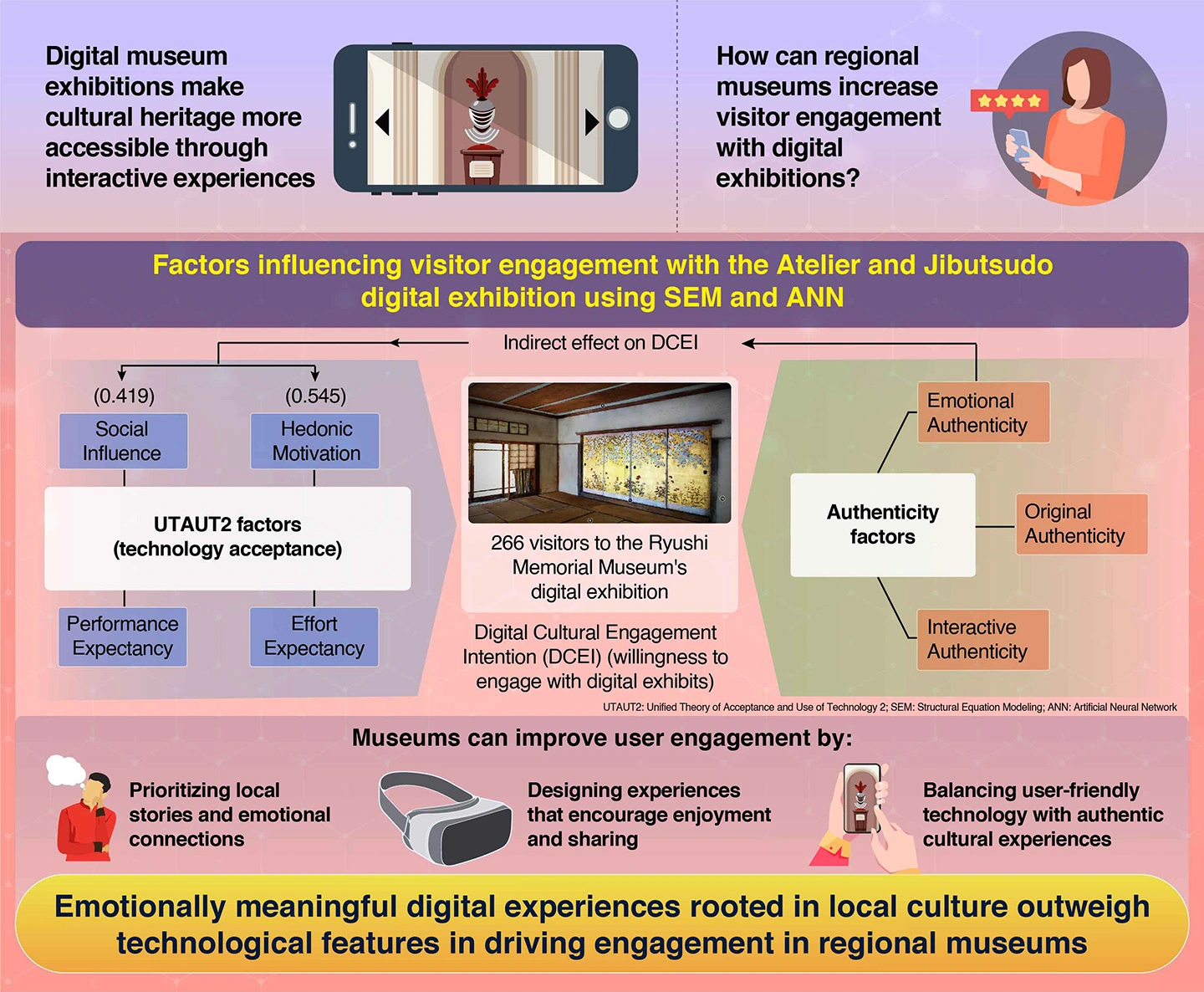
The researchers examined visitor experiences with a digital exhibition of the Atelier and Jibutsudo (a family hall for worshipping Buddha) at the Ryushi Memorial Museum, created using photogrammetry and iPad LiDAR technology. They evaluated visitors’ willingness to engage with digital cultural experiences by examining both how they perceived the technology and whether the exhibition created a sense of authenticity.
The researchers evaluated visitors’ experiences using four technology-related factors: how useful (Performance Expectancy) and easy to use (Effort Expectancy) visitors found the digital exhibition, whether it encouraged visitors to share cultural experiences and participate (Social Influence), and how enjoyable they found the experience (Hedonic Motivation). They also assessed three types of authenticities: the historical value of the museum’s artifacts (Original Authenticity), how realistically visitors experienced the digital exhibition (Interactive Authenticity), and whether it created emotional connections with the museum and local community (Emotional Authenticity).
These factors were measured using a questionnaire that included statements such as, “I deepened my knowledge and understanding of specific exhibits through the digital exhibition,” “I discovered new information about the exhibits through the digital exhibition,” and “The digital exhibition presented information in an easy-to-understand format.” Visitors rated each statement on a 5-point Likert scale from 1 (strongly disagree) to 5 (strongly agree).
Using responses from 266 visitors, the researchers found that emotional authenticity had the strongest influence on visitors’ willingness to engage with the digital exhibition. Visitors who felt emotionally connected to the museum and its cultural heritage were more likely to enjoy the experience, participate in digital activities, and share their experiences with others. Interviews conducted as part of the study also revealed that many visitors felt the digital exhibition reminded them of previous guided tours and helped them envision life in the recreated spaces, strengthening their emotional connection with the museum.
The researchers suggest that regional museums can increase visitor engagement by designing digital experiences that foster emotional connections with visitors through local stories, memories, and cultural identity. “These findings suggest that successful digital strategies for regional museums should prioritize emotionally resonant experiences that connect visitors with local stories, memories, and community identity, rather than solely focusing on technological functionality,” says Ai.
Reference
- Authors: