University of Otago – Ōtākou Whakaihu Waka researchers have helped identify the cause of a previously unrecognised neurodevelopmental disorder.
Dr Meghan Mulligan, of the Department of Biochemistry, says the finding has given people around the world an answer to the source of their family member’s neurological condition.
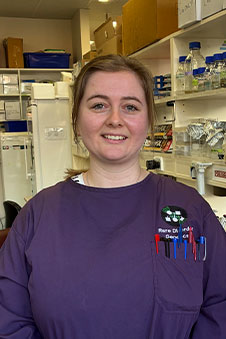
Dr Meghan Mulligan
“Neurodevelopment depends on precise orchestration of the dosage, location, and timing of gene expression.
“Before the study, the gene ELAVL2 was known to have an important role in helping influence brain development, but no one had connected it with a genetic condition. We have now discovered variants in this gene are the cause of a previously undefined neurodevelopmental disorder.
“The work has helped provide answers for 15 individuals and families who were part of the research, and has the potential to help many more,” Dr Mulligan says.
Published in the prestigious journal The American Journal of Human Genetics, the study was an international collaboration between researchers at Otago and in the Netherlands.
Using international gene databases, the study brought together people from all over the world who had genetic changes in ELAVL2 and similar medical features, such as developmental delay and intellectual disability.
The researchers were able to demonstrate that some alterations in this gene can alter biological activity and so defined a new ELAVL2-related neurodevelopmental disorder.
“Our discovery not only helps those whānau involved in the study – who now have an answer as to the cause of their family member’s neurological condition – but also opens up a new diagnostic pathway for other families with rare and previously unexplained neurodevelopmental disorders.
“Diagnostic labs globally will be able to use our finding to help other families searching for an answer to potentially receive a genetic diagnosis in a much shorter timeframe.”
The research was a major part of Dr Mulligan’s PhD studies and formed the foundation for the competitive Neurological Foundation First Fellowship postdoctoral fellowship she now holds.
For the $228,000 fellowship, awarded last year, Dr Mulligan is continuing investigations into the ELAVL family of genes and their involvement in neurodevelopment and disease.
“I’m looking at how changes in other ELAVL genes – which are vital for healthy brain function – may cause similar neurodevelopmental disorders.
“By identifying the genetic causes of these disorders, families receive answers and can get more personalised support and clinical care. This research aims to provide answers for many families and increase our understanding of the causes of neurodevelopmental disorders,” she says.
Publication:
Variants leading to ELAVL2 haploinsufficiency cause a neurodevelopmental disorder with prominent cognitive, behavioral, and neurological features
Marina Boon, Meghan R. Mulligan, Jolijn J.A. Verseput, Barbara Šakić, Pleuni Schreurs, Mireia Coll-Tané, Andrea Accogli, Emily Alderman, Taryn Athey, Cornelius Boerkoel, Antonella Boni, Roseline Caumes, Erica Gerkes, Sabine Haase, Sylvie Jaillard, Lauren Jeffries, Peter Kannu, Monica Konstantino, Jonathan Lévy, Anna Lokchine, Maarten Massink, Nadra Nasser Samra, Renske Oegema, Marcello Scala, Jolanda Schieving, Sarina Schwartzmann, Henrike Lisa Sczakiel, Thomas Smol, Pasquale Striano, Alain Verloes, Amber Begtrup, Rolph Pfundt, Barbara Franke, Marieke Klein, Annette Schenck, Louise S. Bicknell, and Bert B.A. de Vries
The American Journal of Human Genetics
https://doi.org/10.1016/j.ajhg.2026.07.007