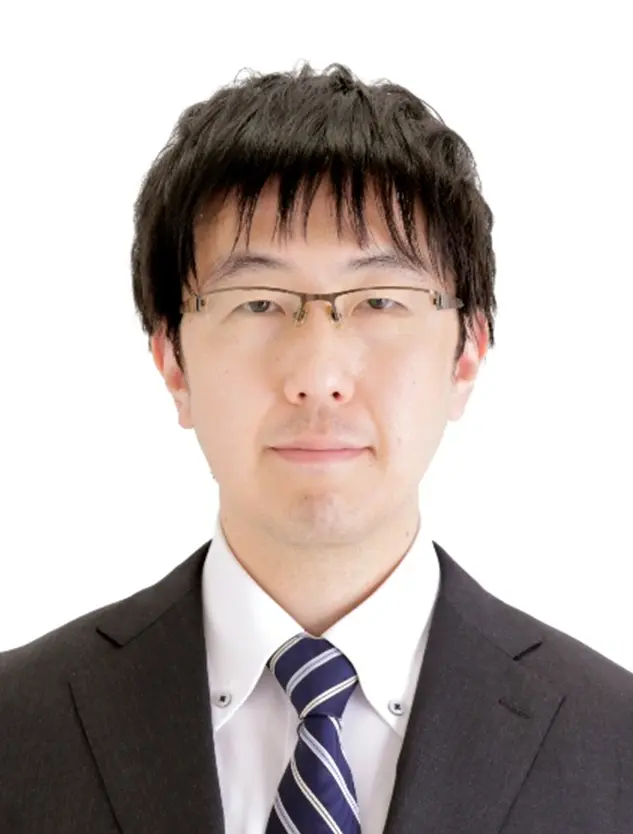
UQ biomaterials engineer Cole Walchle is unlocking new, sustainable proucts from established bioplastics that are currently to brittle to be commercially viable.
(Photo credit: The University of Queensland
)
Key points
- UQ researchers are experimenting with bioplastic formulas to create new, sustainable medical gels
- Many bioplastics are currently too brittle to be commercially viable, despite showing great promise as replacements for traditional petrol-based plastics
- PhD candidate Cole Walchle used grafting techniques to transform the bioplastic PHB into a hydrogel for tissue engineering, wound recovery, drug delivery, and as a specialty coating or lubricant
Biomaterials engineers have created a ‘superstructure’ hydrogel that could be an eco-friendly tool used in medical technologies and as a recovery aid for surgical procedures.
University of Queensland researcher Cole Walchle discovered the gel material while experimenting on an existing bioplastic and said it was a strong candidate for use in tissue engineering, wound recovery, drug delivery, and as a specialty coating or lubricant.
“Crucially, the hydrogel is derived from a bio-derived and biodegradable polymer that – while promising itself – is too brittle to be commercially viable,” said Mr Walchle, a PhD student with UQ’s School of Chemical Engineering .

UQ researchers are making new, sustainable medical hydrogels from existing bioplastics that are currently too brittle to be of commercial use.
(Photo credit: The University of Queensland)
“There’s huge potential for naturally derived plastics to be useful at an industrial scale, but with many of them we just aren’t there yet.”
“Our work demonstrates that there is scope to tweak them to create new, sustainable products that work for us now.”
Mr Walchle said the gel-like material – known as P3HB-HEAA – could have a range of commercial applications in surgical settings and slow-release drug delivery, as well as use in hygiene products and as a specialty coating.
“Further investigation is needed to fully understand the behaviour of this material, in particular its ability to biodegrade,” Mr Walchle said.
“If the biodegradability is carried over from the original material, it would further confirm our method as a viable approach to generate new hydrogel-like superstructures.”
Mr Walchle’s work began with the exploration of the bio-derived polymer poly(3-hydroxybutyrate) (PHB) and the use of grafting techniques to change the physical nature of a characteristically brittle material.
Using gamma radiation Mr Walchle grafted a polymer widely used in the preparation of hydrogels – known as N-Hydroxyethyl acrylamide – onto PHB to create a new material with an exceptional water absorption capacity.
“We’ve basically created something that is simultaneously tougher than the materials we had to begin with, yet also particularly good at absorbing water,” Mr Walchle said.
“It’s a new material with the sustainable origins of a bioplastic, with a greatly expanded potential field of use.”
Read the research in Macromolecular Rapid Communications.
Collaboration and acknowledgements
This research was conducted at the ARC Training Centre for Bioplastics and Biocomposites with support from UQ’s Professor Steven Pratt, Professor Bronwyn Laycock, Dr Samuel Lawless, Dr Céline Chaléat, and Dr Clement Chan.
Dr Justin Davies at the Australian Nuclear Science and Technology Organisation (ANSTO) assisted with gamma irradiation experiments, and UQ’s Dr Eleanor Mullen assisted with scanning electron microscopy.