Sustainability-certified products like coffee and chocolate enable consumers to pay a premium for goods that support farmers and planetary health. Cornell doctoral candidate Charlie Tebbutt hopes to do the same for rubber from the Colombian Amazon, where unsustainable farming practices are increasingly threatening many species – including the region’s iconic birds.
“Forest clearance for cattle ranching is linked to habitat loss and threats to Amazonian biodiversity, but many of the farmers doing this clearing have little other choice to provide for themselves and their families,” Tebbutt said. “Our hypothesis is that if we can make it more financially sustainable for growers to do rubber agroforestry on at least part of their lands, that will support more of the intact Amazonian ecological community of birds.”
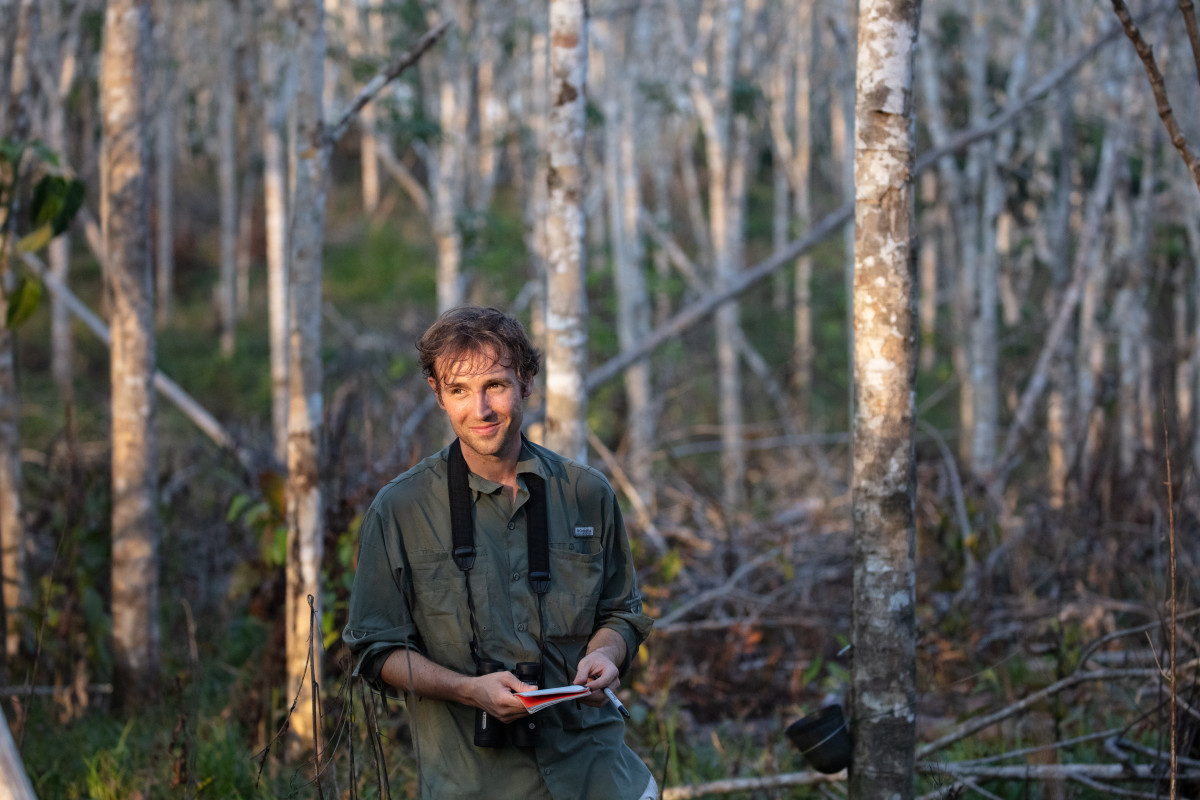
Doctoral candidate and Semlitz Family Sustainability Fellow Charlie Tebbutt studies how sustainable rubber agroforestry in the Colombian Amazon can support bird biodiversity while creating new economic opportunities for local growers.
Tebbutt, who is pursuing a Ph.D. in natural resources and the environment, was part of the 2025-26 cohort of Semlitz Family Sustainability Fellows, a program that brings together early-career sustainability scientists and business students to build collaboration and leadership for positive economic and environmental outcomes. The program is jointly administered by the Cornell Atkinson Center for Sustainability and the Cornell S.C. Johnson College of Business.
In 2023 and 2024, Tebbutt completed four rounds of fieldwork in Colombia, collaborating with a variety of organizations and individuals, including rubber growers, the Wildlife Conservation Society and Colombian birders Wilmer Ramírez Riaño and Diana Lucena Gavilán. Tebbutt and undergraduate research assistant Dhruv Varun Cohen ’26 recorded thousands of hours of audio in the Amazon and then, with Ramírez and Gavilán’s help, taught the AI-powered bioacoustics tool BirdNET Analyzer to recognize unfamiliar species. Through their work, BirdNet can now correctly identify 11 new species, and its ability to recognize 76 other Amazonian forest birds has been proven. BirdNet is a project of the Cornell K. Lisa Yang Center for Conservation Bioacoustics.
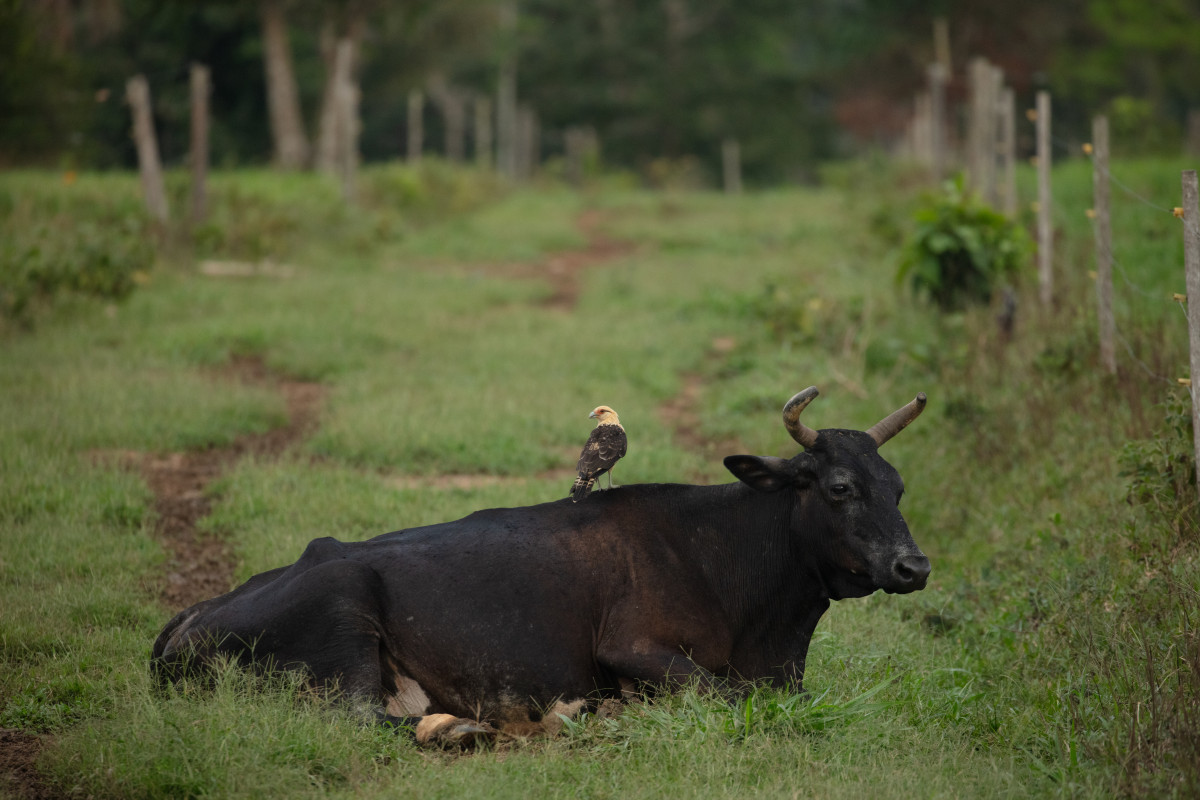
Yellow-headed Caracara is among the Amazonian birds helping researchers understand how biodiversity responds to different land-use practices. Birds serve as indicators of ecosystem health and could help support future biodiversity certifications for sustainably produced rubber.
With BirdNet trained, Tebbutt has begun analyzing the recordings from three different types of habitats- cattle ranch, rubber agroforestry plots, and forests – to understand and compare which birds make use of each type of habitat. Initial findings show that agroforestry areas do provide important habitat for forest-dependent species like the Black-faced Antbird, and some birds even seem to favor it, including Amazonian Trogons and Buff-throated Woodcreepers. Generally, the only native birds that could make use of cattle pasture were the largest, most mobile ones, like toucans and macaws. But even those more-adaptable birds still need access to a forest for at least one life stage or function, such as nesting, Tebbutt said.
Birds are an indicator of biodiversity, so this type of data could support biodiversity certifications that customers and companies could use to value conservation efforts on rubber tree farms, giving growers an additional and more-sustainable income source beyond cattle ranching, he said.
In addition to his work in Colombia, Tebbutt conducted interviews with business leaders who source materials like cacao, cotton, rubber and pharmaceuticals to understand what encourages companies to seek out more-sustainable products. The biggest drivers, he discovered, were government regulation, followed by consumer pressure and material risk.

By documenting the biodiversity benefits of rubber agroforestry, the research aims to inform industry, policymakers and conservation leaders while creating new market opportunities that support both Amazonian communities and forest conservation. Photo of local rubber grower Don Seledonio.
“Some of the people I interviewed said – and I appreciated their candor – that their only real focus is the bottom line. They buy carbon credits to comply with regulation, and avoid deforestation because they have to if they want to sell in the EU,” Tebbutt said. “But then other companies had really coordinated policies where they were thinking long-term about pollinators and preserving landscapes as critical to their future sustainability as a business. Which, of course, it is.”
The Semlitz Fellowship was critical in giving Tebbutt the language to speak with business people and a clearer perspective of the challenges they face, he said. Next steps for this research include creating scientific and public policy-centered documentation to inform industry, governmental and conservation leaders about the biodiversity and livelihood benefits of sustainable rubber agroforestry.
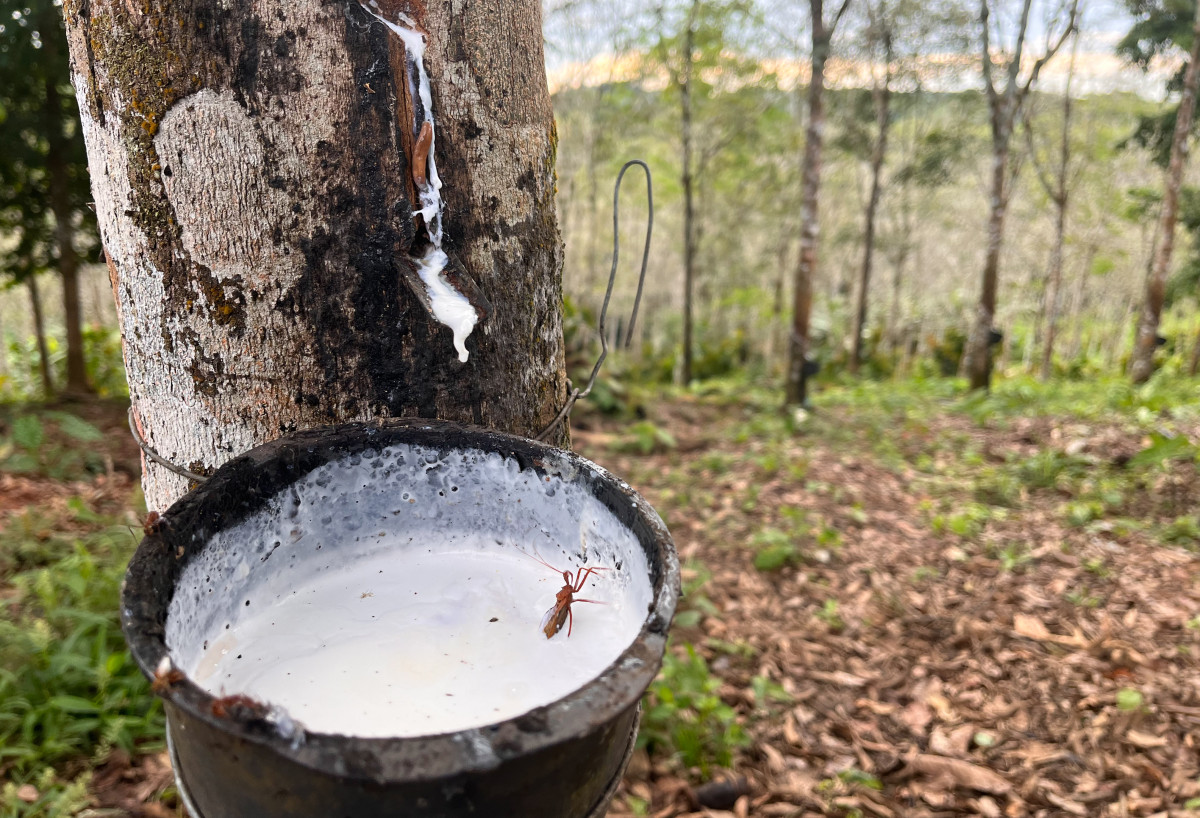
Rubber agroforestry plots in the Colombian Amazon are being studied as a more sustainable alternative to cattle ranching, with the potential to conserve biodiversity while supporting farmers’ livelihoods.
“We increasingly live in these echo chambers. If you go to work in the Lab of Ornithology, of course everyone cares about the birds. But these are not the people who are selecting the suppliers in the supply chain, or who are determining the components of the products that they sell,” he said. “Semlitz was an amazing way for me to meet bankers, financial analysts and chief sustainability officers, to understand the complexity of the problems they’re dealing with and the strategies that could really drive better outcomes for biodiversity and farmers.”
Tebbutt is co-advised by Stephen Morreale, professor, and Shorna Allred, adjunct professor, both in the natural resources and the environment section of the Ashley School of Global Development and the Environment in the College of Agriculture and Life Sciences. He also collaborates with Laurel Symes, acoustic integration program lead for the Lab of Ornithology; Mario Herrero, professor of global development in the Ashley School; and Ismael Dussan Huaca, professor at Colombia’s National Open and Distance University.
In addition to the Semlitz Fellowship, this research was supported by the Sustainable Biodiversity Fund from Cornell Atkinson, and a grant from the Department of Natural Resources and the Environment (now the Ashley School).
Krisy Gashler is a writer for Cornell Atkinson Center for Sustainability.