The future this project seeks to shape
There is no one in the laboratory. Yet new research is moving forward.
AI identifies a question on its own and forms a hypothesis. Robots carry out the experiment. If the results differ from what was expected, the AI considers why and tests the idea again. Eventually, the findings are compiled into a scientific paper. New questions emerge from those findings, and the next experiment begins.
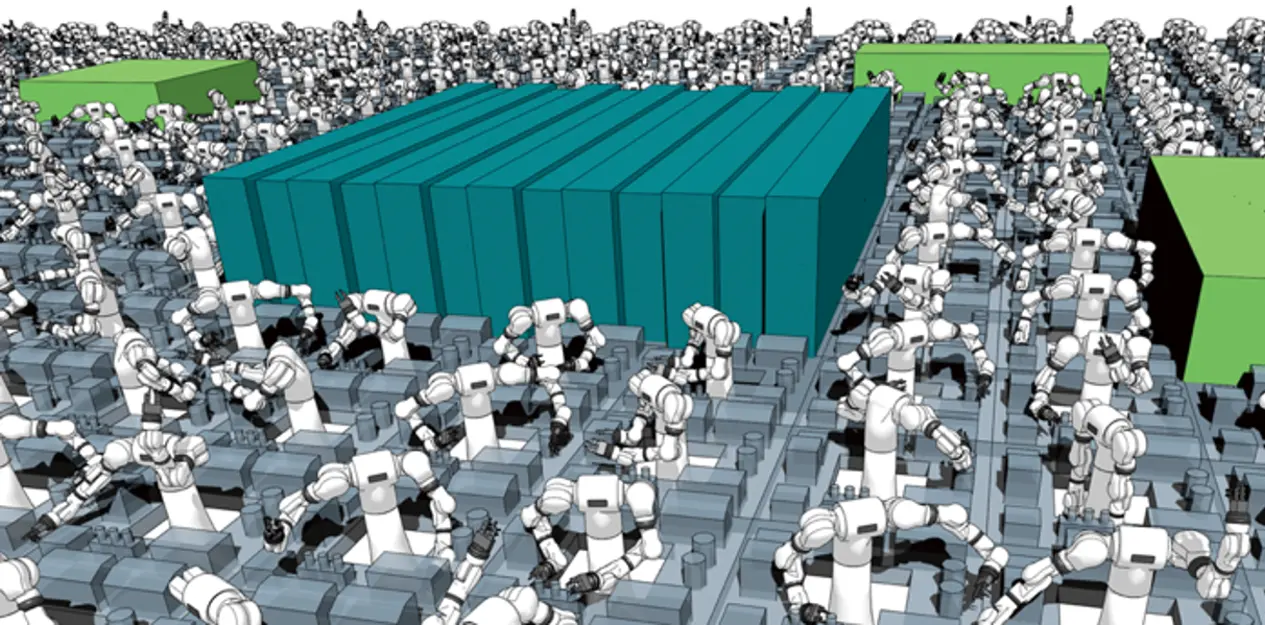
This is the future that Professor Genki N. Kanda and his colleagues at Institute of Science Tokyo (Science Tokyo) are working to make real: a laboratory where new knowledge continues to emerge without any human intervention. It may lead to discoveries we could never have imagined. By 2040, Kanda and his colleagues envision a large, fully autonomous research facility where around 2,000 laboratory robots operate and researchers from around the world can have experiments carried out there.
The challenges to address
This effort began with the development of a laboratory robot called Maholo LabDroid in 2007. With its two arms, Maholo can handle the same laboratory tools that people use. It can also repeat delicate procedures with a level of precision that would be difficult for human hands to maintain. This has helped automate tasks such as growing cells.
By combining the robot with AI, the researchers have also succeeded in finding efficient ways to guide induced pluripotent stem (iPS) cells-which can develop into many different cell types-to become retinal cells.
Yet even when robots can carry out individual experiments, people are still needed to restock reagents, move samples, and respond when equipment stops working. When several experiments need to use the same instrument, someone must also decide which one goes first. In experiments involving living cells, the cells continue to change while they wait. The facility must therefore consider both the availability of equipment and the right timing for each experiment.
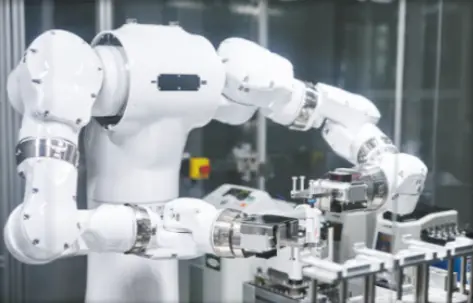
In other words, automating one experimental task at a time is not enough to operate an entire research facility without people. The next challenge is to remove human intervention not only from individual procedures, but from the entire research workflow.
What this project will open up
Kanda and his colleagues have therefore proposed an ambitious project with RIKEN and Epistra Inc. The project will connect robotic life-science experimentation hubs now being developed in Tokyo and Kobe and create a system that can operate the facilities autonomously.
At Science Tokyo, the Robotics Innovation Center will serve as the project’s hub. Researchers from a wide range of fields and industry partners will work together to develop new technologies while putting robots to work in real research settings. The project was selected for the AI to Redesign Scientific Exploration (ARiSE) program of the Japan Science and Technology Agency (JST), which supports scientific research powered by AI.
In the planned facility, AI will design experiments, interpret the results, and decide what to try next. It will also make decisions about experimental preparation and how to respond to problems, while robots carry out the physical work. Using what they learn from operating the facility, the research team will continue to refine the system. Their goal is to create a facility that can carry out the entire research cycle-from generating ideas and hypotheses to experimentation, analysis, and writing up the findings-without human intervention.
By March 2029, Kanda’s team will conduct experiments in areas such as cancer and regenerative medicine to test whether multiple experiments can continue without continuous human supervision. The technologies developed through this work will then contribute to the creation of a large-scale, fully autonomous research facility by 2040.
Researchers have only so much time. They must constantly choose what to investigate and what to leave unexplored. But what if AI and robots could pursue possibilities that people have to leave untested-or ask questions that no one had thought of before? How far could science reach? They might even open up entirely new ways to investigate diseases for which no treatment currently exists. The research team aims to expand the range of questions that science itself can explore.
Science has long rested on the assumption that humans are the ones who conduct research. This project seeks to open another path-one in which AI and robots conduct research on their own. The challenge of expanding the very world that science can explore is now underway.
Comment from the researcher
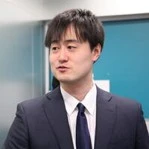
Every university has its own strengths, and each is uniquely positioned to take on certain research challenges. Creating a future in which AI and robots conduct research on their own is exactly the kind of challenge that plays to Science Tokyo’s strengths. Science Tokyo is a place where people who want to make that dream real can come together. If this makes you think, even just a little “I’d like to give that a try,” why not add Science Tokyo to the list of universities you are considering?
(Genki N. Kanda, Professor, Department of Robotic Science, Medical Research Laboratory, Institute of Science Tokyo)
Dive deeper
Explore more research in Science for All
Science for All showcases cutting-edge research at Science Tokyo and highlights the ideas, people, and possibilities shaping the future.

Follow Science Tokyo research on X
Our Research Frontiers account features selected stories from Science for All and regularly shares research from across Science Tokyo.