
Scientists have potentially cracked the code on allergies by debunking centuries-old teaching that allergies start in the immune system, when in fact, it may be due to a power failure inside the body’s barrier cells which line the skin, gut, nose, lungs and oesophagus.
Study lead Professor Peter Smith, a clinical immunologist from Griffith’s School of Medicine and Dentistry, said the team analysed the largest multi-omic collection of allergy data it was aware of, encompassing 116 case-control cohorts, 3,776 patients, and 2,164 cohorts.
“For 60 years, we’ve taught that allergies start with the immune system and the barrier breaks as a consequence, but our work suggests it may be the other way around,” Professor Smith said.
“Allergy diseases, which now affect up to one in three children, may start one step earlier as a power failure in the mitochondria of the epithelial cells which form the body’s barrier surfaces.
“The barrier cell can’t meet the energy and stress demands of the modern environment so raises the alarm too easily, and the immune events we recognise as an allergy, follow.
“It could help to explain why some children have eczema, food allergies, hay fever, asthma and related conditions.”
The evidence was strongest in eosinophilic oesophagitis, an allergic disease of the gullet.
There, the programme that cells use to clear damaged mitochondria was reduced in all 13 independent patient cohorts.
In eczema, changes to the skin’s barrier and antioxidant defences were found even in skin that was not inflamed.
The signal was not found in every allergic condition and was absent in established asthma and nasal polyps, and only partly present in hay fever.
The paper also argued many separate triggers acted on one shared target: the energy capacity of the barrier cell.
These included processed diets, pollution, microplastics, detergents, loss of dietary fibre and early antibiotics.
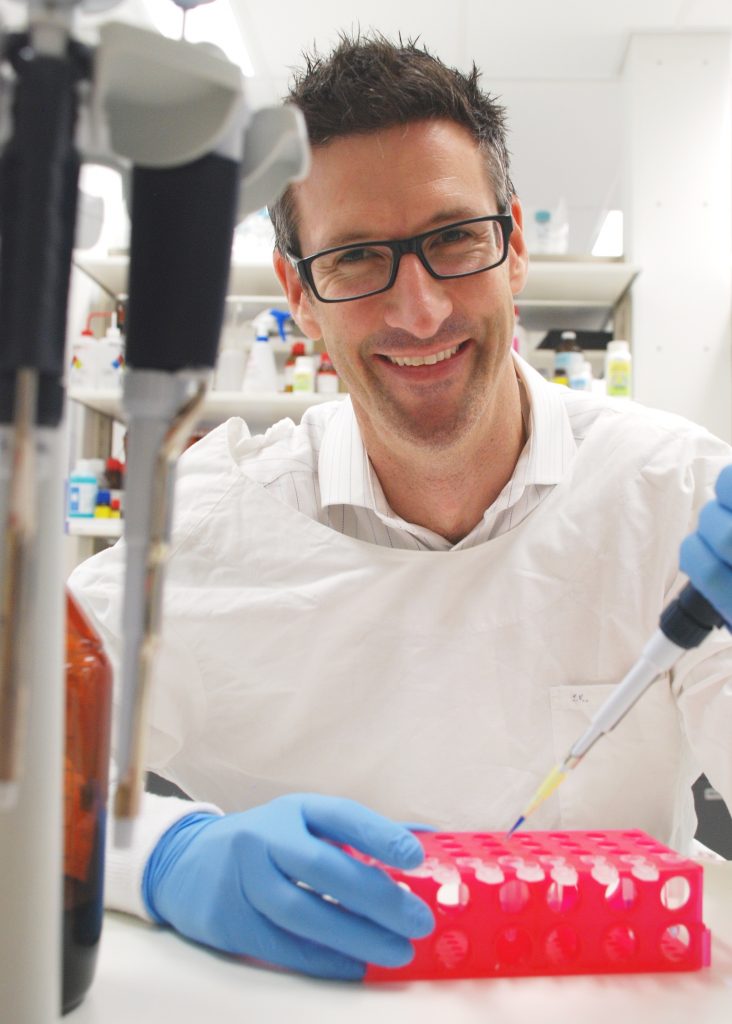
Co-author Associate Professor Nic West, a molecular immunologist from Griffith’s School of Pharmacy and Medical Sciences, said allergies had always had too many causes and no single explanation to account for an epidemic which had multiplied within a single generation.
“The research also explains why allergies can relapse,” Associate Professor West said.
“Once inflammation is established it damages the barrier further.
“Today’s drugs act downstream, so the disease often returns when treatment stops as they do not reach the root cause.”
Professor Smith said the team was clear this was a hypothesis to be tested, not a settled mechanism.
“We have spent our careers managing the smoke and for the first time we think we can see the fire, and it is not where everyone was looking,” he said.
“This is not a cure but is something we have never had before – a logical starting point.
“The next step is to measure these cells directly in infants before the allergy develops.”
The study’s co-authors were from Mount Sinai, Leuven, Cork, Southampton, Zurich, Miami, Singapore and Aberdeen.
The paper ‘The origins of allergy: An outside-in, bioenergetic hypothesis’ has been published in Allergy.
MEDIA NOTE: Click here to access a dropbox link of vision and images.

3: Good Health and Well-being