Kiwi in Tongariro Forest are more vulnerable after vandals burned and smashed ferret traps vital to protecting the birds.
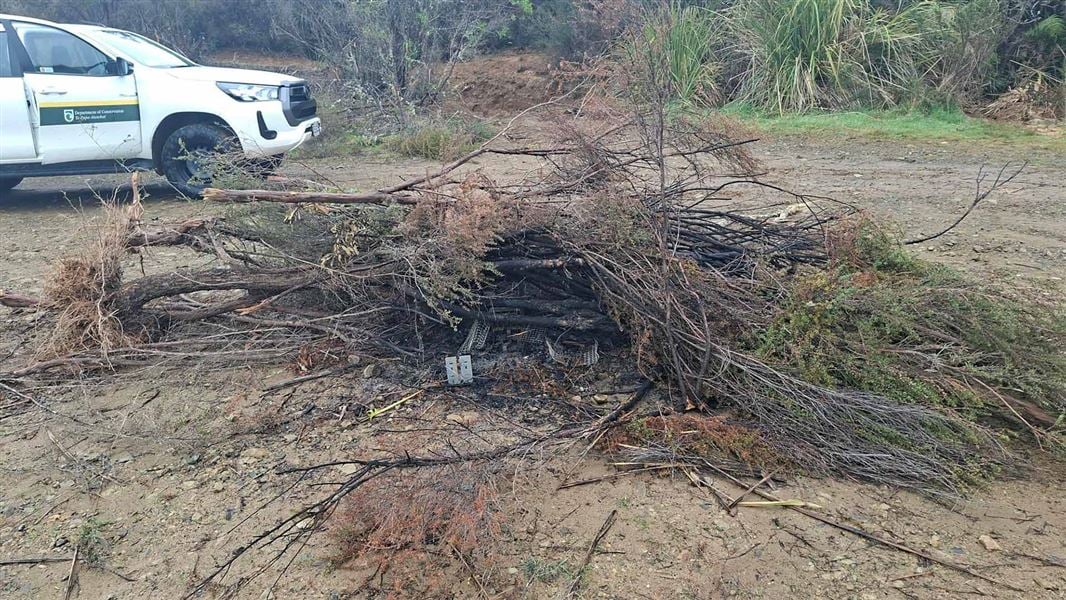
Four traps were burned, and a fifth was believed to have been run over by a vehicle, on a track not far from the popular 42 Traverse. It’s believed the vandalism occurred in mid-September.
Department of Conservation Biodiversity Ranger Jerome Guillotel says it’s frustrating to see senseless vandalism undermining kiwi conservation efforts.
“I do find the odd trap smashed or stolen, but this seems more deliberate and malicious. It’s bad for the kiwi, every trap removed from operation leaves them a little more vulnerable to introduced predators.”
Jerome estimates more than 600 brown kiwi call Tongariro Forest home.
“It’s a place where we have a huge focus on predator control to allow kiwi to thrive. It also means, over the last four years, we’ve been able to supplement the population with around 350 kiwi from Sanctuary Mountain Maungatautari – because we know they’ll generally be safe here.”
The vandalised traps formed part of a range of measures aimed at protecting Tongariro Forest kiwi from introduced predators like ferrets. Three-yearly aerial 1080 operations also keep introduced predator numbers low, protecting native species like whio and kiwi.
Jerome says even one ferret can wreak havoc in a short amount of time.
“Unlike most other introduced predators, ferrets can kill fully grown kiwi. In 2018 a single ferret in Tongariro Forest killed 10 monitored kiwi in just three months, so the traps are a critical part of preventing this kind of loss.”
Brown kiwi are considered ‘not threatened’ but dependent on conservation efforts, meaning protected populations like the one in Tongariro Forest are key to the ongoing success of the species.
If you’re out naturing and you observe suspicious or illegal activity like vandalism occurring on public conservation land, call the DOC emergency hotline on 0800 DOC HOT (0800 362 468) with as much detail as possible.
Existing damage can be reported via the damage report form on the DOC website.
NATURE LOOKS DIFFERENT FROM HERE
Nature isn’t scenery. Nature is a society that we rely on for everything, every day. It’s behind our identity and our way of life.