When Paul Kelly and Kev Carmody first sang that “from little things, big things grow”, they weren’t talking about climate action. Yet the sentiment still carries weight today, particularly when the environmental challenges ahead can feel anything but small.
As you read this, Sydney has just recorded its warmest winter on record, with temperatures at Observatory Hill averaging 19.7°C during the day. Spring has arrived with forecasts of temperatures several degrees above normal, while around the world, heatwaves and extreme temperatures are becoming increasingly difficult to ignore.
For young people, it can be difficult not to feel overwhelmed. Climate change is no longer a distant threat, but something they are living through now – and will continue to navigate for decades to come.
For Macquarie University alumna Angelique Porta, who has dedicated her career to understanding the science behind sustainability, the wide array of emotions this can bring is something that affects her intimately. But she also doesn’t believe that’s a reason to stop trying.
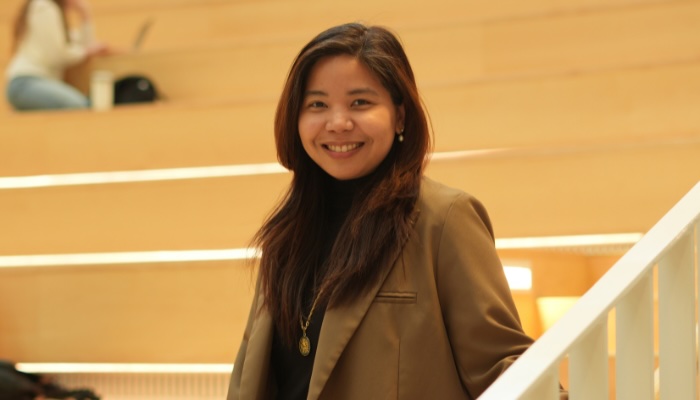
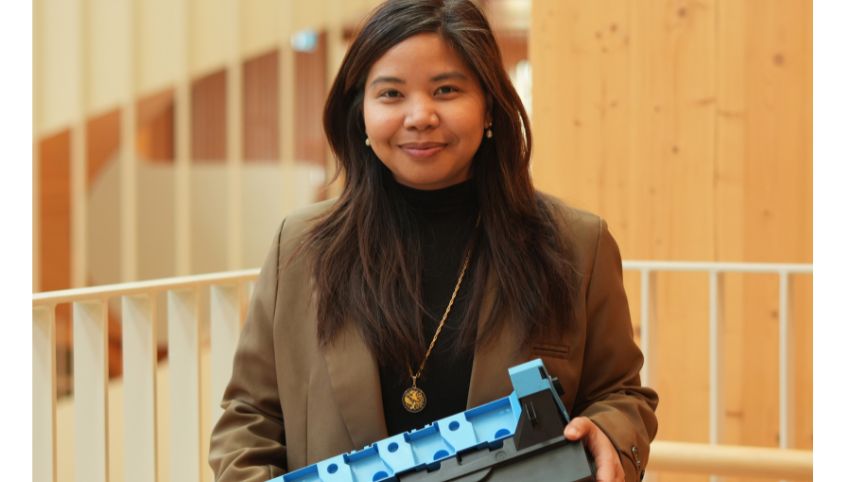 Angelique Porta, has dedicated her career to understanding the science behind sustainability. Image: Amy Shidiak
Having completed a Master of Sustainability at Macquarie, Porta is now putting that belief into practice, leading a Konica Minolta e-waste initiative on campus, helping the University community learn more about how to dispose of unwanted technology responsibly.
“Sometimes, people want to do the right thing, but they don’t know how, or they don’t have the platform to do it,” says Porta.
“What we’re trying to do here is just to create a platform for collaboration for everybody to just learn about e-waste, responsibly recycle their e-waste, learn about what happens after e-waste is recycled, or whether it can be refurbished.”
As technology becomes smarter, our appetite for the latest upgrade is growing too – while the lifespan of the devices we already own gets shorter.
According to the UN’s Global E-waste Monitor , the world generated 62 million tonnes of e-waste in 2022, with just 22.3 per cent collected and recycled. That amounts to more than 1700 kilograms of e-waste being generated every second – a staggering volume that reflects just how quickly our relationship with technology has changed.
But for Porta, that is where waste can become an opportunity – a chance to break from our culture of fast consumption and move towards something more circular.
“The difference between e-waste and regular household waste is that e-waste is an opportunity to recover metals when you recycle it,” explains Porta.
“There are valuable metals inside that laptop, computer or monitor. For example, metals like copper, zinc, steel, gold, palladium, and all the other components of the circuit board.
“If you don’t recycle properly, all that metal is completely wasted.”
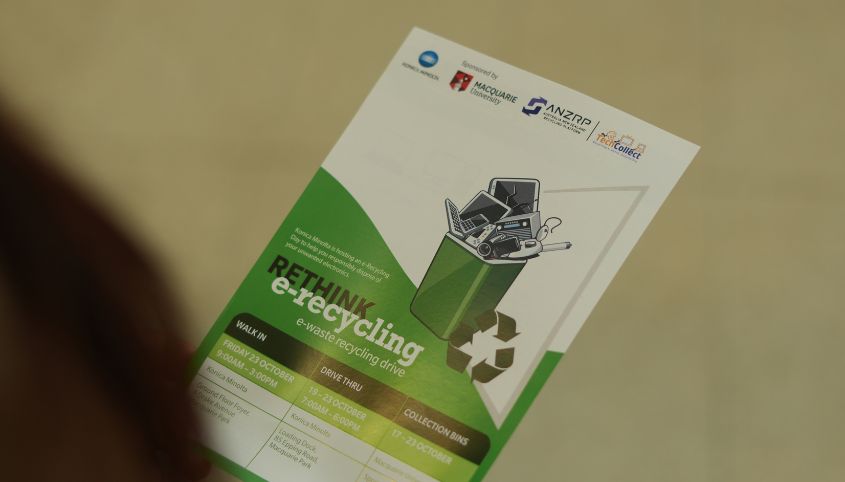
Angelique Porta is leading a Konica Minolta e-waste initiative on campus. Image: Amy Shidiak
The irony is not lost on Porta that while she advocates for circularity in sustainability, her own story also comes full circle, bringing her back to the Macquarie campus.
The support and encouragement she has received to turn her idea into reality is something she feels very lucky to have experienced.
“Macquarie has this “You to the power of us” tagline. I feel like that’s very true,” reflects Porta.
“For example, The Konica Minolta e-waste event was something I just presented to Nicole from the Sustainability Committee of Macquarie, and then she connected me to different people in Macquarie, and this partnership came to life. The initiative brings together Konica Minolta’s commitment to responsible technology lifecycle management with Macquarie University’s sustainability focus and campus community.
“You to the power of us came to life in this very real way.”
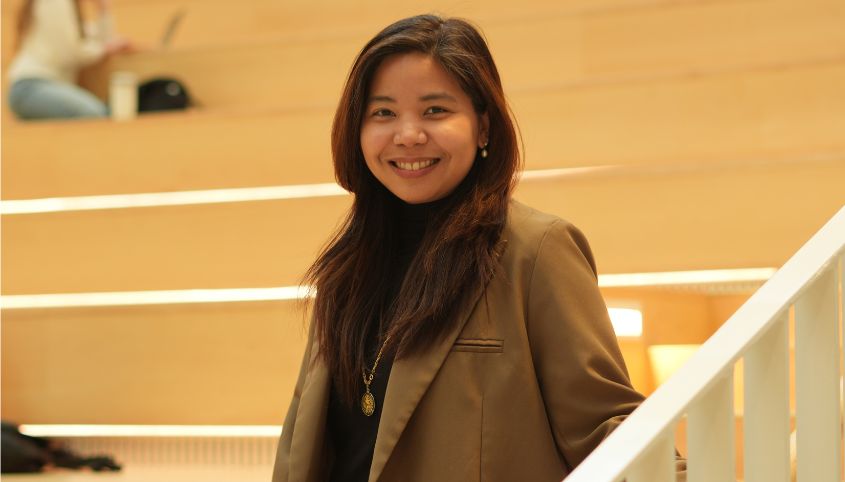
Angelique Porta’s own story comes full circle, bringing her back to the Macquarie campus. Image: Amy Shidiak
That experience is also a reminder of what can happen when an individual idea is met with the support of a wider community. It is a philosophy she hopes extends beyond the e-waste initiative itself – particularly at a time when the scale of the environmental challenges facing young people can feel too big for any one person to tackle alone.
“The environment is deteriorating very fast,” reflects Porta
“It might sound cliché, but individual actions add up.
“Small initiatives become a habit. The habit becomes a culture, and the culture becomes change. Suddenly it makes sense to start somewhere.”
From little things, big things grow.
For more information about Konica Minolta’s E-Waste initiative, including campus drop-off locations, visit: Learn more