Weld Australia has confirmed it will not provide company certification to overseas fabricators seeking to compete against Australian businesses for local infrastructure and manufacturing projects.
Weld Australia has reaffirmed that its company certification activities will remain focused on Australian businesses, ensuring that the investment, expertise and employment generated through certification directly support Australia’s manufacturing capability.
For more than two decades, Weld Australia has delivered internationally recognised company certification through the International Institute of Welding Manufacturer (IIW) Certification Scheme for AS/NZS ISO 3834 and, more recently, AS/NZS 5131.
As Australia’s peak welding body, Weld Australia has made a deliberate policy decision not to certify overseas fabricators seeking to compete for Australian projects.
Weld Australia CEO Geoff Crittenden said the organisation could not advocate for Australian fabricators, skilled jobs and sovereign manufacturing capability while using its certification expertise to help overseas competitors gain access to the same work.
“Weld Australia cannot campaign for local content and stronger opportunities for Australian fabricators on one hand, while providing overseas companies with certification that may help them compete for Australian work on the other,” Crittenden said. “That would be fundamentally inconsistent with our purpose and our responsibility to the Australian welding and fabrication industry.”
Certification must strengthen Australian capability
Weld Australia’s company certification activities are intentionally focused on Australian businesses, together with organisations participating in Australian Government-supported international development programs.
“This is not about restricting international trade or suggesting that overseas companies should not be able to obtain certification,” Crittenden said. “It is about where Weld Australia directs its own technical expertise and resources.”
“Our position is clear: Australian certification expertise should first and foremost support Australian manufacturers, Australian jobs and Australian sovereign capability.”
“Certification must not become a gateway through which overseas fabricators gain access to major Australian projects while capable local businesses are left on the sidelines.”
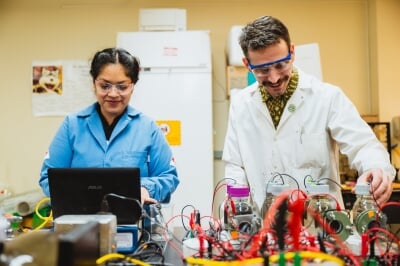
Company certification involves much more than the issue of a certificate. It requires detailed technical assessment, independent auditing, ongoing surveillance, qualified technical personnel and continued engagement throughout the certification cycle.
These activities support skilled Australian jobs across welding engineering, auditing, inspection, welding coordination and certification. They also help participating businesses strengthen their systems, technical knowledge and ability to consistently deliver safe, high-quality fabricated products.
Brisbane 2032 should deliver a local manufacturing legacy
The issue is particularly significant in South-East Queensland as planning and procurement activity intensifies for infrastructure associated with the Brisbane 2032 Olympic and Paralympic Games. Weld Australia understands that many local fabricators have seen few meaningful opportunities to tender for major fabrication packages, despite the unprecedented level of infrastructure investment planned for the region.
Crittenden said Brisbane 2032 represented a once-in-a-generation opportunity to create a lasting manufacturing and skills legacy for Queensland.
“We strongly encourage the Queensland Government, project owners and head contractors to ensure that a substantial proportion of the fabricated steelwork required for Brisbane 2032 is manufactured locally,” Crittenden said.
“Queensland has highly capable fabricators, experienced technical professionals and skilled tradespeople who are ready to contribute. They must be given genuine opportunities to tender and compete for this work—not simply asked to watch from the sidelines as major fabrication packages are awarded offshore.”
Crittenden said the benefits of local fabrication would extend well beyond the construction phase of the Games.
“Brisbane 2032 should leave Queensland with stronger businesses, more skilled workers, more apprentices and greater manufacturing capability,” he said. “That would be a meaningful and enduring legacy for local communities and the broader Australian economy.”