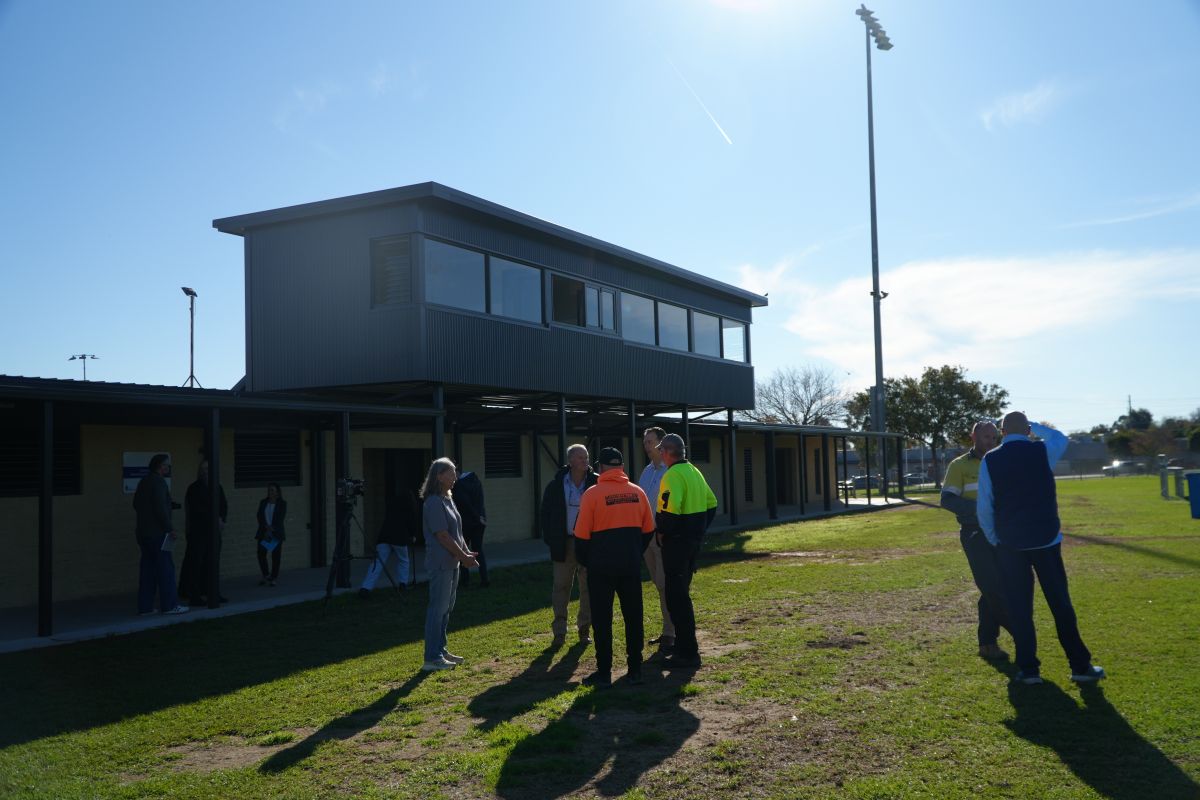
The town of Fifield near Parkes is about a six-hour drive west of Sydney, and at the last census was home to about 130 people. Now, the town has found itself at the centre of a major strategic play by the United States government.
Author
- Robert Monterosso
Research Fellow, United States Studies Centre, University of Sydney
The US Department of War has committed to make a conditional loan of US$400 million (about A$566 million) to Sunrise Energy Metals, an Australian mining company hoping to deliver the world’s first
supply of a key critical mineral outside of China.
Scandium is listed as a critical mineral in both Australia and the US , signalling its strategic importance in aerospace and defence.
This loan is another chapter in the US government’s search for secure critical mineral supply chains to reduce its dependency on Chinese supply. But success will require sustained investment and government support.
Why scandium is on the radar
Scandium is a highly strategic metal used to produce ultra-high strength alloys needed for the most advanced fighter jets. It is also used in solid oxide fuel cells, crucial for providing reliable power to artificial intelligence (AI) data centres.
Two factors have contributed to the sudden interest in scandium.
First, demand for scandium is being driven by massive increases in defence spending across North America, Europe and Asia and an investment boom in power-hungry AI data centres .
Second, China’s sweeping export controls on rare earth elements, including scandium, have contributed to a persistent shortage of supply on the global market, pushing up prices.
These export controls are designed to maintain China’s dominance of supply chains for key critical minerals and slow down the US defence and industrial base.
Still, the market for scandium is tiny. According to statistics from the US Geological Survey, the entire world only consumed 60 tonnes of the metal in 2025.
The world’s first dedicated mine
Scandium is usually found in very small quantities. For that reason, until now, it has been exclusively produced as a byproduct of nickel and titanium processing.
This is what sets the Sunrise Energy Metals project apart – the proposed mine has scandium deposits in a high enough concentration to be the first primary source of scandium in the world.
If production goes ahead, and lives up to its promise of producing 60 tonnes of high-purity scandium each year by 2028, this would be enough to completely satisfy the current level of global demand.
According to the company , there is also potential to expand the project in the future and add another 120 tonnes of production.
China still has leverage
The deal gives the US government first rights to purchase scandium from Sunrise Energy Metals, with production expected to start in late 2028.
However, there are some risks for this project’s economics. While China continues to restrict its exports, scandium will continue to fetch a high price. But China has the ability to remove those restrictions at any time, flooding the market with low-cost scandium and potentially squeezing Sunrise Energy Metals’ profits.
China has played this card before with lithium , flooding the market and making some Western mines uneconomic.
Many other rare earth elements projects also face this risk. That’s partly why earlier this year, in a US$96 million deal (about A$136 million) with another Australian mining company, Lynas, the Pentagon agreed to price floors, to shield Lynas from potential price crashes.
Adding to this, the Pentagon’s multi-million-dollar loan to Sunrise Energy Metals is just that – a loan. It must be paid back, potentially with interest.
The loan is also conditional on a number of milestones. These include the construction of a scandium metal refining facility in the US that can produce a range of different military grade scandium compounds.
When you consider the major upfront capital costs required to produce a small amount of the metal, and overlay the threat of low-cost, subsidised Chinese production, the risks of this kind of investment become clear.
Success isn’t guaranteed
While this project is critical to US defence and strategic ambitions, its success will require long-term investment and government support.
The NSW government, for its part, has chipped in with an offer to defer royalties for five years.
As long as China has the ability to flood the global market with cheap critical minerals – whether its graphite, gallium, or in this case, scandium – projects like these are vulnerable to price crashes.
The US and Australia should consider whether a price floor on scandium is necessary to protect this critical supply chain for the long term.