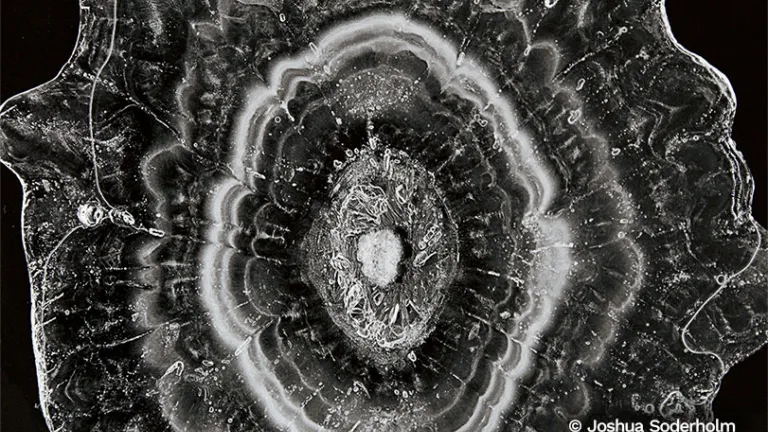
A 13-metre Falcon 9 rocket stage struck the Moon last month, leaving a crater about 20 metres wide.
In the days before impact, University of Tasmania researchers from the School of Natural Sciences became the first in the world to detect the object by radar, helping refine predictions of where it would land.
The team tracked the rocket across nearly 400,000 kilometres of space using radio telescopes across Australia as part of an international effort to observe the event.
On 26 and 29 July, PhD candidate Oliver White led two deep-space radar observations that formed part of that effort.
NASA’s 70-metre antenna at Tidbinbilla, near Canberra, sent a radar signal towards the rocket body almost 400,000 kilometres from Earth. The faint echo that bounced back was picked up by radio telescopes in Hobart, Ceduna in South Australia and Yarragadee in Western Australia.
The observations showed the rocket was slightly away from its predicted position, giving researchers new data to refine estimates of where it would strike the Moon.
For Oliver White, it was not a routine night at the telescope.
“It’s not every day you help track something that is about to hit the Moon,” he said.
“The signal coming back was incredibly faint, but it gave us a real measurement of where the object was.
“That measurement helped improve the prediction of where it would end up, which is exactly what observers needed before the impact.”
The observations revealed more than the rocket’s position.
Fellow PhD candidate Liam Filby used radar-processing techniques developed through his own research to examine how the object was moving as it travelled through space.
His analysis showed the rocket body was tumbling, completing a full rotation about once every seven minutes.
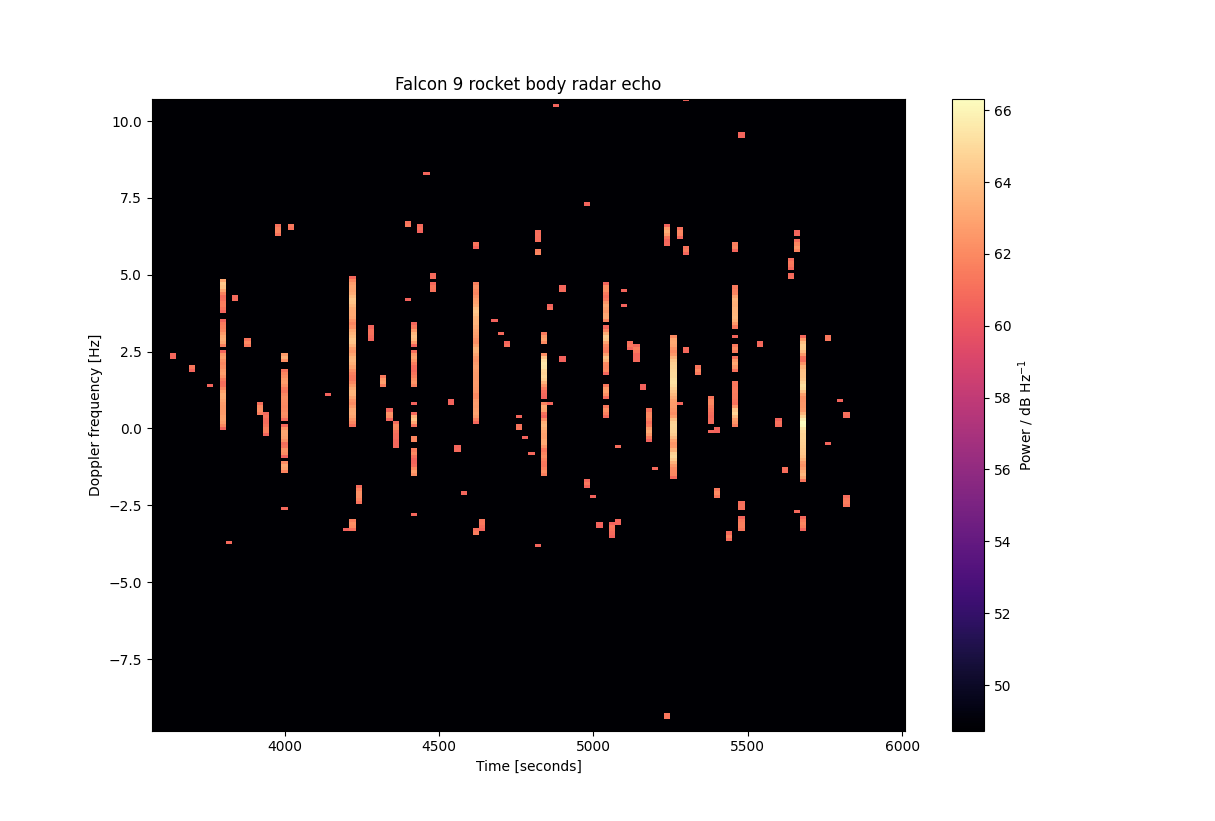
“The echo tells us more than just where the object is,” he said.
“There is information in the signal about how it is moving.
“In this case, we could see the rocket body was tumbling hundreds of thousands of kilometres away. That is a remarkable thing to pull from a faint radar echo.”
Dr Guifré Molera Calvés, who leads space situational awareness activities at the University of Tasmania, said the combination of a rare lunar impact and real-time tracking from Australia made it a significant event.
“We monitor several rocket bodies in the satellite graveyard, but this was the first time we studied an object that was about to impact another celestial body,” he said.
“We have a piece of human-made space debris reaching the Moon, researchers around the world trying to observe it, and students here in Tasmania helping provide the data needed to understand where it is and how it is moving.
“That is the exciting part. This is not a simulation. It is real science, happening in real time.”
The Falcon 9 upper stage had been in space since its launch in January 2025, when it carried two private lunar landers, Firefly Aerospace’s Blue Ghost and ispace’s Hakuto-R, towards the Moon. Once its mission was complete and its fuel spent, the combined pull of the Sun and Moon’s gravity dragged it off course and onto a collision path with the lunar surface. Because the Moon has no atmosphere, there was nothing to slow it down before impact.
Because the impact was only visible from Europe, the University team worked alongside radio observatories in the United Kingdom, Spain and Latvia, as well as the European Space Agency’s tracking station at Cebreros in Spain to track the event. Data collected before, during and after the impact has been shared with the University team for the detailed analysis.
Dr Molera Calvés said the event was a reminder that space debris was no longer only a problem in orbit around Earth.
“We often think about space debris as something circling above us,” he said.
“But human-made objects are now moving much further out, including towards the Moon.
“As we send more spacecraft beyond Earth orbit, we need to know where these objects are, how they are moving and where they are going to end up.”
The work comes as Australia takes a larger role in tracking and managing space debris with the Inter-Agency Space Debris Coordination Committee .
The Australian Space Agency joined a global committee of space agencies in September 2025 to coordinate research and share data on the growing problem. The University of Tasmania is among its key Australian partners, contributing expertise and observations to that work.
For White and Filby, the impact offered a chance to test their research on an event being followed by scientists around the world.
It also provided a rare opportunity to track and analyse an object almost 400,000 kilometres from Earth as it made its final approach to the Moon.