Young women were the single largest demographic reporting marketplace scams in South Australia in 2025-26, as police warn online bargains can quickly become costly.
There were 1,035 marketplace scam reports involving South Australian victims during the financial year, accounting for 20 per cent of all South Australian ReportCyber matters.
Younger South Australians, especially women aged 18-25, generally remained more likely to report this type of scam than older age groups in 2025-26.
The South Australian trend reflects a broader national picture.
The National Anti-Scam Centre’s ‘Targeting Scams 2025’ report, published in March 2026, found more Australians reported a financial loss to shopping scams than any other scam type.
Nationally, 12,248 people reported losing money to shopping scams, with losses totalling $10.8 million. The number of people reporting a financial loss increased 22.2 per cent from 10,022 in 2024.
Scamwatch defines shopping scams as including online shopping and classified scams.
Cybercrime Invest Section Sergeant David Mitchell said scammers took advantage of the speed and convenience of online marketplaces.
“Scammers can create convincing listings for items that do not exist, use stolen images and information, or pressure buyers into paying a deposit before they have had an opportunity to properly verify what they are purchasing,” Sergeant Mitchell said.
“If a deal appears unusually cheap or you are being pressured to transfer money quickly, stop and take the time to check the seller and the item independently.”
While many marketplace scams involve relatively small losses, SAPOL analysis shows high-value purchases can result in significant financial harm.
In 2025-26, 373 South Australian marketplace scam matters involving losses between $100 and $500 accounted for about $86,000 in losses.
By comparison, just 13 matters involving losses between $10,000 and $50,000 accounted for about $220,000, including scams involving cars, caravans, tractors, airline travel and high-value pets.
The national Scamwatch data also shows scammers are increasingly succeeding through digital channels, with reports involving an online contact method and financial loss increasing 31.8 per cent in 2025.
Losses linked to online contact increased 21.8 per cent to $158.5 million.
This message comes as Scams Awareness Week enters its fourth day, with SAPOL reinforcing the importance of slowing down and verifying online deals.
South Australians buying or selling online are encouraged to:
- independently verify the seller, buyer and listing;
- inspect high-value items in person where possible before transferring money;
- avoid paying deposits simply because a seller says there is significant interest in an item;
- be wary of prices that appear significantly below market value;
- use secure payment methods and avoid moving conversations away from established platforms unnecessarily; and
- report suspected scams through ReportCyber.
Anyone who believes they have transferred money to a scammer should contact their financial institution as soon as possible.
Cybercrime can be reported through ReportCyber at cyber.gov.au/report-and-recover/report.
Support:
- eSafety Commissioner – www.esafety.gov.au
- Victims of Crime SA – www.voc.sa.gov.au
- Lifeline – 13 11 14 or www.lifeline.org.au
- Rebuild Victim Counselling – www.rasa.org.au
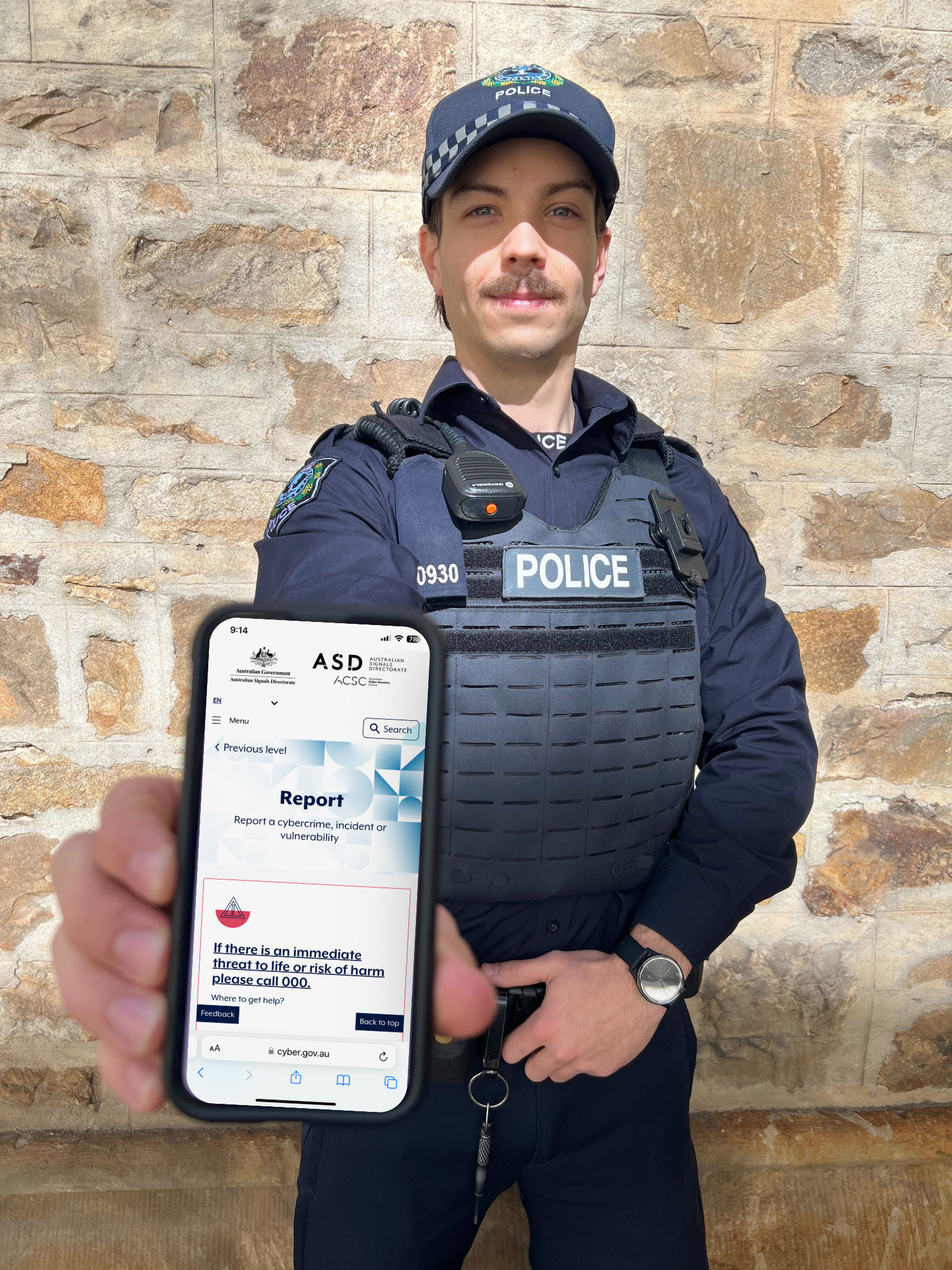
Cybercrime Investigation Section Senior Constable Max Allison demonstrates where to lodge a cybercrime report through ReportCyber, the Australian Cyber Security Centre’s national reporting platform.