Fredrik Lanner researches the developmental stages of the human embryo and how embryonic stem cells can be used for future therapies. Meet one of the new professors of Karolinska Institutet who will participate in this year’s installation ceremony at Aula Medica on 8 October.
Text: Karin Tideström, for KI’s installation ceremony booklet 2026
Fredrik Lanner is interested in the earliest stages of human development – the time from fertilisation to the formation of the first organs. He studies embryonic stem cells, which have the capacity to develop into all cell types in the human body.
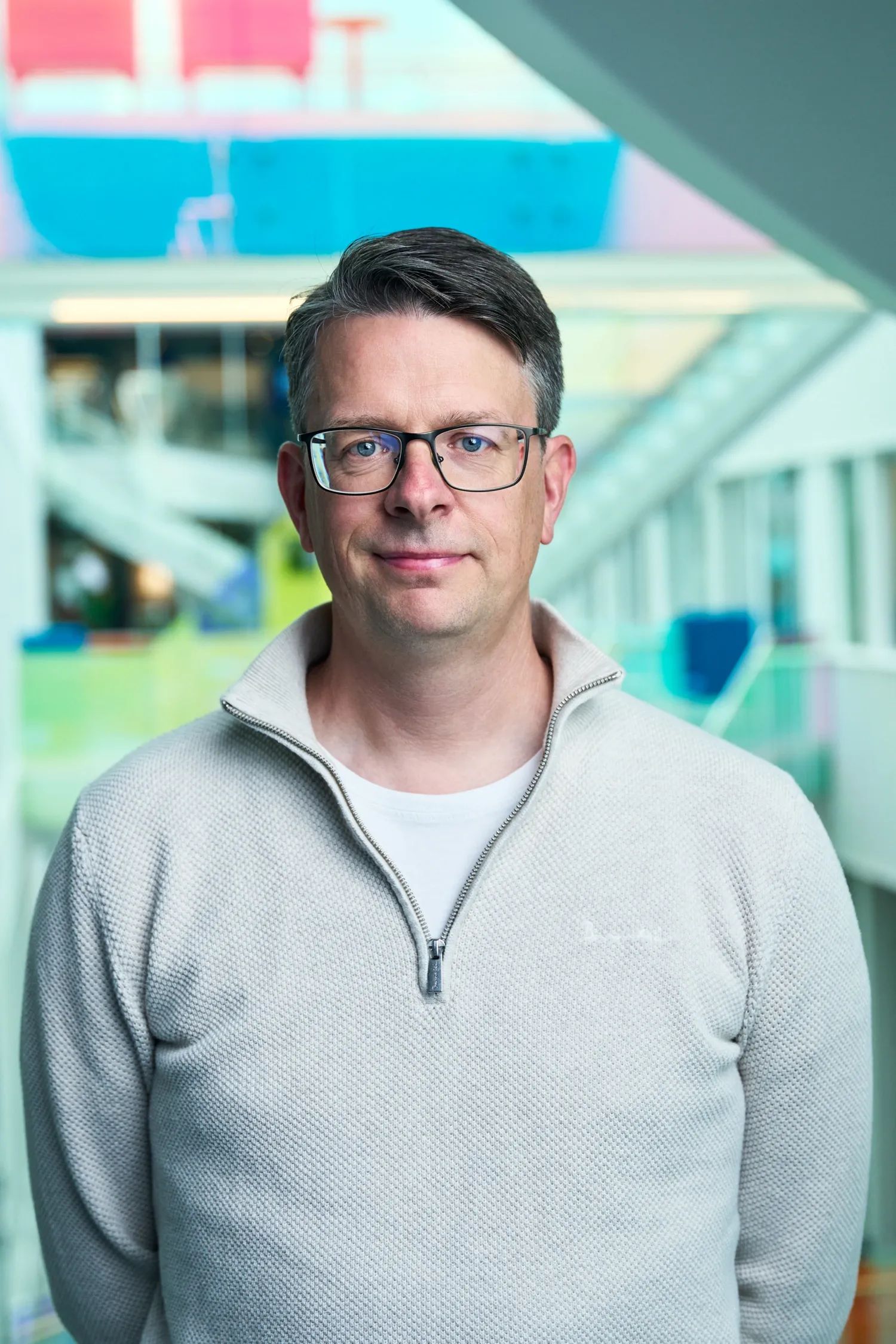
Photo: Erik Flyg
One line of his research is mapping how genes are switched on and off as cell-types mature during the first weeks of pregnancy. By manipulating the cellular environment, the researchers can make them form different types of cells, such as insulin-producing cells and retinal cells, which can be used in type 1 diabetes and age-related macular degeneration respectively.
“Our first retinal cell product is now ready for clinical testing in patients with age‑related macular degeneration,” says Professor Lanner.
The stem cells are also used to create advanced models of the human embryo, enabling the researchers to study embryonic development without having to use genuine embryos. Apart from being able to develop stem-cell-based treatments, their aim is to better understand embryonic development and the causes of infertility and miscarriage.
About Fredrik Lanner
Professor of Embryonic Stem Cell Biology at the Department of Clinical Science, Intervention and Technology as of 1 September 2025
Fredrik Lanner was born in Stockholm in 1977. He studied biology at Stockholm University and earned his PhD at Karolinska Institutet in 2008. During his postdoctoral training at the Hospital for Sick Children in Toronto, Canada, he specialised in developmental and stem-cell biology. He returned to Karolinska Institutet in 2012 to establish his own research group.