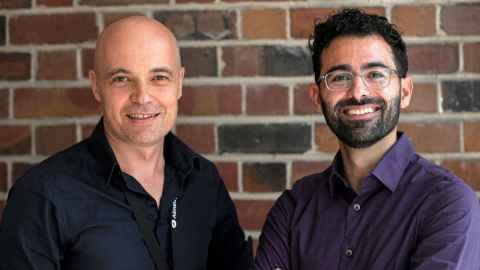
The director at the Max Planck Institute for Brain Research has been awarded the prize in the field of neuroscience, alongside three other scientists

Erin Schumann investigates the cellular mechanisms and neural circuits that underpin information processing and storage in the brain. Her laboratory focuses on the molecular and cellular processes that govern protein synthesis and degradation in nerve cells and their synapses.
© Liwlig / MPI for Brain Research
To the point:
- Erin Schuman shares the Kavli Prize 2026 in the field of neuroscience with Christine Holt of the University of Cambridge (UK), Kelsey Martin of the Simons Foundation (USA), and Oswald Steward of the University of California, Irvine (USA).
- The scientists are being honoured for their discovery of local protein synthesis in neurons, which is of great importance for brain development and plasticity.
- The Kavli Prize is regarded as one of the most prestigious prizes in the fields of astrophysics, nanoscience, and neuroscience and endowed with one million US dollars (approximately 911,000 euros) in each field.
Through learning and experience, connections between nerve cells (neurons) continue to form right into late adulthood and constantly adapt to changing challenges. In the process, the brain’s neural circuits are remodelled, and connections between neurons are formed and maintained – a capability known as ‘synaptic plasticity’. This adaptability is underpinned by proteins in the neuron that can be locally controlled and regulated.
Mechanisms of brain remodelling
The scientists awarded the Kavli Prize in 2026 have uncovered fundamental principles of how neuronal protein production occurs at the molecular level – from the activity-dependent transcription of genes into mRNA to the local translation of mRNA into new proteins in the neuronal processes, the axons and dendrites and synapses. Their findings provide spectacular insights into the mechanisms that enable the brain to be constantly remodelled through experience.
Furthermore, Erin Schuman has developed powerful molecular tools to identify and visualise newly synthesised proteins at high resolution. In doing so, she has elucidated how mRNA levels, protein synthesis and protein degradation are regulated within specific cellular compartments. “I’m thrilled to be honoured with this recognition with Christine, Kelsey and Os and also so pleased that the fascinating machines and molecules inside the neuron are getting the attention they deserve”, says Schuman.
About Erin Schuman
Erin Schuman was born in California in 1963. After completing a bachelor’s degree in psychology at the University of Southern California, she went on to obtain a PhD in neuroscience at Princeton University. She then conducted postdoctoral research in the Department of Molecular and Cellular Physiology at Stanford University. In 1993, she joined the Biology Department at the California Institute of Technology (Caltech), where she remained until 2009 and was appointed as an investigator at the Howard Hughes Medical Institute (HHMI) from 1997 to 2009. In 2009, she relocated to Frankfurt with her husband, Gilles Laurent, to establish the new Max Planck Institute for Brain Research.
Schuman has won a number of prestigious awards, including the Louis-Jeantet Prize for Medicine, the Rosenstiel Award, the Brain Prize, the Körber European Science Prize and the HFSP Nakasone Award. She is a member of The Royal Society in the UK, the National Academy of Sciences and National Academy of Medicine in the US and the German National Academy of Sciences Leopoldina.
About the Kavli Prize
The Kavli Prize is a partnership between The Norwegian Academy of Science and Letters, the Kavli Foundation (US), and the Norwegian Ministry of Education and Research. It is awarded every two years and was first presented in 2008. So far 73 scientists, from eight countries have received the Prize. All laureates are chosen by committees whose members are recommended by six of the world’s most renowned science societies and academies. Thus, the prize is regarded as one of the most important awards in nanoscience, astrophysics, and neuroscience.