A new chapter has begun for one of Victoria’s rarest native orchids, thanks to a collaborative conservation effort between Royal Botanic Gardens Victoria and Parks Victoria scientists, volunteers and other staff.
In late August, 402 Pale Golden Moth orchids were translocated to a carefully chosen site in the Alpine National Park.
The project is led by Royal Botanic Gardens Victoria and funded through DEECA’s Nature Fund. Its goal is to create a new population that can survive on its own and help protect the species from extinction.
The Pale Golden Moth Orchid (Diuris ochroma) was chosen as one of 24 threatened plant species because conservation action was seen as both urgent and achievable.
A species in need of help
The planting may have looked like a two-day event, but it was the result of more than 10 years of research, planning and teamwork to help stop the orchid from becoming extinct.
The orchid is now known to grow in only two places in Victoria, both on private property which isn’t currently protected. Recent surveys showed the number of orchids has dropped significantly at both places. This makes it very important to create a new population.
‘Successful orchid conservation involves much more than growing plants and putting them in the ground,’ said Flo Meredith, Conservation Scientist at Parks Victoria.
‘Scientists at Royal Botanic Gardens Victoria first had to understand and grow the special fungus the orchid needs to survive. This fungus lives in the orchid’s roots. We also had to check that the right pollinators were at the new site, so the orchids could reproduce naturally.’
The new site was chosen after careful review. Several places were checked and compared. The team looked at land use, pest animals such as deer and pigs, weeds, visitor pressure, the risk of damage or interference, and whether the site would suit the orchid in the long term.
A collaborative effort
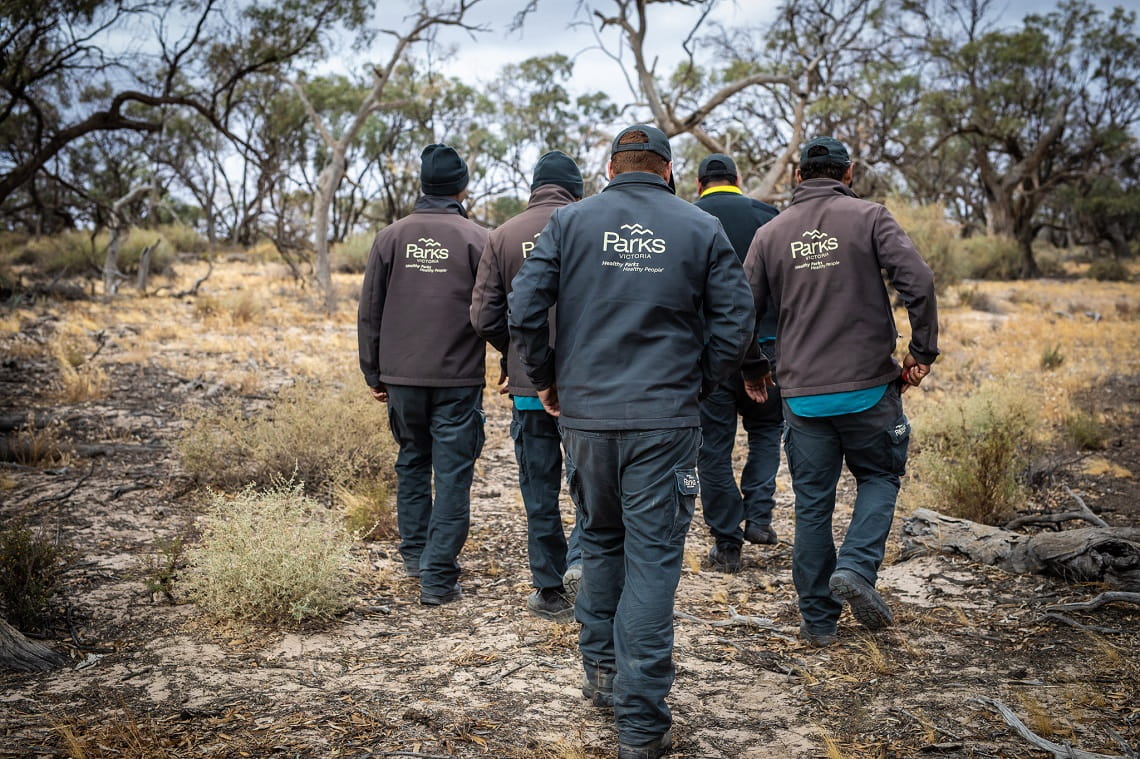
The two-day planting program was a true team effort. It involved staff from Royal Botanic Gardens Victoria, volunteers from the Australasian Native Orchid Society and the Botany and Plant Ecology Society, and Parks Victoria staff.
Even though the site was remote the group completed many tasks. They measured and recorded the orchids, built protective cages, dug holes, watered, tagged and planted each orchid.
Projects like this rely on marrying expert knowledge, science and research, and skilled rangers who can turn conservation planning into real work on the ground.
Monitoring for the long term
The planting event is only the start.
The project’s long-term success will depend on monitoring and managing the site for many years. Monitoring will check how many plants survive, flower, grow and produce seed. Habitat management, weed control and fire planning will help keep the right conditions for the new orchid population.
Our teams will continue to play an important role in this work, in partnership with Royal Botanic Gardens Victoria and other stakeholders.