
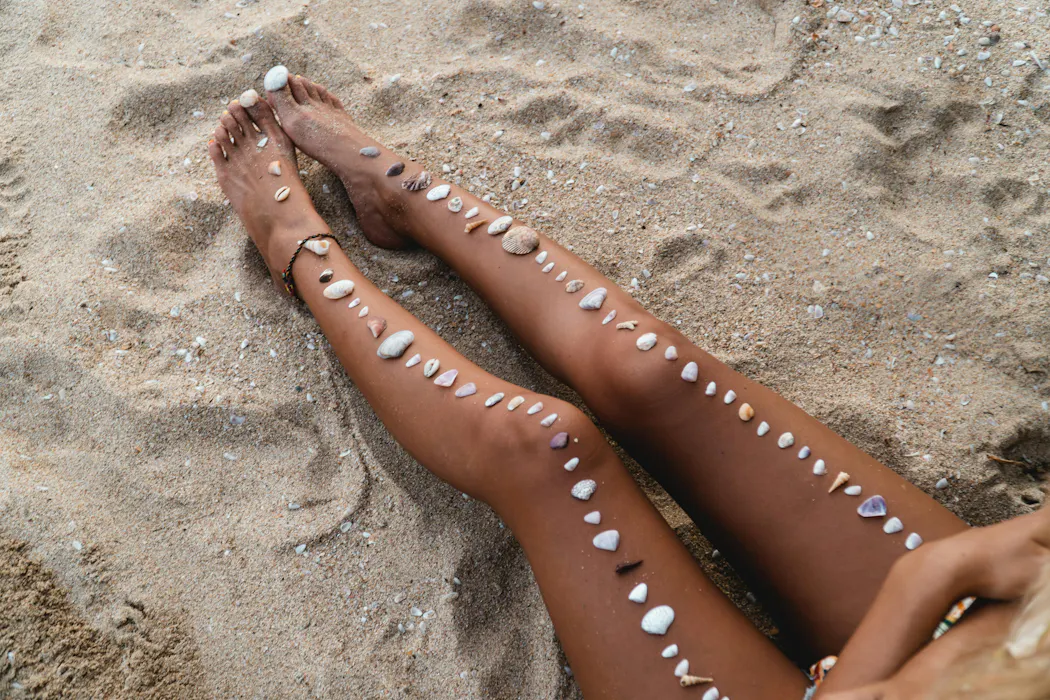
Real tans come from UV-triggered pigment production in living skin; that same UV exposure increases the risk of skin cancer.
Author
- Anna Wang
Associate Professor of Chemistry, UNSW
Bronzers are simply coloured coatings that sit atop the skin and can be washed away.
How, then, to create a fake tan that stays put, without exposing people to UV light and skin cancer risk?
The trick is not to get brown pigment into the skin directly. Brown pigments are usually large molecules, which do not penetrate the skin barrier easily.
Instead, fake tan products smuggle in something much smaller, then generate the pigment chemically once it is already inside the outer skin layer.
How to smuggle in a molecule
The outermost layer of skin, the stratum corneum, is dead skin cells embedded in lipids (fats). While it is an excellent barrier, some small molecules can still get through.
The active ingredient in most fake tan products is dihydroxyacetone, or DHA – a tiny sugar molecule found naturally in our bodies. It’s closely related to glycerol (or glycerin), the sweet, syrupy compound found in foods, cough syrups and skincare products.
Glycerol is in moisturisers and many personal care products; it helps keep skin hydrated. It’s also small enough to move through the outer skin barrier reasonably well.
Just like glycerol, DHA can diffuse into the outermost layers of skin. But instead of helping skin retain water, it reacts chemically with free amino acids and proteins in the stratum corneum, forming brown pigments.
So unlike bronzers or makeup, DHA does not simply sit on top of the skin.
The DHA molecule itself is small enough to enter the outer skin layer, where it then generates larger brown pigments that are trapped within the skin as they form.
You are, in a sense, toast
This sugar + amino acids combination is the same broad class of chemistry that happens in cooking.
When sugars react with amino acids under heat, you get what’s called the Maillard reaction . This chemical reaction is responsible for the browning of toasted bread crusts, biscuits and seared steak.
Fake tan is essentially a low-temperature version of this process happening slowly in your skin.
You are, in a sense, toast.
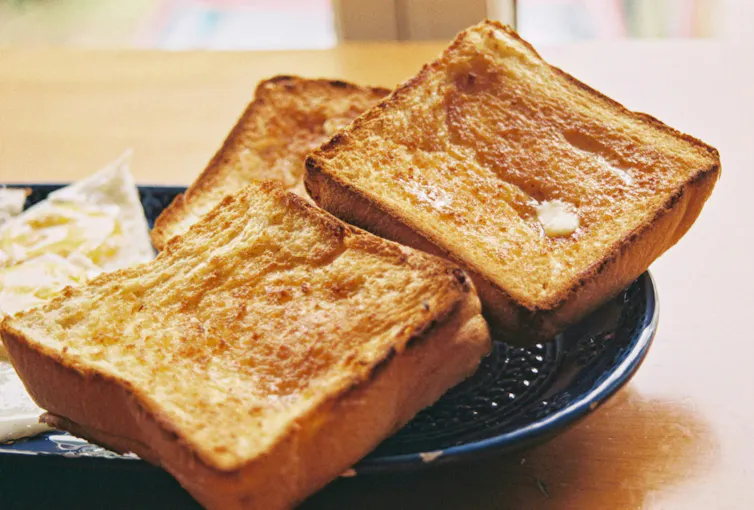
That characteristic fake tan smell comes from the same chemistry. As DHA reacts with amino acids in the skin, it produces volatile molecules – including aldehydes and ketones – that rapidly evaporate into the air. Similar compounds are generated when you brown food during cooking.
So if fake tan smells a bit “biscuity” to you, that’s why.
Heat, sweat and skin oils can intensify the smell, so fake tan scents often become more noticeable overnight or after exercise.
Red, orange, yellow, green tones
DHA tends to produce orange-brown tones, especially on pale skin (I’m sure you can think of someone who’s had this issue).
To counteract this, formulators often add green or olive pigments, which neutralise excess orange and produce a more natural-looking tan.
Some products also contain erythrulose, another sugar-based tanning ingredient that develops more slowly than DHA. It can produce redder or more natural-looking tones.
But there are some problems even experienced tanners frequently encounter.
Problem #1: patchy on
The fake tan danger zones are elbows, knuckles, ankles, and the base of the palms. These regions have thicker, rougher and drier skin, meaning they contain more protein within the dead skin cells for DHA to react with. Product also tends to collect in skin creases and folds.
Warmer areas may also react faster, because chemical reaction rates generally increase with temperature. The result? Patchy overdevelopment in warm spots such as armpits.
One solution is to use an occlusive moisturiser or barrier cream – such as Vaseline – on certain regions before application, reducing how much DHA reaches the skin.
Problem #2: patchy off
Fake tan only stains the outermost layer of skin. As those dead cells naturally flake off, the colour disappears unevenly. Friction from clothes, sweat, dry skin and local differences in skin shedding all contribute to the classic “leopard print” fade.
Skin is not a perfectly uniform sheet. Human skin already contains subtle biological patchiness in sweat production, oiliness and cell turnover.
Fake tan simply makes this texture more visible. Exfoliating might help before and after DHA application, for different reasons. Exfoliating before can remove excess dead skin, making the skin more even for DHA uptake. Exfoliating after the tan starts fading can help remove the stained dead skin cells more evenly than natural shedding processes would.
Problem #3: waiting time
The DHA reaction takes time. Even “one hour tan” products do not fully develop in one hour; they simply contain enough DHA, or enough penetration enhancers (such as dimethyl isosorbide) that sufficient material enters the skin quickly before rinsing. Also, pH levels can also be carefully tuned to speed up the browning chemistry without degrading the DHA itself.
But there are trade-offs. Faster formulas can develop less evenly, smell stronger or produce more orange tones.
Unless you plan on climbing into an oven to speed things up, your best option may be to simply relax, and let the chemistry do its work.


