Monday 7 July
Honouring Strength and Legacy: NAIDOC Week 2025
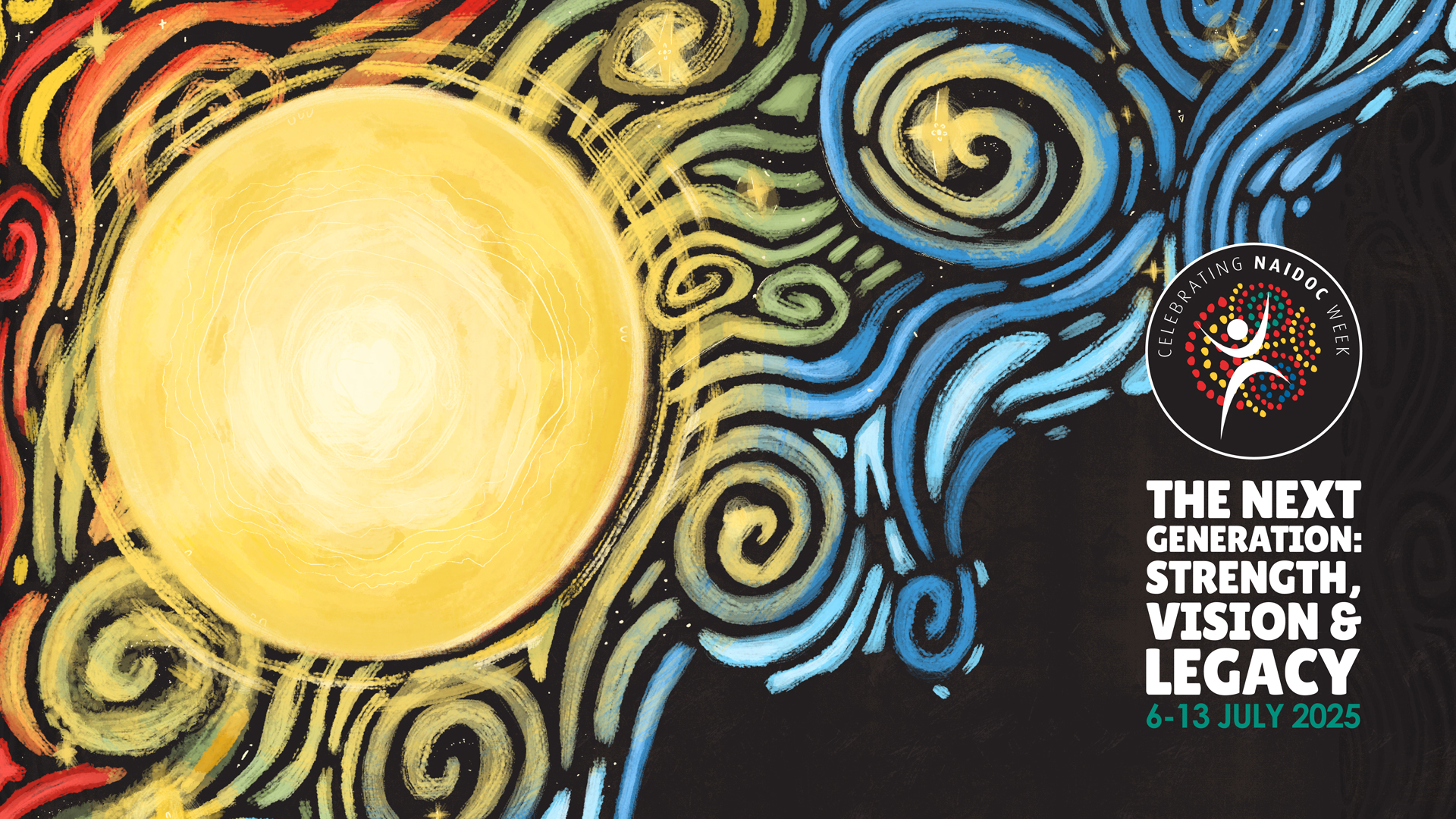
This year marks the 50th anniversary of NAIDOC Week, celebrated from 6-13 July 2025.
2025 NAIDOC theme: “The Next Generation: Strength, Vision & Legacy”
The 2025 theme, “The Next Generation: Strength, Vision & Legacy”, invites us to reflect on the resilience of Aboriginal and Torres Strait Islander peoples and to look forward with hope and determination.
As we honour this milestone, it’s vital to recognise the unique experiences of First Nations people with disability. The intersectionality of being an Aboriginal and Torres Strait Islander
person with disability can often lead to increased discrimination.
Their stories are integral to our national narrative, embodying the challenges faced and the strength displayed in the pursuit of equity and inclusion.
Celebrating Culture and Advocacy
NAIDOC Week offers numerous opportunities to engage with and celebrate First Nations cultures. Events across the country will showcase art, music, and storytelling, providing platforms for voices that have historically been marginalised.
Find an event near you at the NAIDOC Week Local Events Calendar.
This week is not only a celebration but also a call to action. It’s a time to acknowledge past injustices, advocate for change, and commit to a future where diversity is embraced, and all communities thrive.
Addressing Restrictive Practices
Last month PWDA hosted a side event at the 18th Conference of States Parties (COSP18) in New York – ‘Ending restrictive practices against First Nations people with disability: Finding a culturally sensitive way forward‘- where PWDA’s Megan Spindler-Smith and Tahlia-Rose Vanissum (Woppaburra Woman and First Nations Disability and Gender Justice Advocate) led an interactive discussion with attendees, reflecting on the speakers’ experiences and discussing possible ways forward.
Restrictive practices, including physical restraint and seclusion, often stem from systemic biases and have long-lasting impacts.
During the session, advocates stressed the importance of culturally sensitive approaches that prioritise the voices and rights of those affected. Speakers emphasised the importance of centring lived experience in reform efforts and listening deeply as we work towards dismantling harmful systems and fostering environments where all individuals are respected and empowered.
Watch the recording below: