Thousands of Australians are living with glaucoma without knowing it, putting them at risk of irreversible vision loss. New research led by Flinders University and QIMR Berghofer suggests a genetic test could help identify people most at risk long before symptoms appear, giving doctors a better chance to monitor patients, start treatment earlier and help prevent avoidable blindness.
Published in Ophthalmology, the study found genetic information can help predict not only who is most likely to develop glaucoma, but also whose disease is more likely to progress and require surgery.
Glaucoma is the leading cause of irreversible blindness worldwide and often develops without symptoms. By the time many people notice changes to their vision, permanent damage has already occurred. About half of all people with glaucoma remain undiagnosed.
Flinders University leads the Australian & New Zealand Registry of Advanced Glaucoma (ANZRAG) which was used to validate the clinical value of the new test in Australian patients.
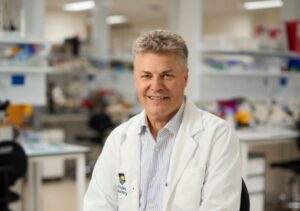
Senior author and world-leading glaucoma expert Professor Jamie Craig – co-director of the Flinders Health and Medical Research Institute (FHMRI) Eye and Vision group says the research could help doctors identify people at greatest risk before vision is lost.
“One of the biggest challenges with glaucoma is that many people don’t know they have it until permanent damage has already occurred,” says Professor Craig.
“Many patients are shocked to learn they have glaucoma because they haven’t noticed any change in their vision. Once vision is lost, we can’t restore it, which is why early detection is so important.”
The study found people in the highest genetic risk group developed glaucoma up to 25 years earlier than those in the lowest risk group. Researchers also found the test could help predict which patients were more likely to experience disease progression and require surgery.
“Genetic information could help us identify who may benefit from earlier screening, closer monitoring and timely treatment to protect their vision,” says Professor Craig.
Lead author Professor Stuart MacGregor, Head of QIMR Berghofer’s Statistical Genetics Laboratory, says the test represents a major advance in glaucoma risk prediction.
“In Australians of European ancestry, people in the highest 10 per cent of genetic risk were ten times more likely to have glaucoma than everyone else. Our earlier test identified about a four-fold increase in risk,” says Professor MacGregor.
“To our knowledge, this is the strongest genetic risk prediction reported for any common complex disease.”
Importantly for patients and clinicians, the test also helped predict disease severity. In a long-term study of people with suspected or early glaucoma, almost one in four people in the highest-risk group required glaucoma surgery by age 80, compared with none in the lowest-risk group.
Nick Haan, CEO of Seonix Bio, says the findings show genetic information could become an important addition to existing clinical assessments.
“This research shows the potential of genetic information to help identify who may develop glaucoma and who may be more likely to progress and require surgery. Our goal is to make this information useful to clinicians as they work to protect patients’ vision,” he says.
The researchers hope the approach will ultimately help reduce the number of people who lose vision from glaucoma by identifying high-risk individuals before irreversible damage occurs. Further studies are planned to investigate how the test could best be incorporated into glaucoma screening and care.
The paper, Step change in glaucoma polygenic risk score performance enables clinical utility is published in Opthalmology by MacGregor S, Ni G, Seviiri M, Kolovos A, Le NQ, Hassall MM, Schmidt J, Gharahkhani P, Tang V, Souzeau E, Qassim A, Nandakumar P, Shringarpure S, Granka JM, Cooke Bailey JN, Aung T, Landers J, Graham SL, Healey PR, Khawaja AP, Pasquale LR, Wiggs JL, O’Brien J, Weinreb RN, Willoughby CE, Lotery A, Mitchell P, Mackey DA, Hewitt AW, Haan N, Siggs OM and Craig JE. DOI: 10.1016/j.ophtha.2026.10.013
Acknowledgements: This work was supported by grants from the National Health and Medical Research Council (NHMRC) of Australia (#1107098; 1116360, 1116495, 1023911, 1150144), the Ophthalmic Research Institute of Australia, and the BrightFocus Foundation. SM, JEC, DAM, PG and AWH are supported by NHMRC grants (Fellowship/Investigator/Program), OMS by the Snow Medical Research Foundation (Grant No. PF2019-040), DAM by Glaucoma Australia, and Telethon.